
Are VVS Diamonds Real? The Truth About VVS Clarity & How to Avoid Fakes
Sep 09,2025 | Juyoyo
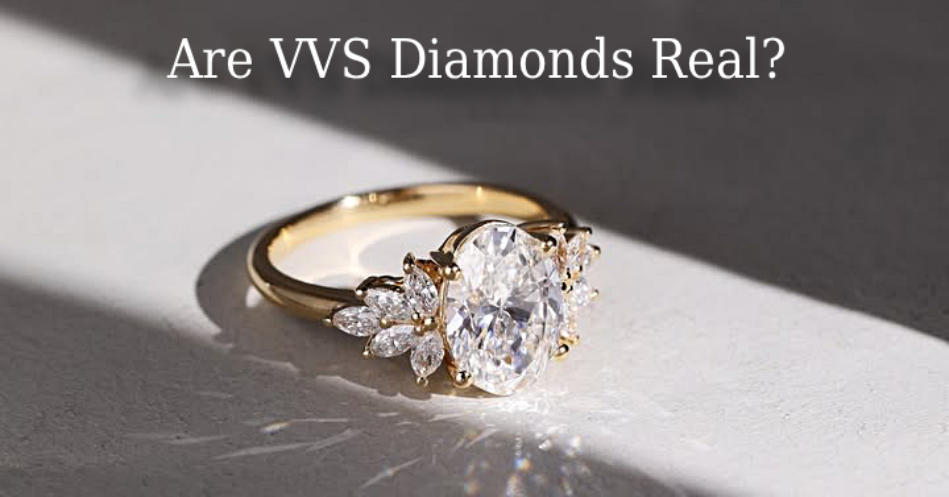
"VVS." The term sounds exclusive, expensive, and a little mysterious. However, that mystery can create a nagging question in the back of your mind, especially when you're about to make a significant investment: Are VVS diamonds real?
Let's clear the air immediately: Yes, VVS diamonds are 100% authentic. They are not fake, synthetic, or a marketing trick.
But we know that’s not the real question you’re asking.
When you ask, "Are VVS diamonds real?" you're not just wondering if they exist. You're asking a deeper, more critical question: "Is this VVS diamond genuine, or am I about to be scammed?"
At Juyoyo, we believe that buying a diamond should be an enjoyable experience, not an anxious one. We are committed to providing total transparency, both in our diamonds and the knowledge we share with you.
This guide won't just tell you that VVS diamonds are real. It will give you the knowledge you need to prove it yourself, so you can avoid overpaying or buying a fake.
What Does "VVS" Mean in Diamonds?
Let's start with the basics. "VVS" stands for "Very, Very Slightly Included." It's a grade on the diamond clarity scale developed by the Gemological Institute of America (GIA), the industry's foremost authority. Clarity is one of the "4 Cs" that determine diamond quality, the others being cut, color, and carat. It measures the presence and visibility of tiny imperfections within the diamond.
Think of it like this: Imagine a large, perfectly clean glass window. A "flawless" diamond is like that window, which has absolutely nothing on it. A VVS diamond is like that same window with a single, minuscule speck of dust that only a trained expert with a powerful magnifying glass could find, and even then, it would take some searching.
The VVS grade is further broken down into two subcategories:
- VVS1: The higher grade. Inclusions are extremely difficult to see, even for a skilled grader, under 10x magnification. They are often located in less visible areas of the diamond.
- VVS2: Inclusions are still very difficult to see under 10x magnification, but may be slightly more noticeable or centrally located than those in a VVS1 diamond.
To the naked eye, VVS1 and VVS2 diamonds are absolutely identical. These grades represent the pinnacle of clarity, just below flawless (FL) and internally flawless (IF). Their existence is very real and well-documented.
The Clarity Ladder on the Official GIA Clarity Scale
To understand the elite status of VVS diamonds, it’s important to see where they fall on the grading scale created by the Gemological Institute of America (GIA), the world’s leading authority on diamonds.
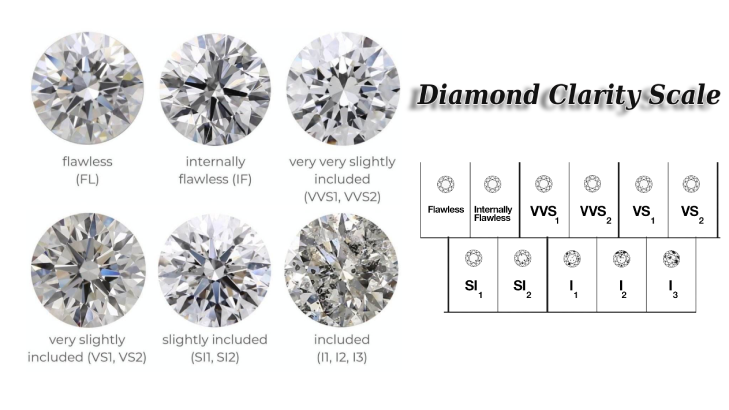
- Flawless (FL): No inclusions or blemishes are visible under 10x magnification. The rarest of the rare.
- Internally Flawless (IF): No inclusions are visible under 10x magnification, though they may have tiny surface blemishes.
- Very, Very Slightly Included (VVS1 and VVS2): You are here. Inclusions are so slight that they are extremely difficult for a skilled grader to see under 10x magnification.
- Very Slightly Included (VS1 and VS2): Inclusions are minor and range from somewhat difficult to easy for a skilled grader to see under 10x magnification.
- Slightly Included (SI1 and SI2): Inclusions are noticeable to a skilled grader under 10x magnification. At this grade, there is a possibility of seeing a flaw with the naked eye.
- Included (I1, I2, and I3): Inclusions are obvious under 10x magnification and may affect transparency and brilliance. They are often visible to the naked eye.
As you can see, VVS is near the top of the pyramid. It represents an exceptionally rare level of purity in nature.
Are VVS Diamonds Real or Fake?
The confusion arises because the word "real" can have two different meanings in this context, and unethical sellers exploit this ambiguity.
- Real diamond= the material is diamond (crystalline carbon), whether natural (formed in Earth) or lab-grown (CVD/HPHT). Both can be graded VVS.
- Fake diamond= diamond simulant (e.g., moissanite, cubic zirconia) or misrepresented grading (a VS sold as VVS).
Common misconceptions to drop:
- "VVS = fake." False. It's a clarity grade, not an origin label.
- "A diamond tester proves everything." Conductivity testers can confuse moissanite and do not confirm clarity or grading.
- "No certificate needed if it looks clean." Visual inspection isn't enough. Buy graded.
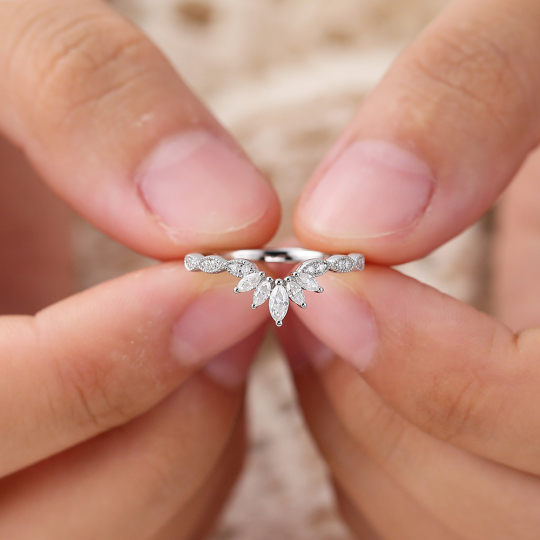 |
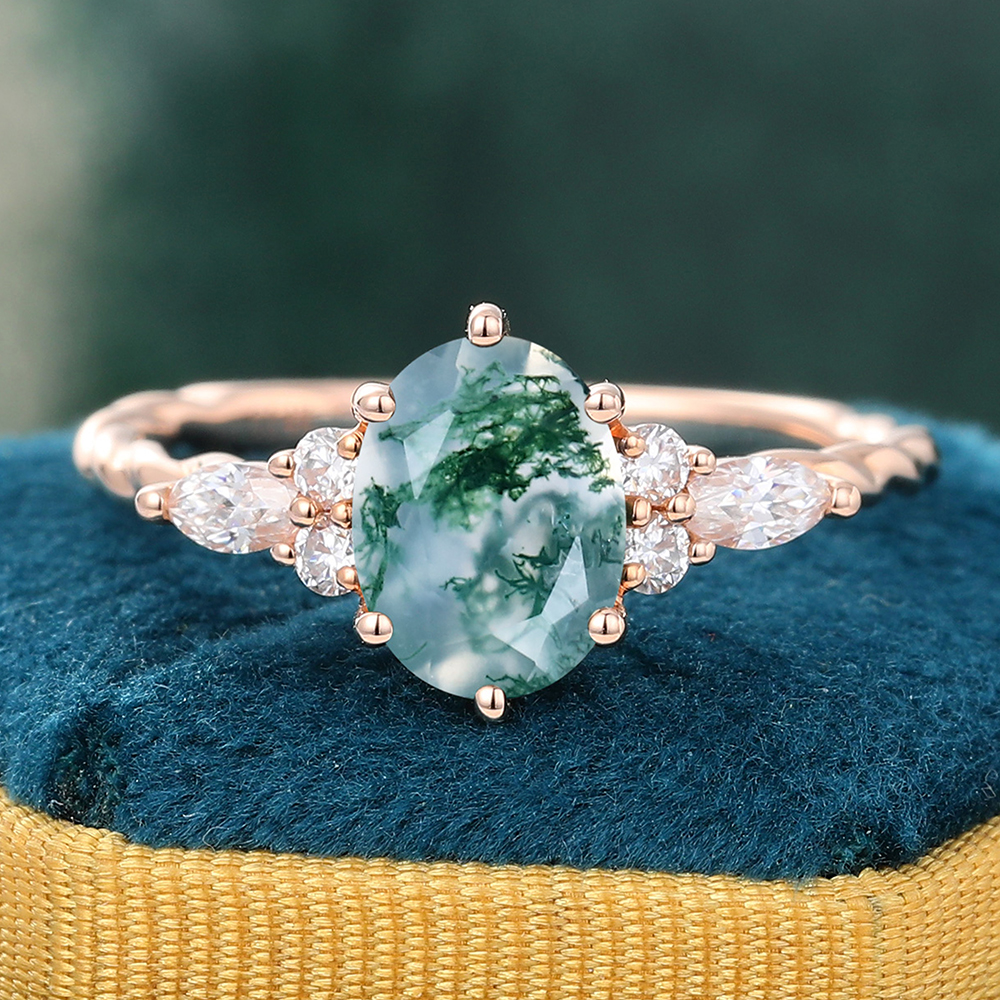
| Marquise Cut Diamond White Gold Curved Wedding Band |
Natural vs. Lab-Grown VVS: Same Look, Different Story
Quality and Physics
Both are real diamonds with the same chemical and optical properties. Both can achieve VVS clarity.
Labs can also use advanced spectroscopy to grade the origin of a diamond as natural or lab-grown, and this information will be clearly stated in the certificate.
Price and Ethics
Lab-grown VVS diamonds typically cost significantly less than natural VVS diamonds with the same specifications—often 60-80% less per carat, depending on the market.
Many buyers choose lab-grown diamonds for budget efficiency or perceived sustainability, while natural diamonds appeal to those who value geological rarity.
Natural vs. Lab-Grown VVS: Which Should You Choose?
- First, decide on the origin (natural or lab-grown) based on your values and budget.
- For lab-grown diamonds, consider stepping down to VS1 to increase the carat size or color; eye-clean diamonds are easy to find.
- For natural diamonds, the sweet spot for most brilliant cuts is VS1–VS2; VVS is best for high-carat or step-cut connoisseurs.
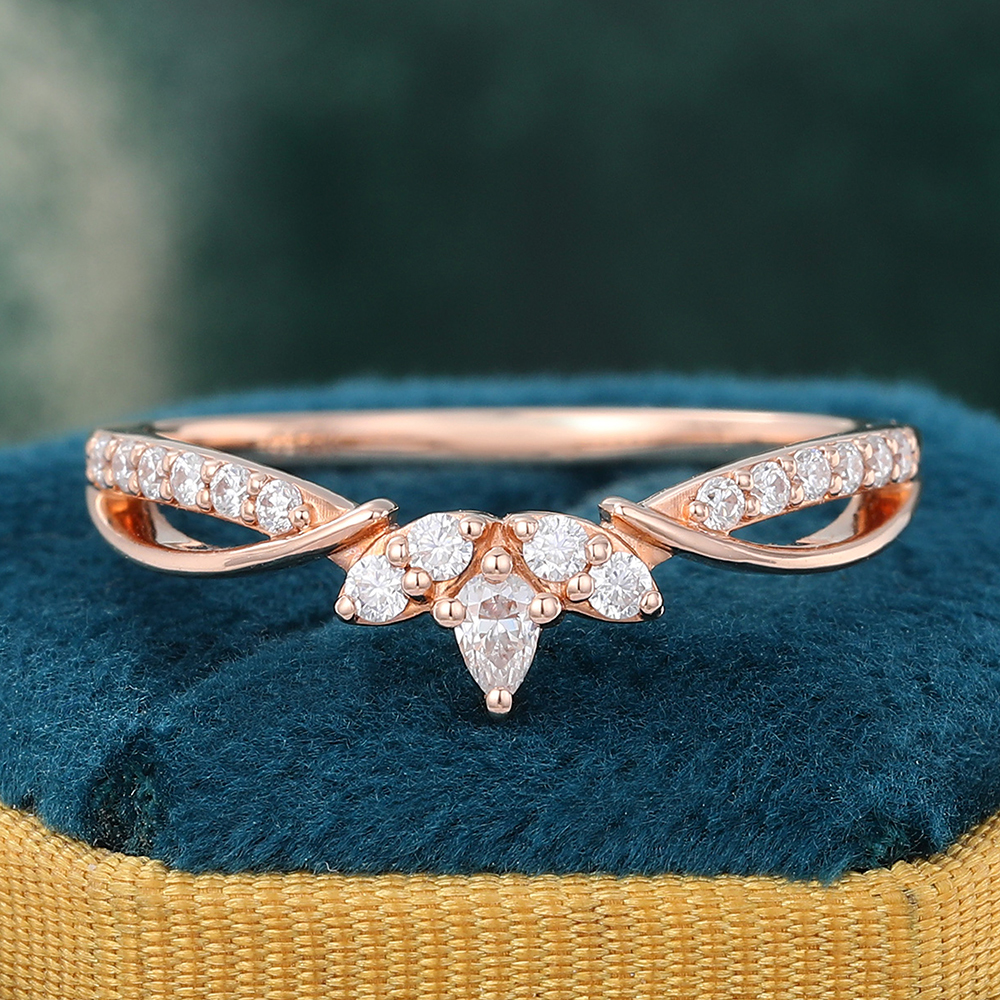 |
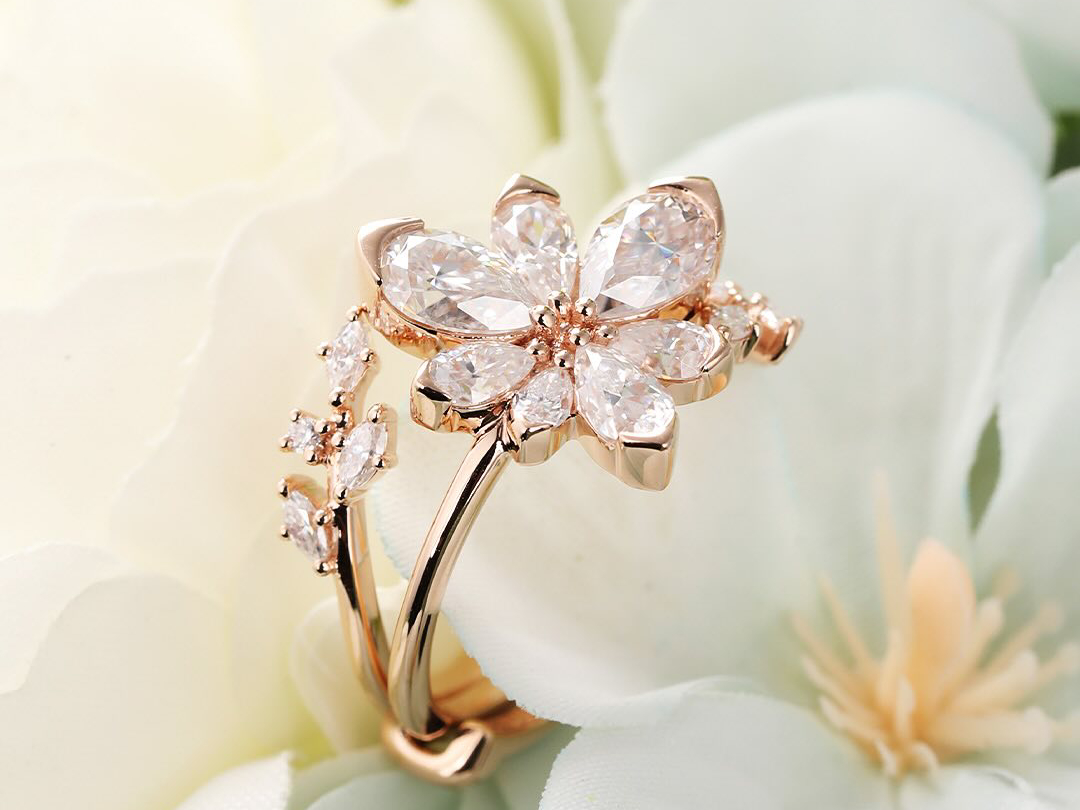
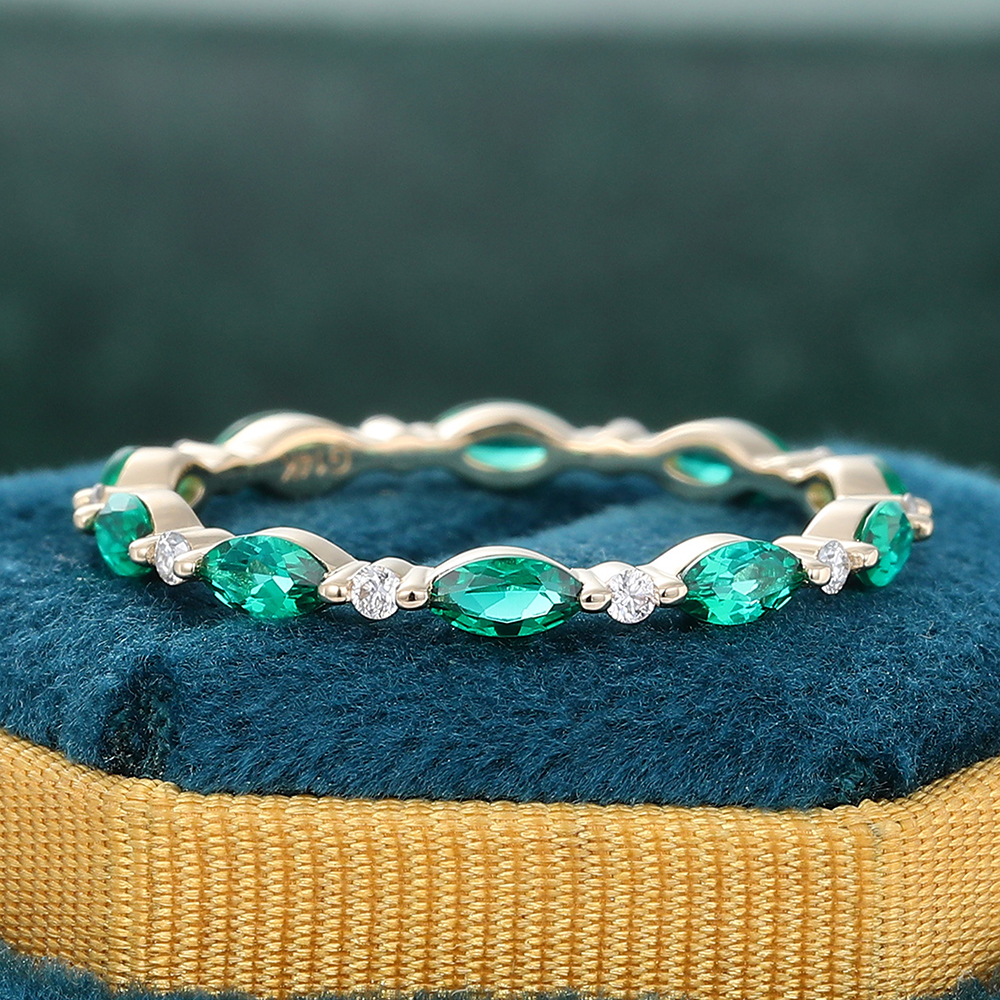
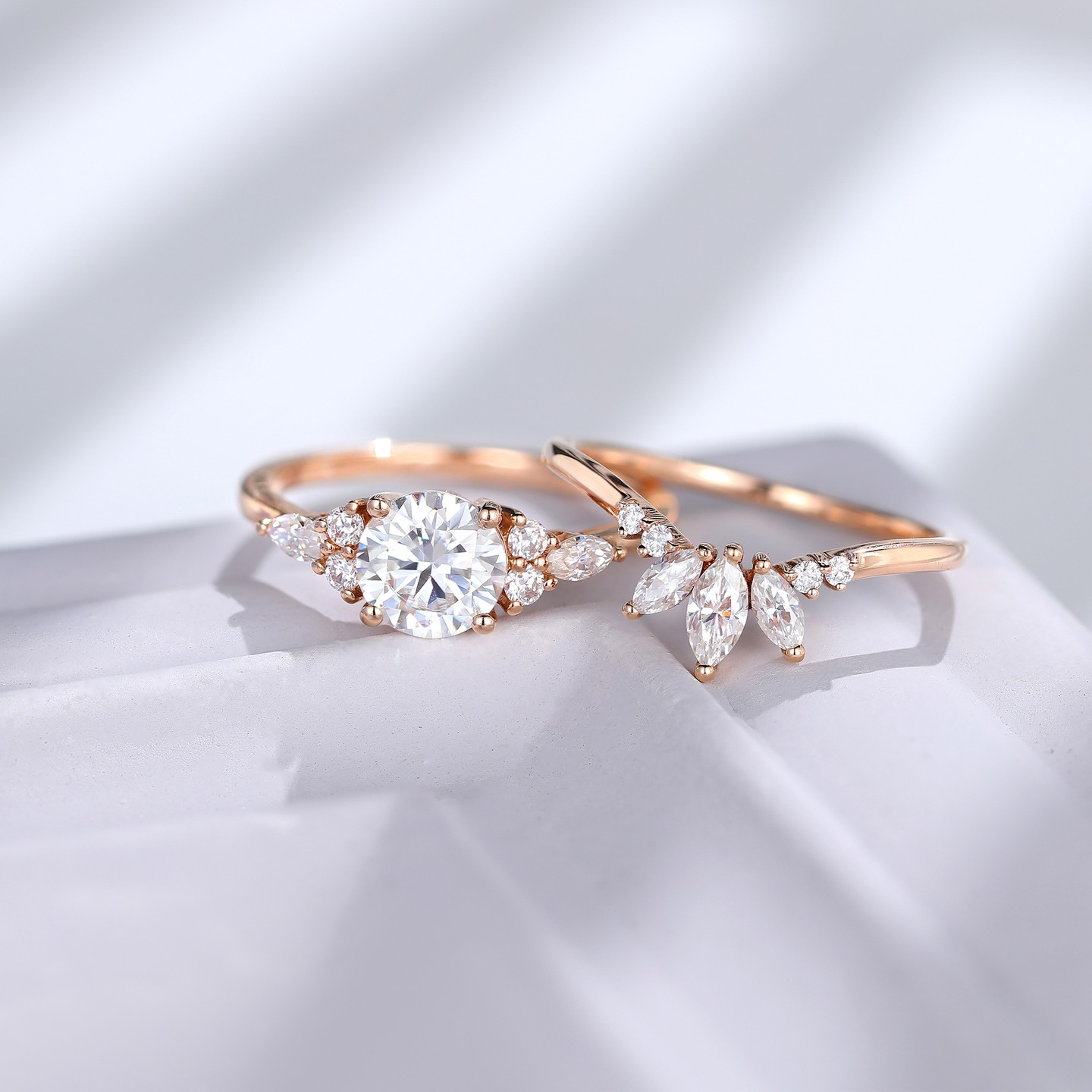
| Diamond Crown Curved Wedding Band Half Eternity Infinity Wedding Band Rose Gold |
How to Tell if a VVS Diamond Is Real: Your 3-Step Verification Plan
Anyone can call a diamond "VVS." A trustworthy seller will prove it. Here is your essential action plan to ensure authenticity.
Step 1: Certification is Your Truth Anchor
This is the most critical step. Never buy a VVS diamond without an independent grading report from a reputable lab.
- Trust independent labs such as GIA, IGI, and HRD.
- Every report lists the diamond's clarity, color, cut, carat weight, fluorescence, proportions, and an inclusion map.
Step 2: Verify the Diamond Yourself
Each grading report has a unique number that is laser-inscribed on the diamond's girdle, or the outer edge. This number is invisible to the naked eye.
- Use a jeweler's loupe with 10x magnification to see it, or ask the sales associate to show you.
- Locate the inscription and match it to the number on the certificate.
- Take it a step further by verifying the report number on the grader's official website (e.g., GIA's online report checker).
This simple step confirms that the certificate matches the exact diamond you're looking at.
Step 3: Buy from a Reputable & Transparent Seller
Your safest bet is to buy from jewelers who:
- Specialize in certified diamonds and provide detailed documentation.
- Clearly explain the 4Cs and the grading process without using technical jargon.
- Openly discuss the differences between natural and lab-grown diamonds with complete transparency in pricing.
- Have a strong return policy.
- Have verified customer reviews.
- Have responsive customer service.
At Juyoyo, our gemology experts personally review each diamond's certification with you to ensure that you never overpay for quality you can't see.
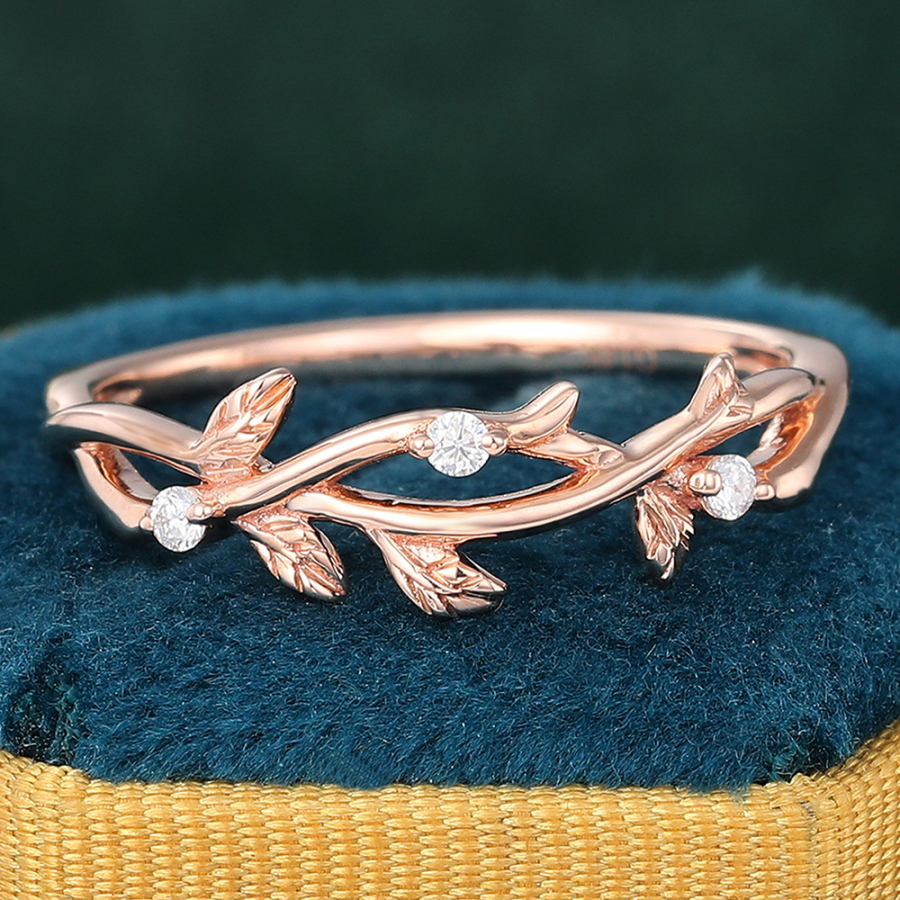 |
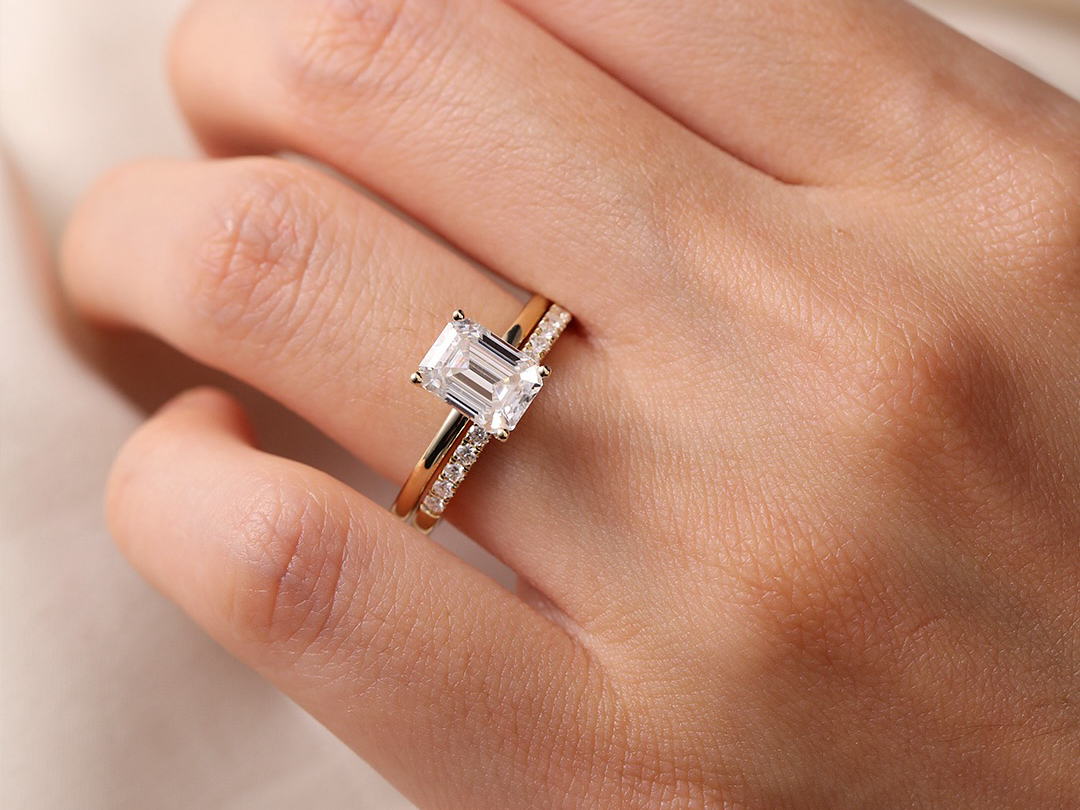
| Diamond Rose Gold Stacking Ring Wedding Band |
Are VVS Diamonds a Good Choice for You?
Now that we've confirmed they're real, let's discuss value and practicality.
The Pros:
- Prestige & Purity: They represent the top 1% of diamonds in terms of clarity.
- Investment & Value Retention: High-clarity natural diamonds hold their value exceptionally well.
- Absolute Brilliance: With no visible inclusions, light can pass through without interference, maximizing sparkle.
The Cons:
- High Premium: You pay a significant price for a perfection that is invisible without magnification.
- Potential Overpayment: Many shoppers may not be able to distinguish between a VS (very slightly included) or a high SI (slightly included) diamond and a flawless diamond, resulting in a significant cost difference.
Juyoyo's Expert Advice: For most people, the best value lies in the VS-SI range. You can use the money you save by choosing a slightly lower clarity grade that still looks flawless to your eye to get a larger carat weight or a superior cut quality. These factors have a much more dramatic impact on a diamond's overall beauty.
The Final Word
So, are VVS diamonds real? Yes.
VVS is a recognized clarity grade used by top laboratories for natural and lab-grown diamonds alike. The bigger question is whether VVS is right for you. If you want ultra-clean clarity, collectability in larger stones, or step-cut transparency, then VVS earns its premium. However, if your goal is to get the most beautiful diamond for your budget, a well-chosen VS1 or VS2 that’s eye-clean can look just as stunning. This lets you allocate more funds toward cut quality or carat weight.
Ready to see how exceptional diamonds can bring a design to life? Explore our collection of exquisite diamond rings!
Frequently Asked Questions (FAQs)
Are VVS Diamonds Real or Lab-Made?
They can be either. VVS describes clarity, not origin. Both natural and lab-grown diamonds can be VVS.
Is VVS Better than SI?
Yes, significantly. VVS diamonds are two full grade tiers above SI (Slightly Included) diamonds. While some SI1 diamonds can appear clean to the naked eye, SI2 and I-grade diamonds often have visible flaws, whereas VVS diamonds never do.
Are VVS Diamonds More Expensive?
Yes, significantly. You pay a premium for their rarity and top-tier clarity grade. The price jump from VS1 to VVS2 can be substantial for a minimal visual difference.
How Much Is a 1-Carat VVS Diamond?
The price varies wildly based on the other three Cs: color, cut, and carat. A well-cut, colorless (D-F) natural VVS diamond can cost between $8,000 and $15,000. A lab-grown VVS diamond with similar specifications would cost a fraction of that, typically between $1,500 and $3,000.
Will a VVS Diamond Pass a Diamond Tester?
Absolutely. Both natural and lab-grown VVS diamonds are real diamonds, and they will easily pass any standard diamond tester.
Is VVS Worth It?
It's worth it for step cuts, large sizes, or buyers who value the psychological assurance of ultra-clean clarity. Otherwise, VS1-VS2 diamonds may be a better value.
Do VVS Diamonds Hold Value?
Natural VVS diamonds with the best specifications can retain their value relatively well compared to lower grades, but all diamonds are subject to market conditions. Lab-grown VVS diamonds generally have limited resale value.
Comment