
Is Moissanite See Through? The "Windowing" Effect & Why It Looks Different from Diamonds
Jan 15,2026 | Juyoyo
When shopping for a moissanite engagement ring or other fine jewelry, many people ask, "Is moissanite see-through?" Some buyers worry that moissanite looks too clear, glassy, or cheap compared to diamonds.
The short answer is: No. Moissanite is transparent, but a well-cut stone is not “see-through” like glass or cubic zirconia (CZ) when viewed face up.
This guide explains what you’re actually seeing, why moissanite can appear different from a diamond, and whether transparency is a flaw or a desirable quality.
What Does “See-Through” Mean in Gemstones?
In gemology, there is a significant difference between transparency and see-through quality. Both diamonds and moissanites are 100% transparent, meaning light can pass through them.
However, a well-cut gemstone acts like a series of mirrors. Light enters the top, bounces around the pavilion (the bottom), and shoots back out as sparkle. If light leaks out the bottom instead of reflecting back, jewelers call it "windowing."
What is the Windowing Effect?
It occurs when a moissanite is cut too shallow or too deep, creating a "window" in the center. If you look down through the top of the stone and can clearly see your finger or the metal setting underneath, then the stone has a windowing problem.
- The Juyoyo Standard: At Juyoyo, we reject stones with windowing. We ensure every moissanite meets a specific "Depth %" (usually between 59% and 62.5% for rounds) to guarantee the light stays trapped inside the stone, creating a solid, brilliant look.
Why Moissanite Can Look "See Through"
Some people describe moissanite as looking "too clear," "glassy," or even "see-through," especially in photos or under strong lighting.
This impression does not mean that the stone is of low quality. It stems from three main optical factors: its higher refractive index, double refraction, and the quality of the cut.
1. Higher Refractive Index Than Diamond
Moissanite has a higher refractive index than diamonds, meaning it bends light more strongly.
- Diamond RI: ~2.42
- Moissanite: ~2.65-69
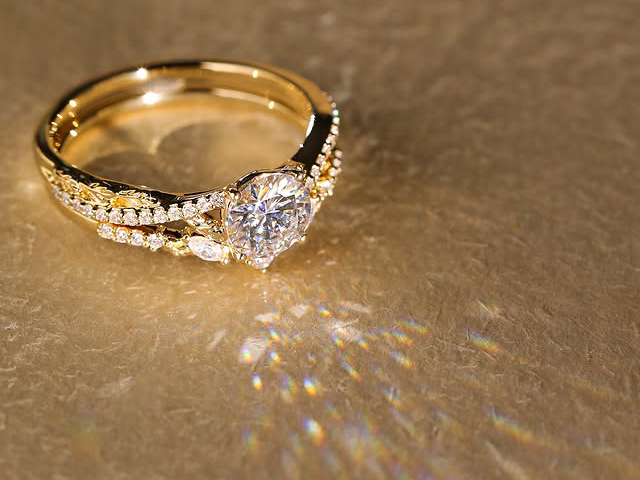
This causes moissanite to produce more flashes of light and color. Sometimes, this gives the impression that light is passing straight through rather than bouncing internally.
2. Double Refraction (Key Difference)
Moissanite is doubly refractive, whereas diamonds are not.
This means:
- Light splits into two paths inside the stone.
- Facet edges may appear slightly doubled under magnification.
- The stone may appear more "open" or lively.
This optical behavior is often misinterpreted as transparency, but it’s actually a sign of moissanite’s unique crystal structure, not poor quality.
3. Cut Quality Matters More Than Material
Not all shapes handle light the same way. The cut you choose will determine how "dense" the sparkle feels.
A well-cut moissanite will:
- Reflect light back to the eye
- Show depth and contrast
- Avoid a flat, glass-like look
Here are the suitable cut for moissanite:
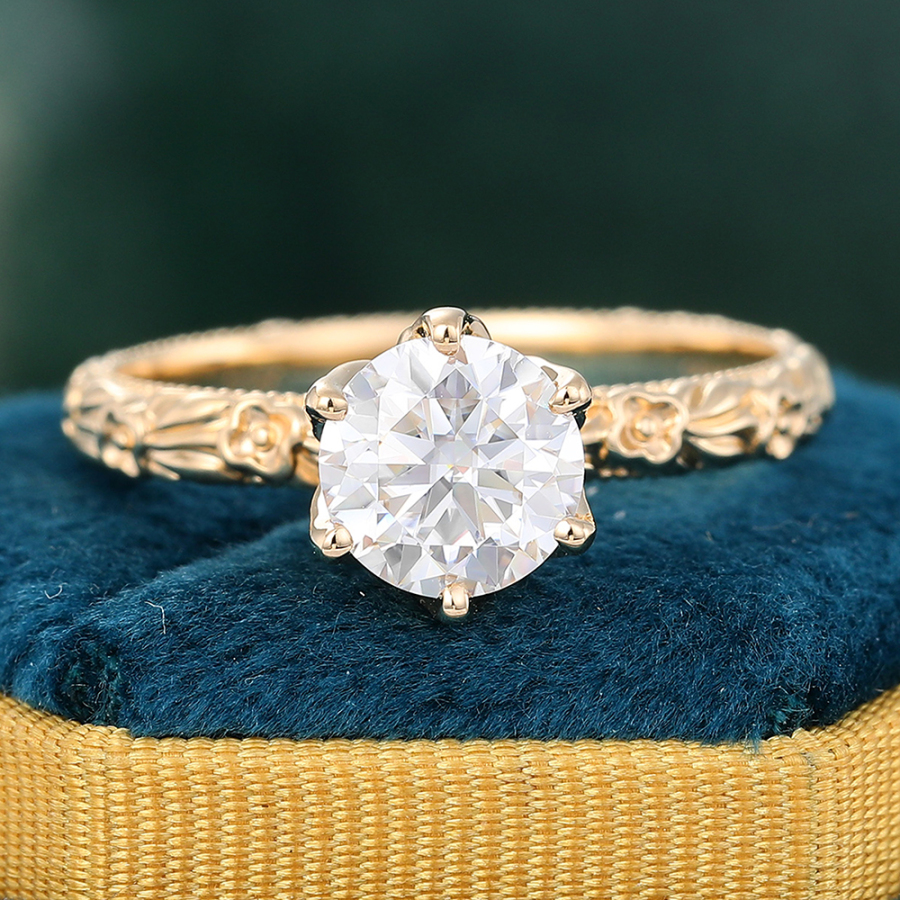
- Round Brilliant Cut: This cut is best for preventing a see-through look. Its 58 facets are designed to reflect the most light. It is nearly impossible to see through a well-cut round moissanite stone.
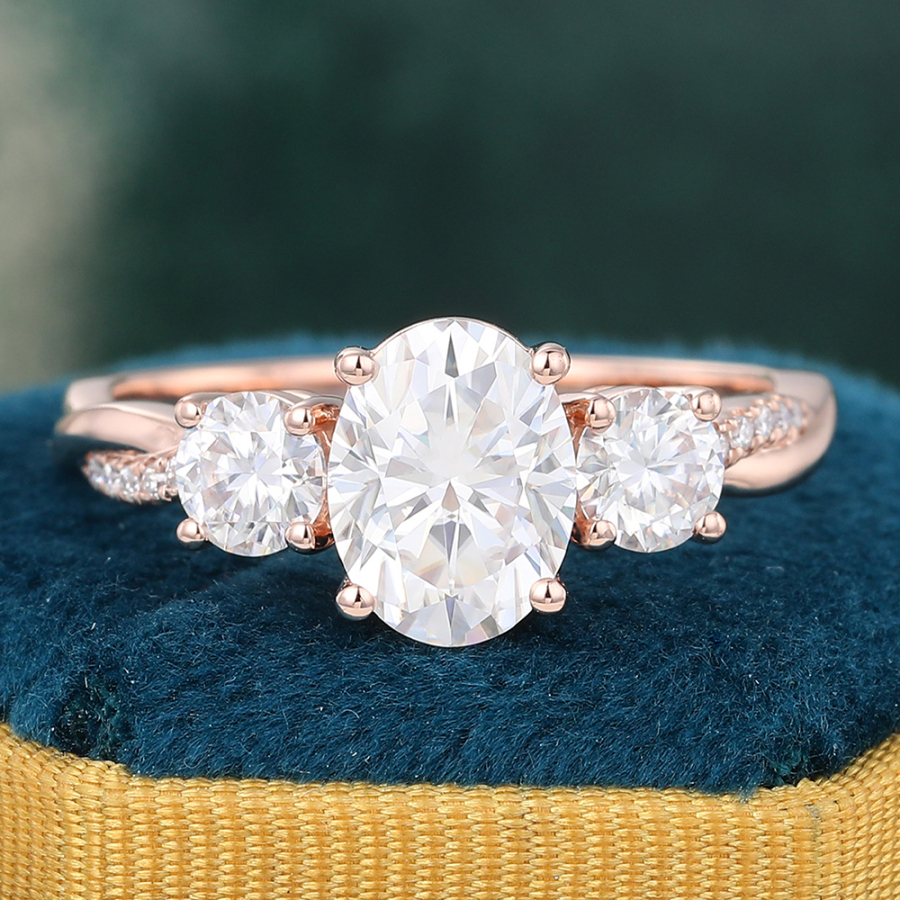
- Crushed Ice Cut (Cushion/Radiant): Popular in modern moissanites, this cut features many tiny facets that mimic the appearance of crushed ice. It provides a "solid" look with millions of tiny sparkles that perfectly hide the interior of the stone.
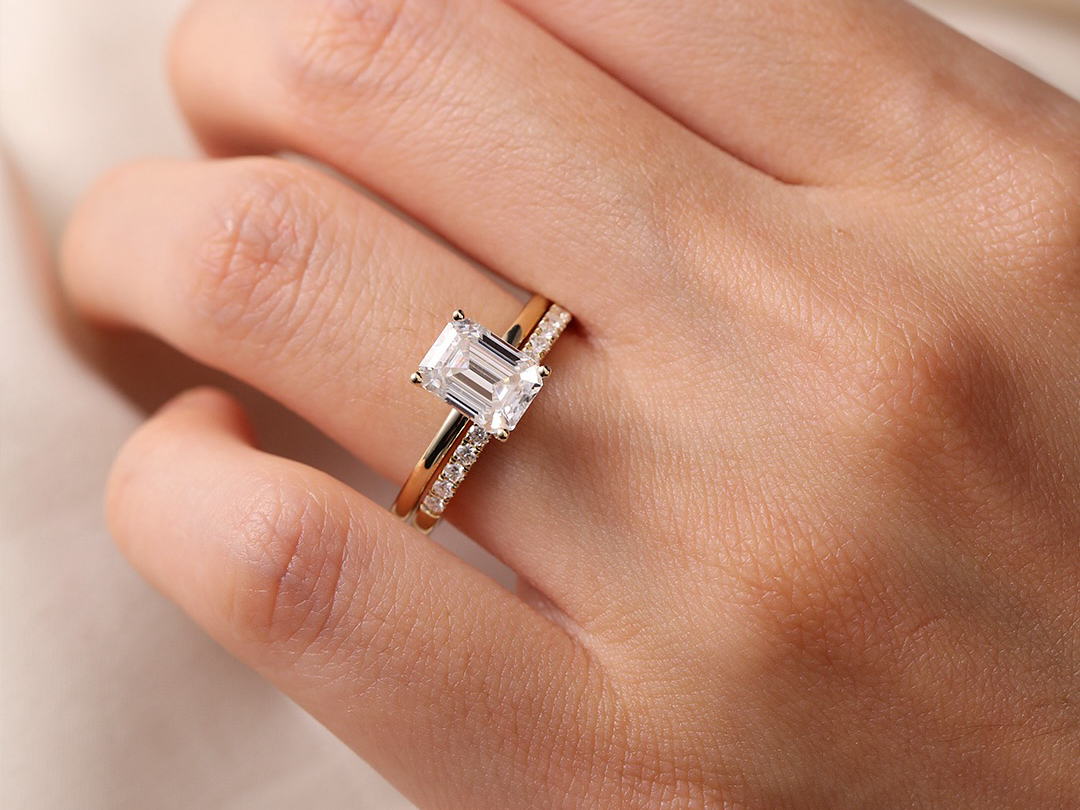
- Step Cuts (Emerald & Asscher): These cuts have long, open facets, making them the most "transparent." If you prefer an emerald cut, prioritize high clarity (VVS1) and color (D grade) to make the stone look like a hall of mirrors rather than a piece of glass.
 |
 |
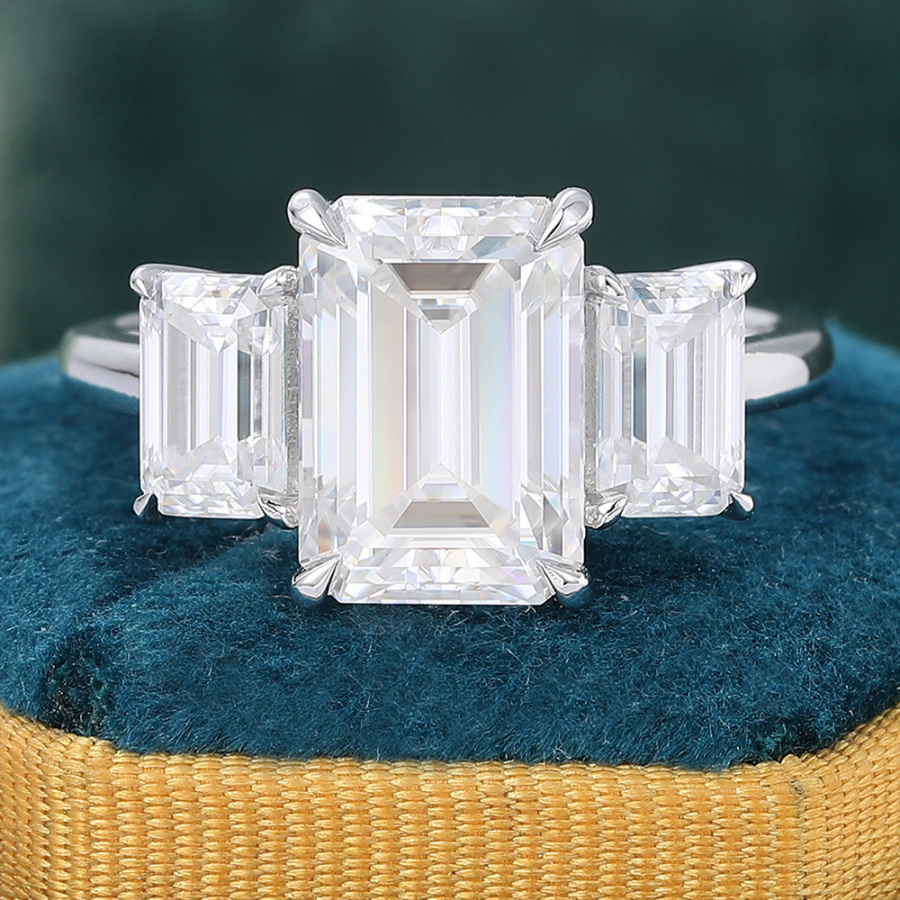 |
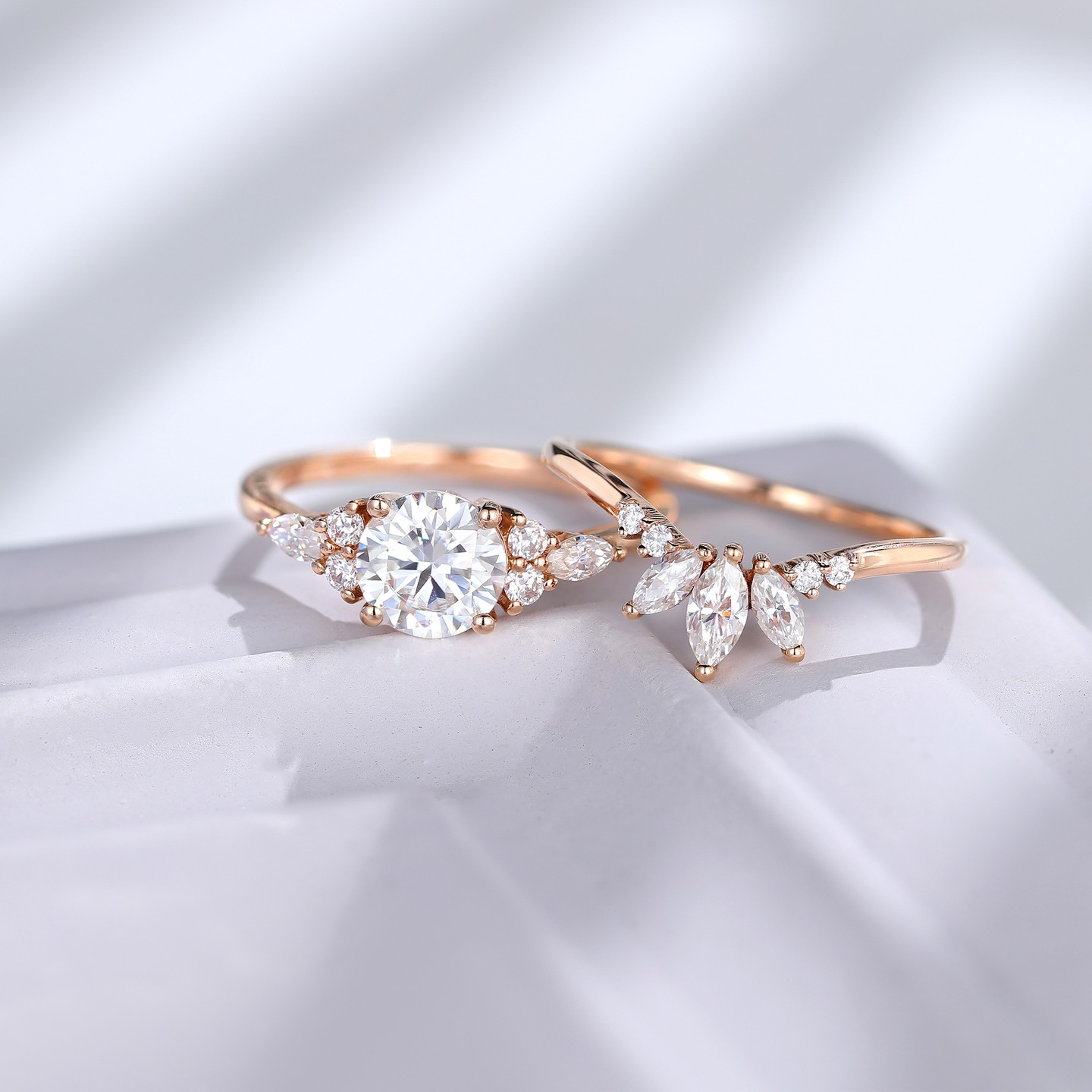
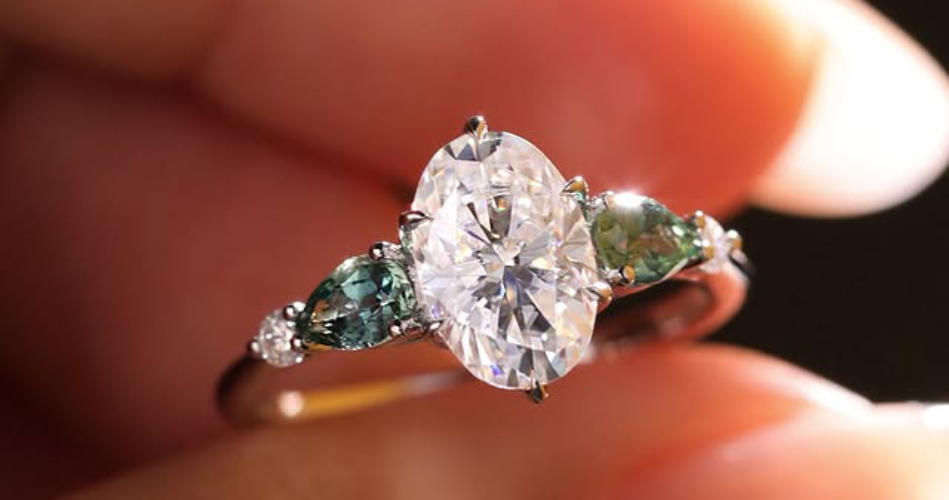
| Round Cut Moissanite Solitaire Engagement Ring Yellow Gold Floral Engraved Ring for Women | Oval Moissanite Trinity Engagement Ring Unique 3 Stone Engagement Ring | Emerald Cut Moissanite Three Stone Engagement Ring White Gold Bridal Ring for Women |
Moissanite vs Diamond: Transparency Comparison
|
Feature |
Diamond |
Moissanite |
|
Transparency |
Transparent |
Transparent |
|
Refractive Index |
Lower |
Higher |
|
Fire (Color Flashes) |
Moderate |
Very high |
|
Double Refraction |
No |
Yes |
|
Visual Depth |
Deep, crisp |
Lively, bright |
Try simple at-home tests, such as the dot test (place the gem over a dot on paper) or the newspaper test (check to see if text is visible through the gem). Diamonds usually completely obscure the view, while moissanite may show some doubling or partial visibility.
Contine reading: Moissanite vs Diamond: A Comprehensive Comparison
Common Misconceptions About Moissanite Rings
"Does it look see-through? Does that mean it’s cheap?"
Not at all! Moissanite's unique sparkle and slightly see-through appearance come from its optical properties, not poor quality.
"It looks cloudy."
Cloudiness is often the result of poor cutting or residue buildup, not the gem itself. High-quality moissanite is crystal clear when clean.
"My stone looks like glass."
This "glassy" effect often occurs under certain lighting due to moissanite's extreme brightness and fire. It's not a flaw; it's just a different visual style.
How Can You Tell If a Moissanite Is Too See-Through
If you’re unsure whether your stone is moissanite or diamond, use these basic checks:
- 10× magnification: Look for doubled facet edges (a sign of double refraction).
- Fog test: Moissanite disperses heat quickly, so fog clears faster than on a diamond.
- Look under bright light: Notice rainbow flashes? That’s moissanite’s signature fire.
- Professional test: Jewelers often use electrical conductivity or moissanite testers for confirmation.
Continue reading: How to Know If the Moissanite You Bought Is Real? 7 Key Ways to Spot Fakes
Buying Advice: How to Choose a Quality Moissanite
For those who love moissanite's brilliance but prefer a diamond-like appearance:
- Choose the right cut. Round or brilliant cuts minimize the "windowing" effect, keeping the stone looking dense and fiery.
- Opt for colorless grades (D-F). These grades provide a more diamond-like appearance and ensure maximum sparkle.
- Prioritize precision cutting. Juyoyo guarantees accurate facet angles and depth, which enhances brilliance.
With the right combination of cut and color, moissanite can be nearly indistinguishable from diamonds in everyday wear, offering exceptional sparkle and durability.
Continue reading: Moissanite Ring Buying Guide
Should You Avoid Moissanite Because It’s Transparent?
Absolutely not!
Transparency is a basic requirement for fine gemstones.
What matters is how that transparency is used to create brilliance.
Many people actually prefer moissanite because:
- It looks brighter in low light.
- It has stronger fire than a diamond.
- It offers exceptional value without sacrificing durability.
Final Thoughts: Is Moissanite See-Through
Moissanite is transparent, but its optical properties set it apart from diamonds. Its higher brilliance, rainbow fire, and double refraction create a livelier, more colorful sparkle. If you choose a well-cut, high-quality moissanite, its transparency becomes a strength, not a flaw.
FAQ: Moissanite Transparency
Is Moissanite Fake?
No. Moissanite is a real gemstone made of silicon carbide. It is often used as a diamond alternative, but it is not an imitation like glass or cubic zirconia.
Will Moissanite Pass a Diamond Tester?
Yes. Many moissanites pass basic thermal diamond testers because they conduct heat similarly to diamonds. Only advanced electrical testers or professional inspection can reliably tell them apart.
Does Moissanite Get Cloudy Over Time?
No, because it is chemically stable. It will not become cloudy or discolored. If it appears dull, cleaning it usually restores its brilliance.
Are Moissanites Clear?
Yes. High-quality moissanites are clear and transparent gemstones. They are eye-clean and do not appear cloudy or milky when viewed with the naked eye. Any haziness usually comes from poor cutting or surface residue—not the material itself.
Comment