
Benefits of Wearing a Moissanite Ring — Durability, Cost & Meaning
Dec 29,2025 | Juyoyo
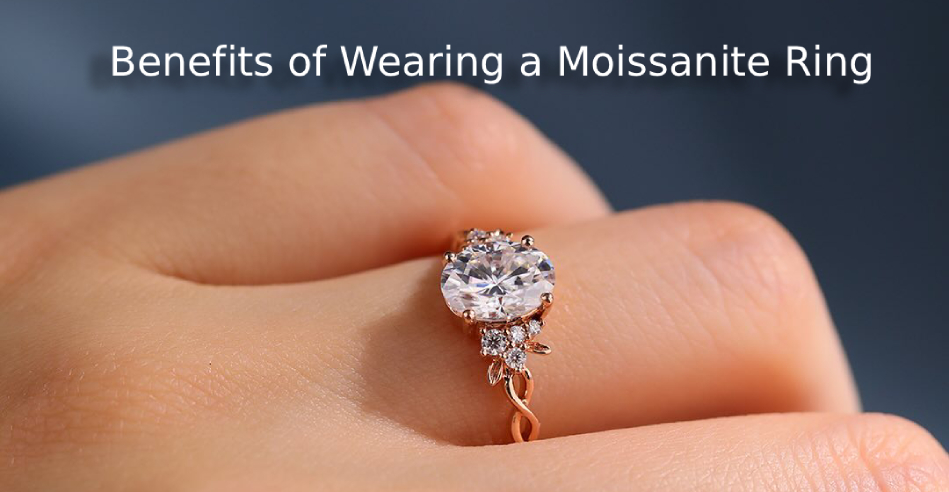
The primary benefits of wearing a moissanite ring are exceptional durability (9.25 on the Mohs scale), superior visual brilliance (refractive index of 2.65-2.69), and significant affordability, often costing up to 90% less than mined diamonds.
As a lab-grown, conflict-free gemstone, moissanite offers long-lasting beauty and ethical value, making it a popular choice for modern engagement rings.
For many buyers, the durability comparison between moissanite and diamonds becomes a key deciding factor, especially when ethics, cost efficiency, and everyday wearability are considered together.
At Juyoyo, we believe that choosing a ring should be an empowering experience. Below, we explore the benefits of wearing a moissanite ring and explain why it strikes a balance between beauty, meaning, and value.
How Moissanite is Made: A Gem Born from Science
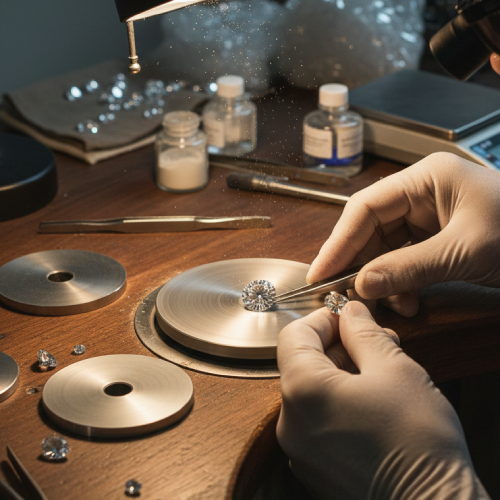
Moissanite is a lab-grown gemstone engineered to replicate the optical and physical properties of rare natural crystals.
Its controlled creation process is what gives moissanite its consistent sparkle, durability, and ethical advantages.
Natural moissanite is extremely rare. It was first discovered in 1893 by Dr. Henri Moissan in a meteor crater. Because it came from space, it is often called a "space diamond." Today, moissanite is grown in laboratories using silicon carbide under precise conditions to ensure uniform quality.
Unlike mined gemstones, lab-grown moissanite avoids large-scale excavation and supply-chain uncertainty. This makes it a reliable choice for consumers who want beauty without environmental or ethical compromise.
The Top 7 Practical Benefits of Wearing a Moissanite Ring
Moissanite rings offer advantages, including affordability, durability, superior brilliance, ethical sourcing, and low maintenance. These qualities make them ideal for daily wear.
1. Affordability: More Beauty for Your Budget
Moissanite costs dramatically less per visual carat than diamonds. This is one of the most compelling benefits of wearing a moissanite ring.
According to market data, a high-quality, 1-carat moissanite ring costs about $400-$600, while a similar-quality diamond ring costs $4,000-$6,000. In practical terms, buyers can save 70-90% while achieving a similar or larger appearance.
For instance, a 1.5-carat moissanite ring may cost less than a 0.75-carat diamond with a similar visual impact. This price advantage allows buyers to allocate their budget toward better craftsmanship, premium metals, or custom designs—an area in which Juyoyo specializes.
2. Durability for Daily Wear: Built for a Lifetime
Is moissanite durable enough for an engagement ring? Absolutely. According to the International Gem Society (IGS), moissanite ranks at 9.25 on the Mohs scale of hardness. This means it resists scratches better than most gemstones.
- Comparison: Diamonds are a 10 and sapphires are a 9.
Moissanite is engineered for long-term daily wear, even for those with active lifestyles. When paired with a secure setting, moissanite is ideal for engagement rings and everyday jewelry.
- Real-World Resilience: Moissanite is harder than almost every other gemstone on Earth. It is highly resistant to scratching and chipping, making it an ideal choice for doctors, teachers, athletes, and anyone with an active lifestyle. It won't break under the pressure of daily life.
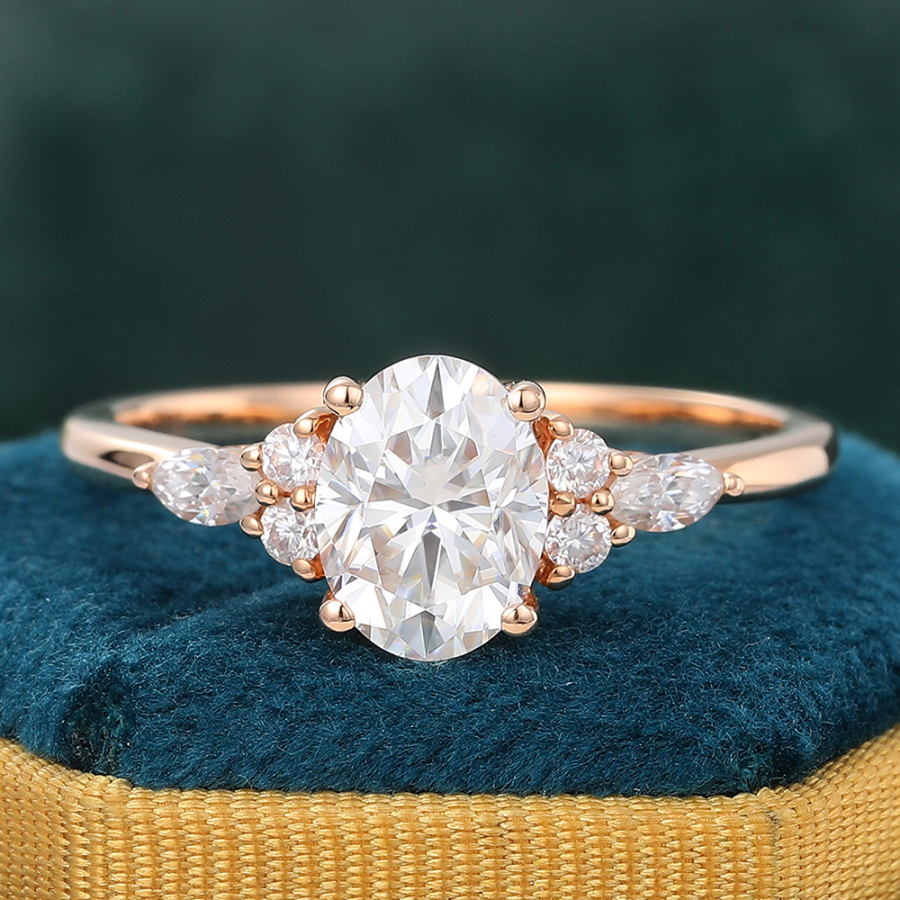 |
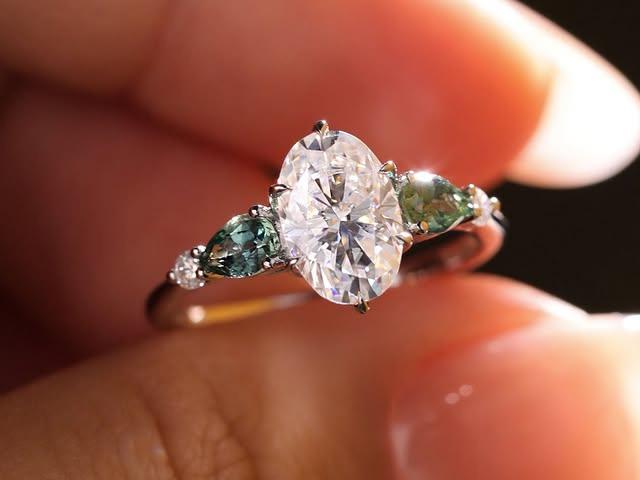
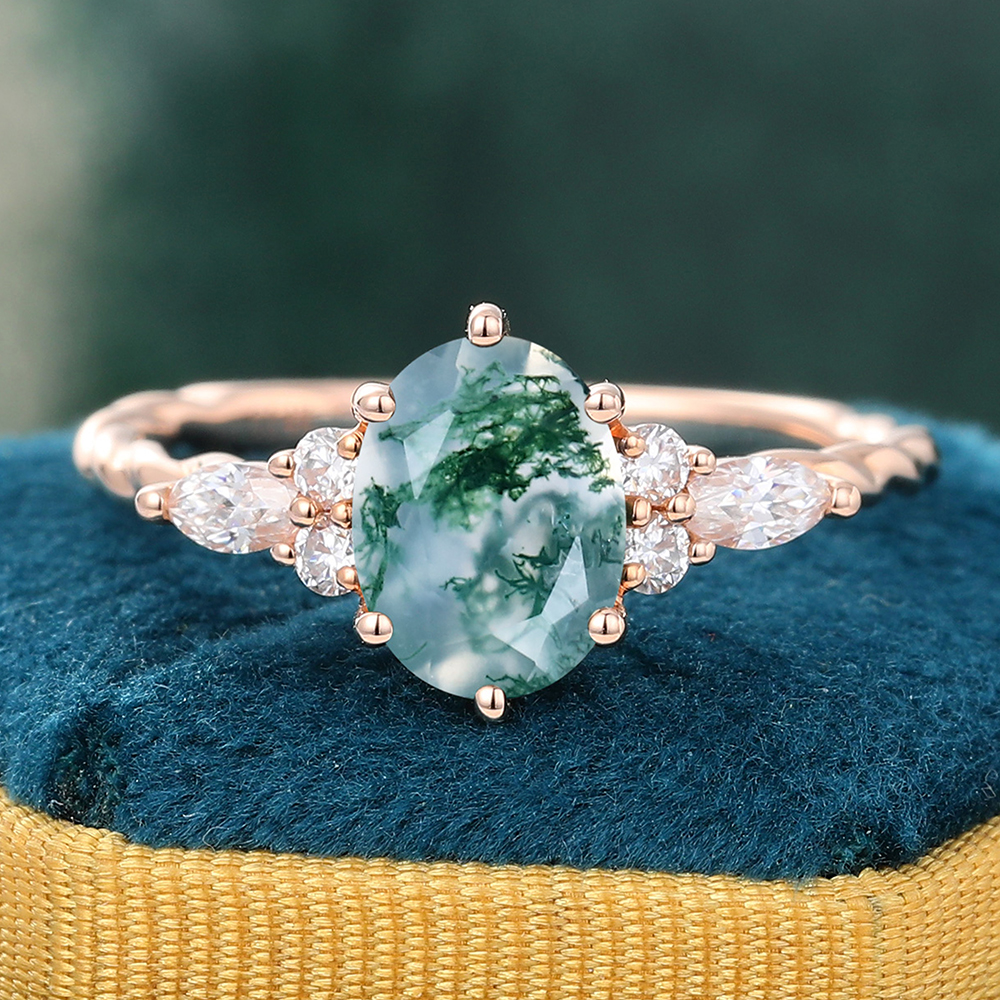
| 6x8mm Oval Moissanite Engagement Ring with Diamond Accents |
3. Visual Brilliance: More Than a Diamond Look-Alike
Moissanite is optically superior to diamonds in terms of fire and sparkle.
This difference is measurable, not subjective.
- Refractive Index (RI): A diamond’s RI is 2.42. Moissanite’s range from 2.65 to 2.69.
- Fire (Dispersion): According to the Gemological Institute of America (GIA), moissanite has a dispersion of 0.104, which is more than double that of a diamond (0.044).
Therefore, moissanite reflects more "rainbow flashes" than a diamond does. In low-light environments, such as during a candlelit dinner, a moissanite ring will outsparkle almost any other stone.
4. Low Maintenance & Easy Care
Moissanite requires minimal maintenance, as it does not cloud, discolor, or lose brilliance with normal daily wear.
Routine care involves gently cleaning it with warm water and mild soap. Occasional professional checks are recommended to ensure the security of the setting, but no specialized treatment is required, making moissanite ideal for those who wear it every day.
5. Ethical and Environmental Advantages
Moissanite is an ethical gemstone because it is lab-grown, eliminating the need for mining and reducing environmental and social impact.
For environmentally conscious buyers, wearing a moissanite ring is a transparent, values-aligned choice that doesn't sacrifice luxury or aesthetics.
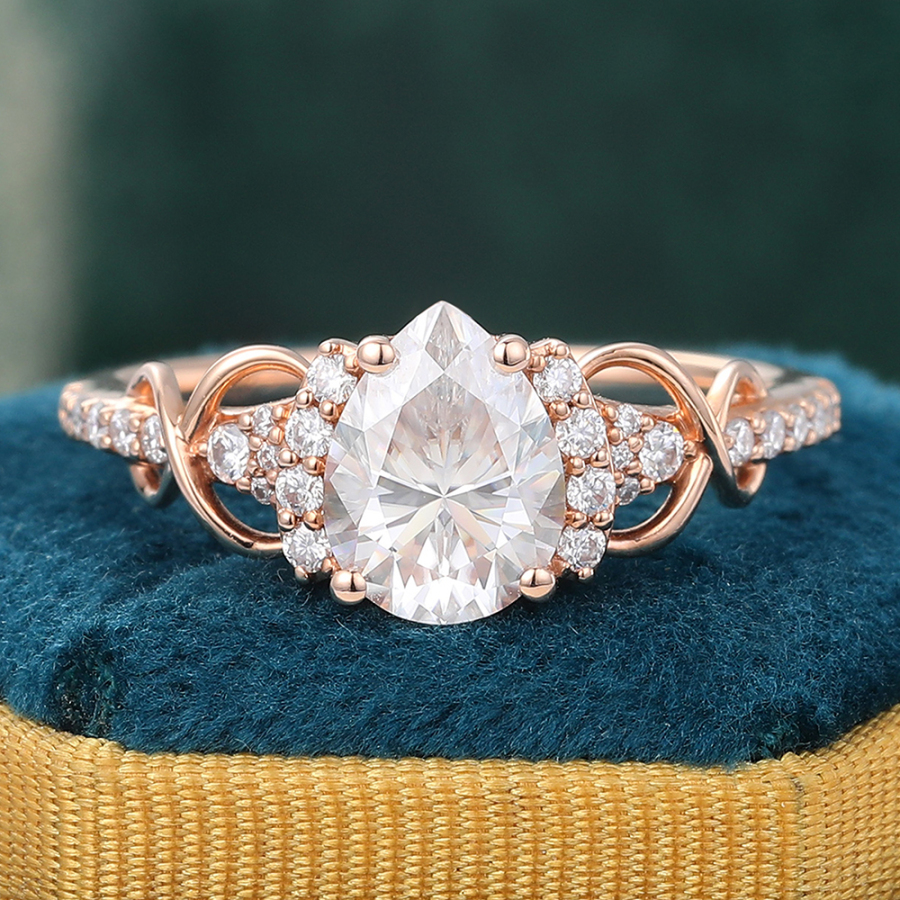 |
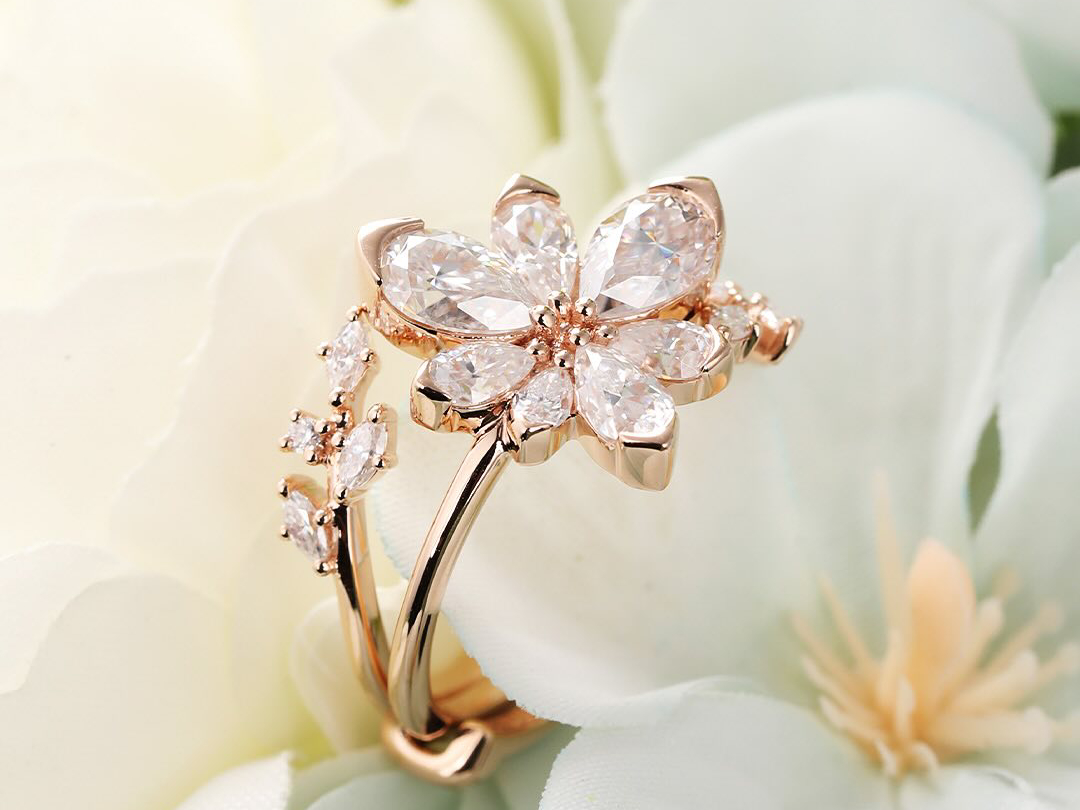
| Pear Cut Moissanite Engagement Ring, Infinity Promise Ring, Pavé Diamond Ring, Rose Gold |
6. Style Flexibility: Bigger Look, More Design Freedom
Moissanite offers greater design flexibility because its lower cost allows for larger carat sizes and more elaborate settings without exceeding your budget.
The larger visual size for a lower cost enables you to customize a ring that matches your personal aesthetic, not just your budget.
7. Emotional and Symbolic Benefits
Symbolically, moissanite represents clarity, resilience, and personal values, while spiritual interpretations vary and are based on cultural or individual beliefs rather than scientific evidence.
Moissanite is often associated with intentional love, clarity, and thoughtful decision-making. Moissanite represents a "modern love"—one built on transparency, intelligence, and a rejection of outdated, overpriced traditions.
Some cultural or spiritual interpretations attribute emotional balance or positive energy to moissanite. These beliefs are symbolic rather than scientific and vary from culture to culture. For most people who wear it, the true meaning lies in choosing a ring that aligns with their personal values and lifestyle.
Moissanite vs. Diamond vs. Cubic Zirconia: A Clear Comparison
Understanding the differences between popular gemstones helps buyers make confident decisions. The following practical comparison is based on performance, value, and everyday suitability.
|
Feature |
Moissanite |
Natural Diamond |
|
|
Price (1ct) |
~$400 - $600 |
~$4,000 - $10,000+ |
~$20 - $50 |
|
Hardness (Mohs) |
9.25 |
10 |
8 - 8.5 |
|
Brilliance (RI) |
2.65 - 2.69 (Highest) |
2.42 |
2.15 |
|
Durability |
Excellent (Lifetime) |
Excellent (Lifetime) |
Poor (Scratches/Clouds) |
|
Resale Value |
Moderate |
Moderate/High |
None |
|
Best For |
Savvy, Ethical Buyers |
Traditionalists |
Temporary Jewelry |
- The Takeaway: Although cubic zirconia (CZ) is inexpensive, it scratches easily and turns "cloudy" within a year. Compared to diamonds and CZ, moissanite offers the best balance of durability, brilliance, and affordability for everyday fine jewelry.
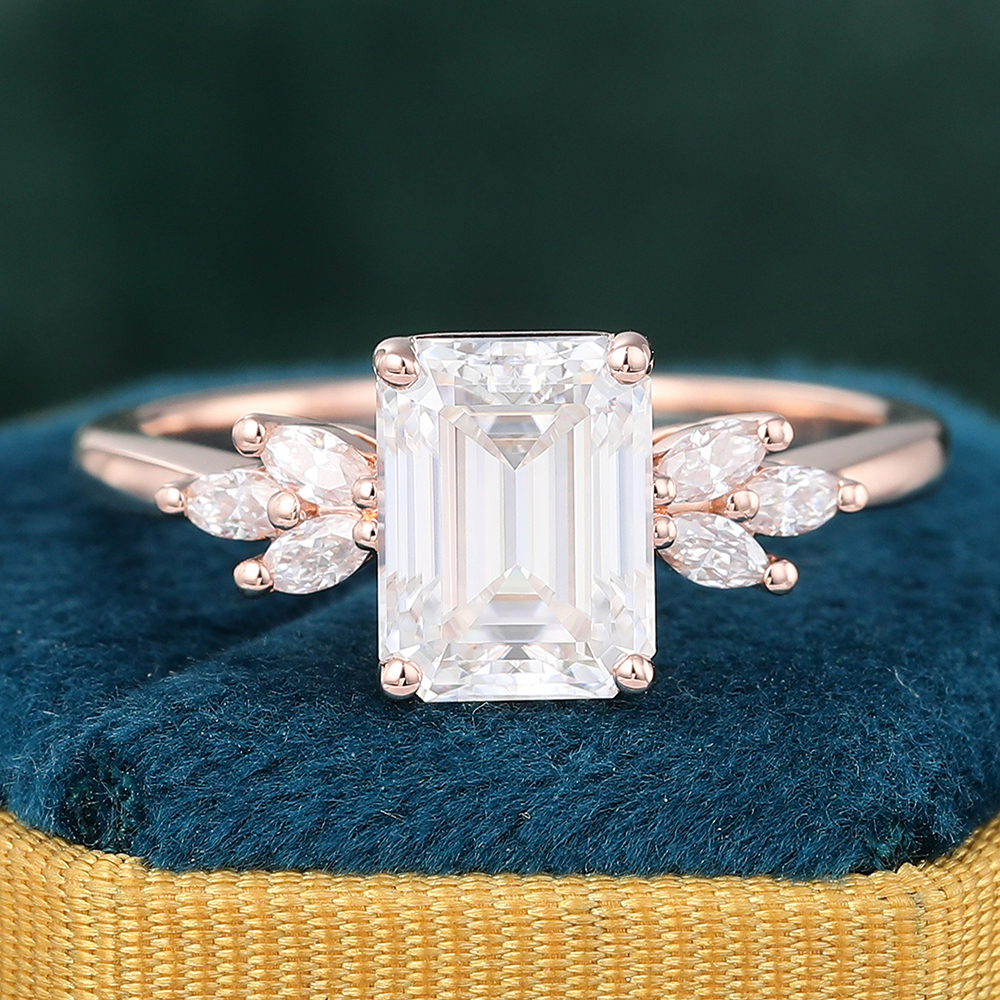 |
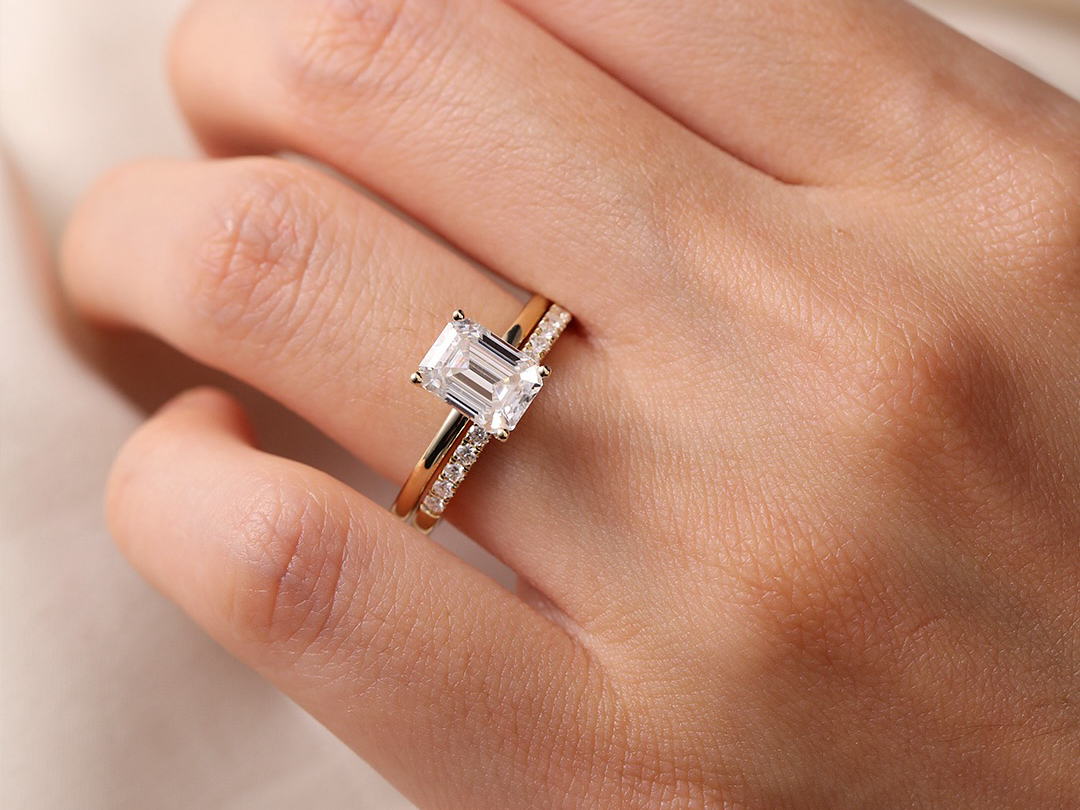
| Vintage Emerald Cut Moissanite Engagement Ring Diamond Accents Bridal Ring |
Factors to Consider When Buying a Moissanite Ring
The cut, color grade, setting security, metal choice, and lifestyle compatibility of a moissanite ring directly affect long-term satisfaction.
- Cut Quality: A "brilliant cut" maximizes the stone's fire. Ensure the facets are symmetrical.
- Color Grade: Aim for the D-E-F range (colorless). Juyoyo specializes in these premium grades to ensure your ring never appears "yellow" or "off-white."
- Certification: Always ask for a GRA certificate or similar authentication to guarantee the stone's properties.
- Setting Style: Secure settings protect the stone during daily wear.
- Metal Choice: The type of metal (gold, platinum, or silver) affects durability and comfort.
- Lifestyle Needs: Active lifestyles benefit from low-profile, secure designs.
For a deeper, step-by-step breakdown of each factor, including how to select the best cut, color, and setting for your lifestyle, refer to our comprehensive Moissanite Rings Buying Guide.
Who Should Choose a Moissanite Ring?
Moissanite is ideal for buyers seeking maximum visual impact, ethical sourcing, and long-term durability at a lower cost than diamonds.
It especially appeals to couples seeking engagement rings that reflect modern priorities rather than tradition alone.
Those primarily focused on investment or resale value may prefer diamonds, but for most people who wear rings every day, moissanite offers superior practical benefits.
Conclusion
The benefits of wearing a moissanite ring combine beauty, performance, and meaning in one gemstone. With its exceptional brilliance, proven durability, ethical origins, and affordable price, moissanite sets a new standard for modern fine jewelry—one that aligns perfectly with Juyoyo's thoughtful craftsmanship philosophy.
Ready to find yours? Explore Juyoyo’s collection of high-quality, affordable moissanite rings!
Frequently Asked Questions (FAQs)
Is Moissanite Suitable for Everyday Wear?
Yes. With a Mohs hardness rating of 9.25, moissanite is highly resistant to scratches and ideal for daily wear.
Is Moissanite Suitable for Engagement Rings?
Absolutely. Its durability, symbolism, and value make it one of the most popular choices for modern engagement rings.
Will Moissanite Set Off a Diamond Tester?
Yes, since most basic diamond testers measure thermal conductivity. Since moissanite conducts heat similarly to diamonds, it often "passes" as a diamond. However, you would need a specialized "moissanite tester" that measures electrical conductivity to tell them apart.
Does Moissanite Lose Its Sparkle or Turn Cloudy?
No, unlike cubic zirconia, moissanite is chemically stable and does not change color or become cloudy over time. Any "cloudiness" that people see is usually just surface oil or dirt that can easily be cleaned away with soap and water.
Is Moissanite a Fake Diamond?
No, moissanite is a synthetic gemstone that can be created in a lab. Calling it a "fake diamond" is like calling a ruby a "fake sapphire." It is its own distinct mineral with superior optical properties.
Does Moissanite Look Different from a Diamond?
Moissanite has more fire and sparkle, which some people prefer. This difference is optical rather than an indication of lower quality.
Comment