
Tree Agate vs Moss Agate: Differences, Meanings, and How to Choose
Dec 06,2025 | Juyoyo
Agate enthusiasts often ask, "Is tree agate the same as moss agate?" The answer is that agate names can be confusing, especially when comparing tree agate vs moss agate for the first time. Many people land on this page with one of three goals:
- Identify a stone they already own
- Pick the best stone for jewelry or gifts
- Choose a reputable place to buy authentic agate
Great news! This guide will walk you through five easy tests, provide a quick comparison, and buying guide to help you decide with confidence. If you want clarity, confidence, and practical insights, you're in the right place.
The fastest difference:
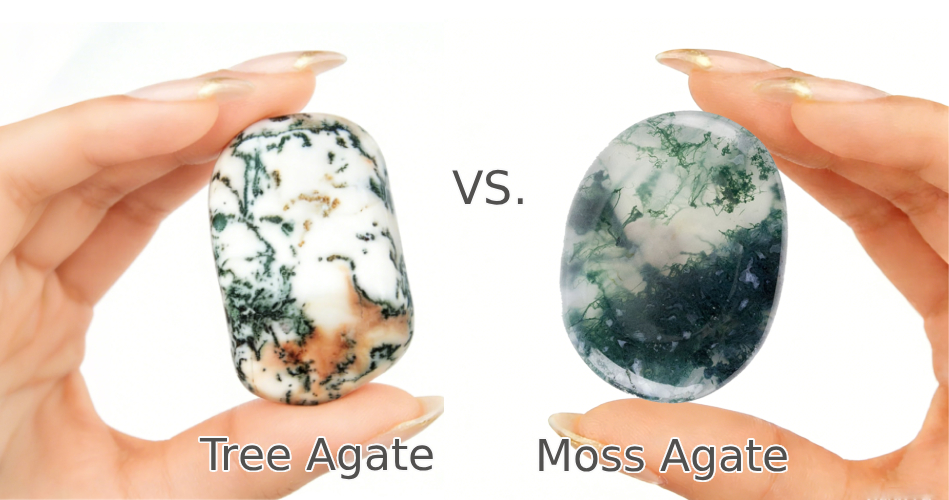
- Moss agate is semi-translucent with soft, moss-like inclusions. Light passes through it.
- Tree agate, on the other hand, is opaque with stronger, branch-like dendritic patterns. Light doesn't pass through it.
What Is Agate?
Both stones are varieties of chalcedony, a microcrystalline mineral in the quartz family made of silicon dioxide (SiO₂). This means:
- Solid scratch resistance (great for everyday jewelry)
- Beautiful natural inclusions
- Suitable for rings, pendants, and beads when set properly
The magic lies not in chemical differences, but in visual and structural differences, which is exactly what users care about when comparing these two stones.
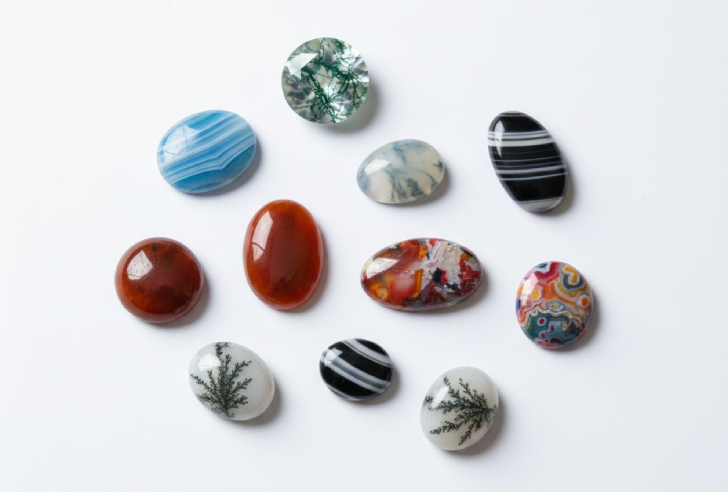
Tree Agate vs. Moss Agate: A Quick Comparison
Both tree and moss agate have a quartz foundation, but they differ significantly in appearance, structure, and ideal uses.
|
Feature |
Moss Agate |
Tree Agate |
|
Transparency |
Semi-translucent to translucent |
Opaque, non-translucent |
|
Inclusions |
Soft, foggy, mossy filaments |
Bold, branch-like dendrites |
|
Base Color |
Milky, grayish, light cream, sometimes clear |
White or cream solid base |
|
Best For Jewelry |
Engagement rings, pendants, thin slabs, cabochons |
Beads, statement rings, carvings |
|
Vibe/Look |
Misty, dreamy, organic |
Clear, contrasty, forest-like |
|
Rarity/Local Collecting |
Montana material popular in US |
India and Brazil material common |
|
Ideal Gift Symbolism |
Growth, resilience, harmony |
Stability, patience, connection |
The quickest way to distinguish between tree agate and moss agate is to look at their transparency and inclusion structures. Moss agate is transparent and looks misty inside. Tree agate, on the other hand, blocks light and has clear botanical dendrites on a white background.
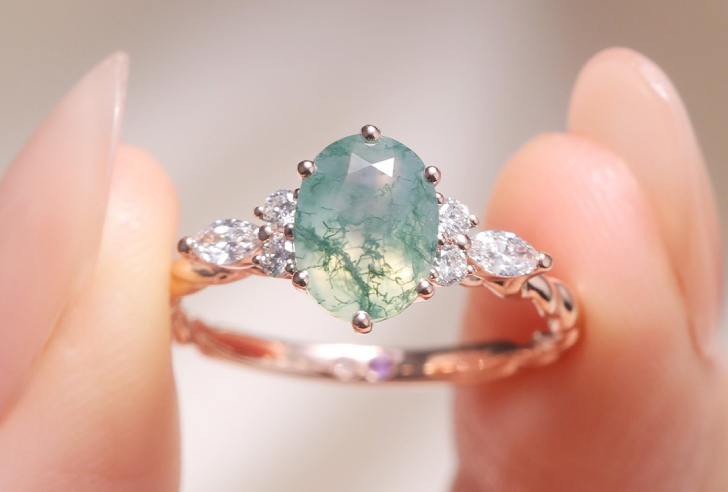
The Deep Dive: Differences Between Tree Agate vs Moss Agate
Understanding the reasons behind their visual differences is key to never confusing them again. Let's break down the most important factors:
1. The Foundation: Base Color and Transparency
This is the most reliable identifier.
- Tree Agate: Imagine a bright, opaque, milky white canvas. It has no transparency. The white is dominant and solid, like porcelain. This pure base allows the dark dendritic patterns to contrast sharply, creating the signature "winter tree" effect.
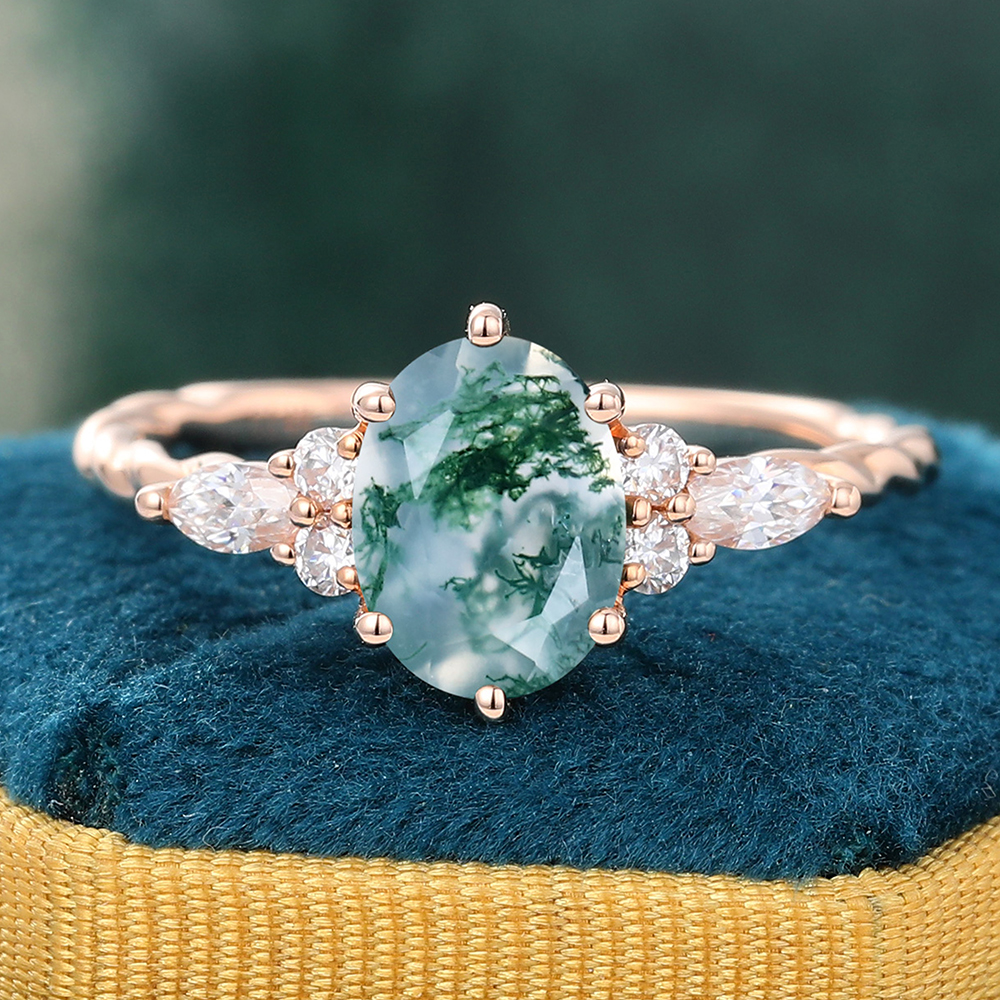
- Moss Agate: Picture clear quartz or a slightly hazy, translucent base. Light passes through it. The inclusions appear to float within this clear or semi-clear matrix, forming miniature landscape scenes. When held up to the light, the internal "moss" is often illuminated.
2. The Signature Pattern: Dendritic vs. Mossy
Both have organic patterns, but their structures are different.
- Tree Agate: The inclusions form true dendrites. This is a scientific term for crystal structures that resemble branching, tree-like shapes, such as frost on a window. These patterns are often singular and bold and resemble ferns, pine branches, or river delta maps. The branching is precise.
- Moss Agate: Its inclusions are fibrous, moss-like, or feathery. They appear soft, diffuse, and chaotic, resembling a clump of moss, an algae bloom, or lichen. There is no defined "trunk and branch" structure; it is more of a clustered, organic spread.
3. Formation and Geology: A Different Birth Story
This is the fascinating explanation for their differences.
- Tree Agate: It is a type of chalcedony that forms when manganese or iron oxide solutions crystallize within fissures of white, opaque agate. The dendritic patterns are essentially mineral "frost" growing in tiny cracks.
- Moss Agate: Technically, it is not a true agate because it lacks the banding that is typical of agates. It is a type of chalcedony with mineral inclusions, usually silicates like green hornblende. The "moss" was trapped during the stone's formation and did not form later in cracks. This is why it appears suspended.
Why does formation matter for value and care? Because moss agate’s inclusions are locked inside, it is highly resistant to wear. However, tree agate’s dendritic patterns are in fissures that reach the surface. This makes tree agate more susceptible to damage from harsh chemicals entering those micro-cracks.
4. Metaphysical and Healing Properties: Different Energies for Different Needs
The distinction here is profound and matters greatly to users.
Tree Agate: The Nurturer
- Core Theme: Steady, strengthening growth. It’s connected to the plant kingdom and the earth's gentle, sustaining power.
- Key Benefits: Promotes patience, inner stability, and resilience. It is called the “Good Luck”stone for farmers and gardeners. It is said to encourage a deep, nourishing connection to nature and alleviate feelings of isolation.
- Best For: Those planting new seeds—literal or metaphorical, such as a new project, habit, or phase of life—and in need of endurance and calm nourishment.
Moss Agate: The Revitalizer
- Core Theme: Fresh Abundance and Emotional Release. It is connected to the heart chakra and the concept of new growth after rain.
- Key Benefits: Attracts prosperity and opportunity. It encourages letting go of old patterns and embracing change. It enhances self-esteem and emotional balance. It is the traditional talisman for gardeners to ensure a bountiful harvest.
- Best For: Those seeking new beginnings, financial growth, or a way to release emotional baggage and make space for new opportunities.
5. Jewelry & Usage Examples
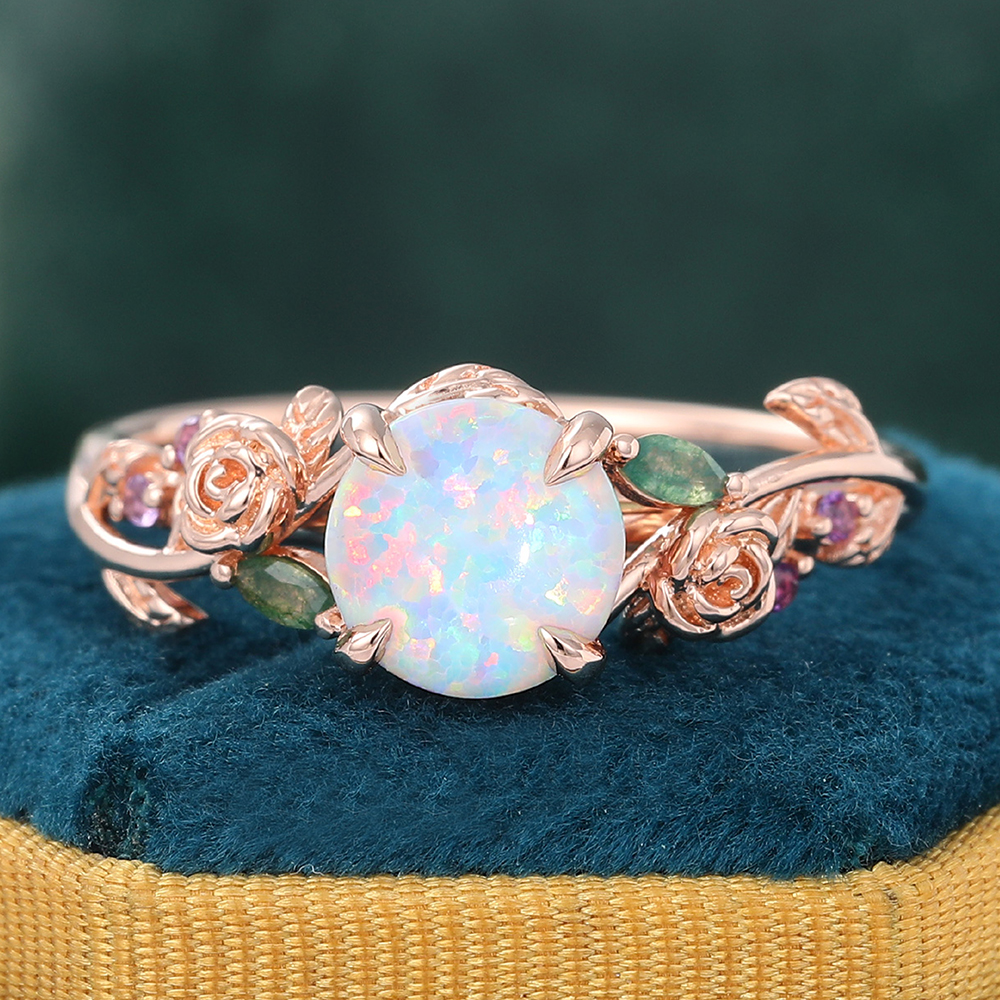
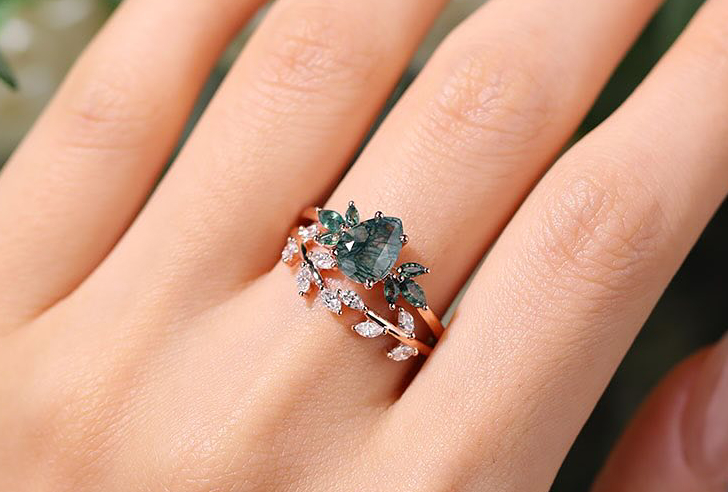
Tree agate is popular in beads, pendants, and bracelets because of its grounding symbolism and earthy appearance. Moss agate's translucent beauty makes it ideal for rings, earrings, and other decorative pieces that showcase its distinctive inclusions.
How to Tell Tree Agate from Moss Agate: 5 Foolproof Tests
These are the most reliable and beginner-friendly identification methods.
1) Backlight Test (Fastest)
Hold the agate stone up to a light source, such as the sun, a lamp, or a phone flashlight.
- If light passes through and the inclusions look misty or floating, it is moss agate.
- If no light passes through, it is the tree agate.
2) Inclusion Structure (What to visually expect)
- Moss agate looks like smudged greenery, foggy threads, or soft clumps — like moss underwater.
- Tree agate has defined branching dendrites that look like tree silhouettes or ferns.
Tip: If the green looks too "perfect and wispy soft," it's moss. If it looks like ink-painted branches, it's tree agate.
3) Observe the Base
- The moss agate base is clear, gray, or lightly milky, resembling frosted glass.
- The tree agate base is solid white or cream-colored, resembling ceramic or vanilla frosting.
4) Surface Luster
- Moss agate tends to polish into a smooth, wax-like luster.
- Tree agate can have a slightly glassier shine, especially at lighter angles.
5) Magnification Test
- Moss inclusions disperse like chlorophyll mist.
- Tree dendrites remain sharp, even under magnification.
Tree Agate vs. Moss Agate: Which One Should You Choose?
Don't choose based on the name; choose based on what you need it to do.
If you intend to BUY jewelry:
- Want a statement ring? Get a tree agate ring.
- Want a nature-inspired glowing pendant or ring? Get one made with moss agate.
- Want a durable bead bracelet? Try three agate beads.
- Want a unique engagement ring alternative? Consider protective moss agate ring styles.
If you're interested in crystal meanings:
- Need to let go of stress or old emotional baggage? Moss agate is for you.
- Need patience to grow something over months or years? Try tree agate.
- Want abundance, opportunity, and confidence? Moss agate again!
- Want to ground your heart during big life transitions? Try tree agate.
- You can wear them together: moss opens the door, and the tree gives you the stamina to walk through it.
If you want to identify a stone:
Use this 10-second checklist:
- Does light pass through it? → Moss agate
- Is the base solid white? → Tree agate
- Are the inclusions misty or sharp? (Misty = moss; sharp = tree.)
- Is it carved or beaded rather than a thin slab? It's likely a tree agate.
- Can you see the depth of the inclusion below the surface? Definitely moss agate.
Buying Guide: How to Avoid Fakes and Assess Value
Navigating the market requires a keen eye. Here’s what we’ve learned at Juyoyo after years in the trade.
Red Flags & Common Fakes:
- Dyed Agates: Plain white agate is often dyed green to mimic these stones. Telltale signs include unnaturally bright "Kool-Aid" green and color concentrated in cracks when viewed under magnification.
- Resin or Glass Imitations: These will have a uniform, plastic-like feel and potentially have air bubbles and patterns that look too perfectly painted or wispy.
What Determines Value & Price?
- Pattern Appeal: A striking, landscape-like pattern in either stone is worth more than a blur of color.
- Color Contrast: In tree agate, a high contrast between the white base and dark dendrites increases the stone's value. In moss agate, clear translucency with well-defined inclusions is prized.
- Origin: Some regions, such as Montana, are renowned for the quality of their agate and command a premium.
- Cut & Polish: A skilled, symmetrical cut that maximizes the pattern's beauty adds significant value.
Caring for Your Stones
Treat them with care to preserve their beauty.
- Cleaning: Use lukewarm water, mild soap, and a soft cloth. Avoid harsh chemicals, steam cleaners, and ultrasonic cleaners, as these can damage the inclusions or matrix.
- Charging: They both benefit from indirect sunlight (prolonged exposure to direct sunlight can fade moss agate) or from being placed on a bed of clear quartz or selenite.
- Storage: Wrap it in a soft cloth or place it in a fabric-lined box to prevent scratches from harder gems.
Conclusion: Embrace Their Unique Gifts
Tree agate and moss agate are testaments to nature’s artistry. One captures the stark yet beautiful silhouette of enduring life, while the other captures the lush and vibrant essence of growth itself.
Now that you know how to distinguish between the two, you can choose with confidence. Whether you’re drawn to the steadying nourishment of tree agate or the revitalizing abundance of moss agate, you’re inviting a piece of the earth's profound wisdom into your life.
Ready to find your perfect stone? Explore Juyoyo's curated collection of moss agate rings, featuring detailed, high-resolution images and full transparency into the origin and properties of every piece. Find more than a crystal—find a companion for your journey.
Tree Agate and Moss Agate FAQ
Is Tree Agate Rarer than Moss Agate?
Tree agate is generally less common due to its specific formation conditions. However, both stones are widely available in high-quality specimens.
Can Moss Agate Be Used in Engagement Rings?
Yes. Its hardness and unique appearance make moss agate suitable for engagement rings, especially for those seeking a distinctive, nature-inspired look.
How To Tell Fake Agate From Real?
Real agates have natural inclusions and irregular, unique patterns. Synthetic or fake stones often have uniform patterns or unnatural colors. Purchasing from reputable sources like Juyoyo ensures authenticity.
Can I Wear Tree Agate and Moss Agate Together?
Absolutely! They create a beautiful synergistic energy. Moss agate attracts new opportunities, while tree agate provides the stability and patience needed to bring them to fruition.
Do Moss Agate and Tree Agate Scratch Easily?
No, both are fairly scratch-resistant (around 6.5-7 on the Mohs scale) and suitable for daily use when properly set.
Comment