
Are Opals Bad Luck? Uncovering the Truth Behind the Superstition
Oct 25,2025 | Juyoyo
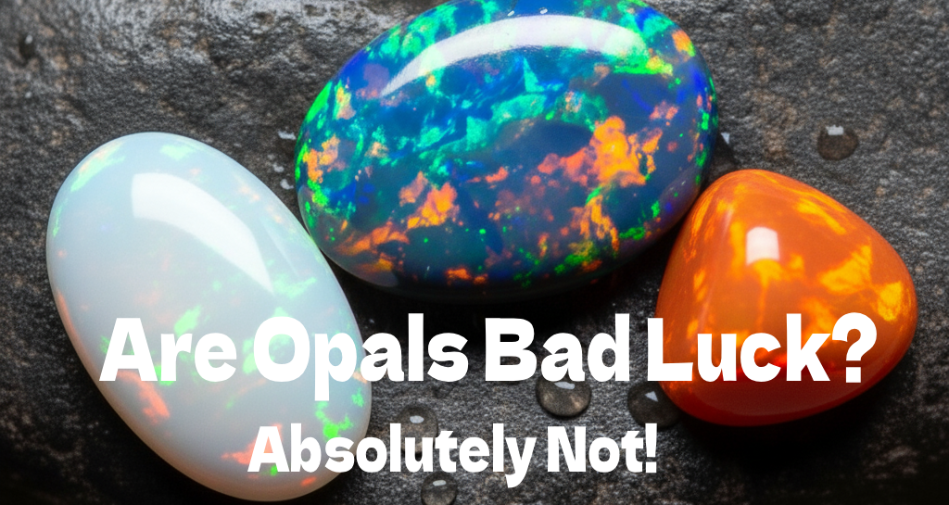
The opal. A mesmerizing galaxy of color, a stone so unique that no two are ever alike. Despite their beauty, opals have an unusual reputation. Some believe they bring misfortune. If you’ve ever wondered whether opal rings are unlucky or make poor engagement rings, you’re not alone.
Let's put your mind at ease: No, opals are not bad luck. This damaging superstition is not an ancient belief. It's a surprisingly modern myth born from a 19th-century work of fiction and likely amplified by savvy marketing.
In this article, we’ll explore the origins of this superstition, separate fact from fiction, and reveal why opal engagement rings are safe and meaningful to wear.
The Origin of the "Bad Luck" Myth
1. Medieval Misconceptions and the "Evil Eye"
In medieval Europe, opals were admired and feared. Their unique play of color—the ability to reflect a spectrum of hues—was misunderstood. People associated this shifting appearance with unpredictability and even dark magic. Some believed that opals could grant invisibility, linking them to deception and mischief.
However, this negativity was far from universal. Ancient Romans, for instance, viewed opals as symbols of purity and hope. The Roman scholar Pliny the Elder described opals as containing "the fire of the ruby, the purple of the amethyst, and the sea-green of the emerald."
2. The Turning Point: Sir Walter Scott's Anne of Geierstein
Modern superstition gained traction in the 19th century thanks to Scott's novel.
Scott published his bestselling Gothic novel in 1829. In the story, Lady Hermione wears a stunning opal in her hair. Scott vividly describes it:
"...it gleamed with a thousand changing hues as the wearer’s spirits rose or fell."
The opal was magical, flashing red when Lady Hermione was angry and sparkling when she was happy. However, the plot takes a dark turn. During a christening, a drop of holy water accidentally splashes onto the stone. The stone instantly loses its fire and turns "dull, milky white." Lady Hermione, who is later revealed to be an enchanted princess, faints. She is carried to her room. The next day, she is nothing but a small pile of ashes.
While the novel was fictional, its impact was real. Victorian readers conflated the story with reality, and opals became associated with misfortune. Competitors in the gem trade, particularly diamond merchants, seized this opportunity to undermine the popularity of opals. Within a year, sales plummeted by an estimated 50%, remaining low for decades.

3. Did De Beers Fan the Flames of Opals Being Bad Luck? The Diamond "Conspiracy"
The Sir Walter Scott novel explains how the myth began, but not why it persisted so stubbornly into the 20th century, especially in America.
In the early 1900s, diamond miners—particularly the De Beers conglomerate—were launching one of the most successful marketing campaigns in history. Their goal was to make diamonds the only choice for engagement rings.
Think about it: Opals are soft, delicate, and famously nontraditional. They are the opposite of the "A Diamond Is Forever" slogan, which promises indestructibility and eternity.
Although there is no "smoking gun" document proving that De Beers actively spread anti-opal rumors, it was convenient for them that the "bad luck" myth was already circulating. By not correcting the superstition—and perhaps even encouraging jewelers to steer clients toward more "durable" (and profitable) diamonds—De Beers effectively sidelined their iridescent competition.
The combination of a popular novel and a brilliant marketing campaign created the perfect storm that cemented the opal's unlucky reputation.
Debunking the Myth: Opals as Symbols of Good Fortune
Before Sir Walter Scott, opals were universally revered.
- Ancient Rome (also known as the "Queen of Gems"): Romans considered the opal the most precious gemstone. The historian Pliny the Elder wrote that the opal "contains the glories of the most precious stones...the fire of the carbuncle, the brilliant purple of the amethyst, and the sea-green of the emerald, all shining together in incredible union." They saw it as the ultimate symbol of hope and purity. In fact, the Roman senator Nonius chose exile over selling his magnificent opal to Mark Antony.
- The Middle Ages (the "Eye Stone"): During this period, the opal was called ophthalmios ("eye stone") and was believed to cure eye ailments. It was also said to render its wearer invisible at will, making it a prized amulet for thieves and spies.
- The Royal Reversal: We can thank Queen Victoria for the opal's comeback. She adored opals and ignored the superstition surrounding them. She wore opals throughout her reign and gave her daughters beautiful opal jewelry as wedding gifts. Her royal endorsement single-handedly revived the British and Australian opal industries.
Apart from their good luck symbolism, opals carry rich symbolism.
- Creativity & Inspiration: Artists and writers have long associated opals with imagination.
- Love & Loyalty: The Romans believed that opals symbolized fidelity, making them meaningful gifts.
- Individuality: No two opals are alike, making them perfect for those who value uniqueness.
At Juyoyo, we celebrate this uniqueness by curating opal jewelry that tells a personal story, whether as a birthstone, romantic gift, or statement of self-expression.
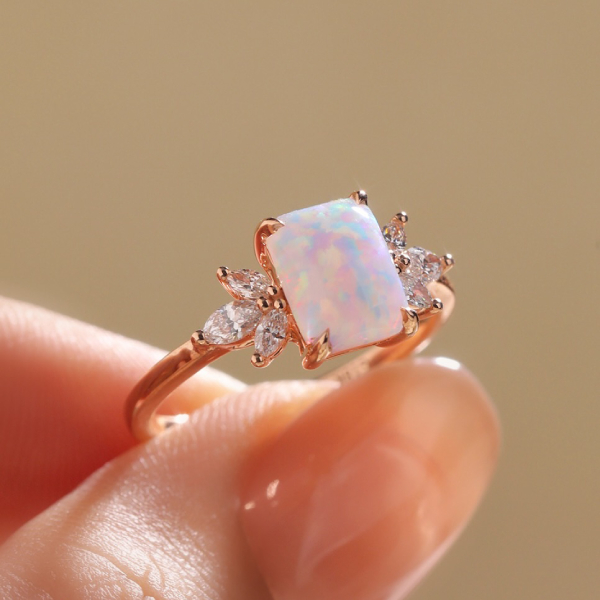 |
| Emerald Cut Opal Engagement Ring Diamond Cluster Ring for Women Anniversary Gift |
Debunking Common Opal Superstitions
1."Opals Are Bad Luck If They’re Not Your Birthstone"
Some believe that only those born in October—since opal is October’s birthstone—can safely wear opals.
The truth is that this superstition has no historical or scientific basis. In fact, opals were considered universally lucky in ancient Rome and the Middle Ages, regardless of birth month. Today, anyone can wear opals and enjoy their beauty.
2. “Opals Should Never Be Given as Gifts.”
According to folklore, giving an opal as a gift will bring misfortune to the recipient.
The truth is that this belief likely arose from Victorian-era superstitions. In reality, opals are meaningful gifts that symbolize love, loyalty, and creativity. Many cultures, including Australian traditions, see opals as tokens of good fortune.
3. "Opal Engagement Rings Are Unlucky."
Some say opals bring bad luck in marriage, making them unsuitable for engagement rings.
The truth is that this idea stems from 19th-century novels. It also stems from marketing by the diamond industry. The idea does not stem from reality. In fact, opals symbolize fidelity and passion. Opal engagement rings are becoming a popular choice among modern couples, thanks to their distinctive beauty and personal significance.
4. "Opals Crack Easily and Bring Bad Luck."
Some people assume that opals are fragile and therefore shouldn’t be worn daily.
The truth is that while opals are softer than diamonds (ranging from 5.5 to 6.5 on the Mohs scale), they can be worn daily with proper care. Setting opals in protective designs and avoiding harsh chemicals ensures they will last for generations.
5. "Opals Absorb Negative Energy"
Some metaphysical traditions claim that opals act like sponges, absorbing negative emotions or bad energy from their surroundings. This belief has led some people to worry that wearing opals could attract misfortune or amplify sadness.
The truth is that, scientifically, opals are made of hydrated silica with microscopic spheres that diffract light. There is no evidence that they can “absorb” energy, positive or negative. In fact, opals are celebrated for their ability to inspire creativity and amplify emotions.
Should You Wear Opal Rings?
Absolutely! Here's why:
- For October Birthdays: Opals are your birthstone, symbolizing hope and creativity. Giving a piece of opal jewelry to your October friend is the best, most meaningful gift.
- For Engagement Rings: Modern couples increasingly choose opals for their uniqueness and symbolism of loyalty.
- For Collectors: Opals are prized for their rarity and play of color, especially black opals from Australia.
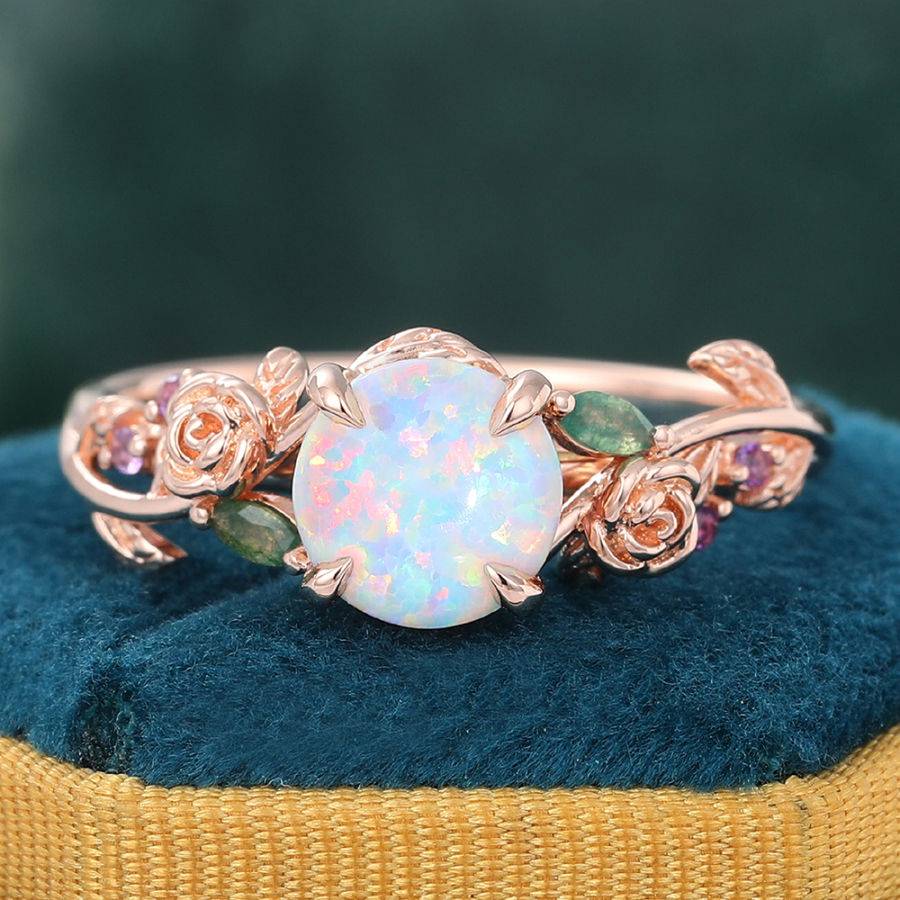 |
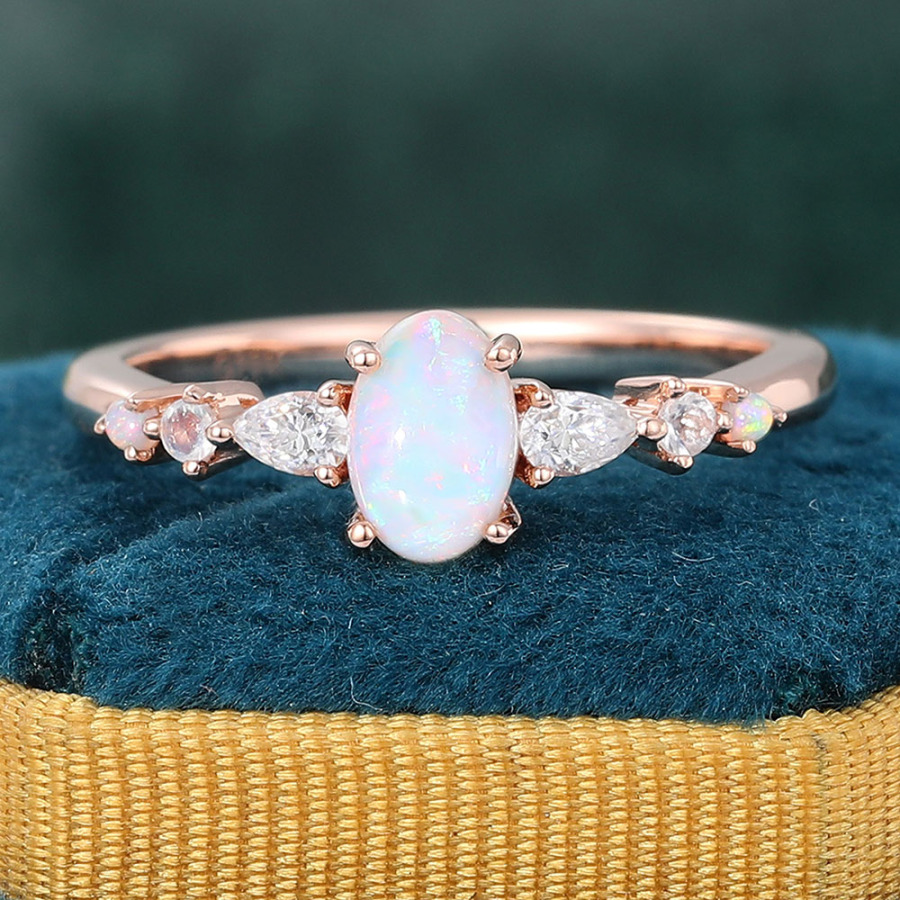 |
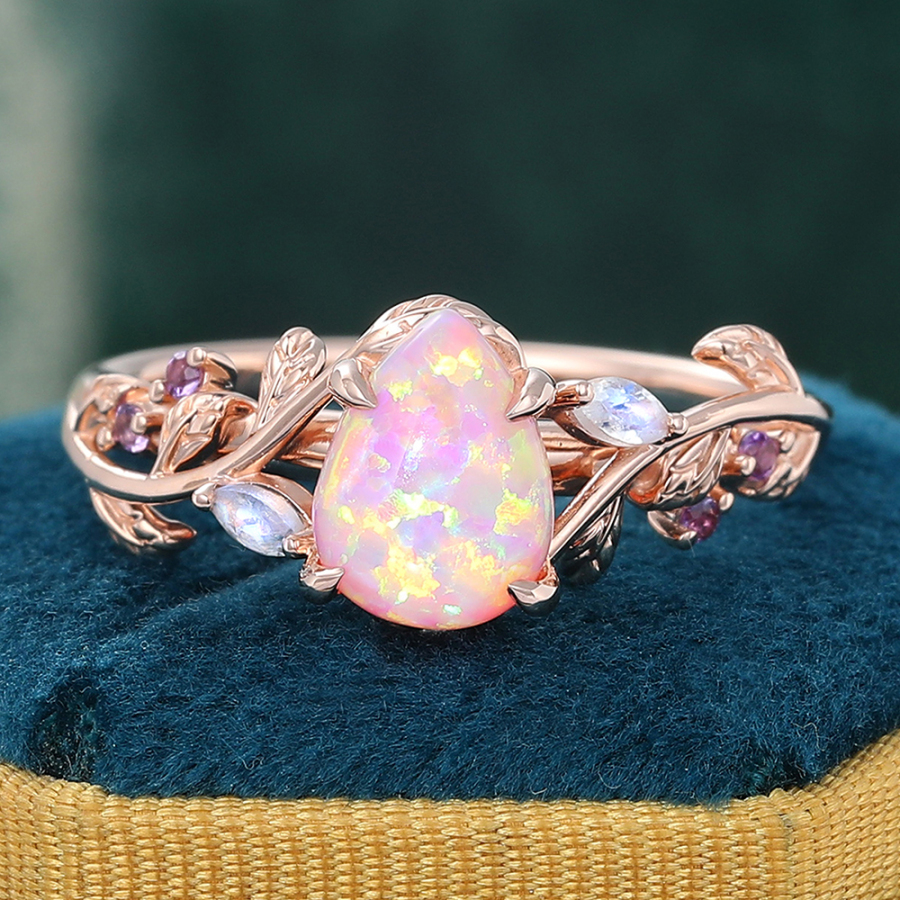 |
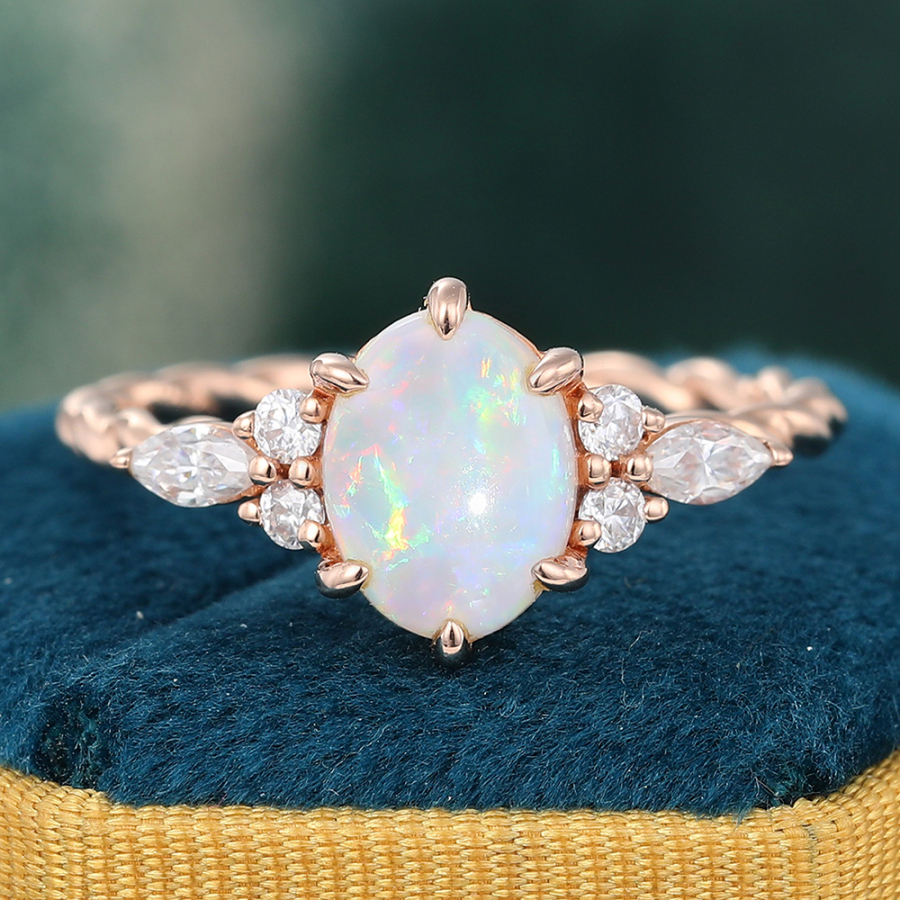 |
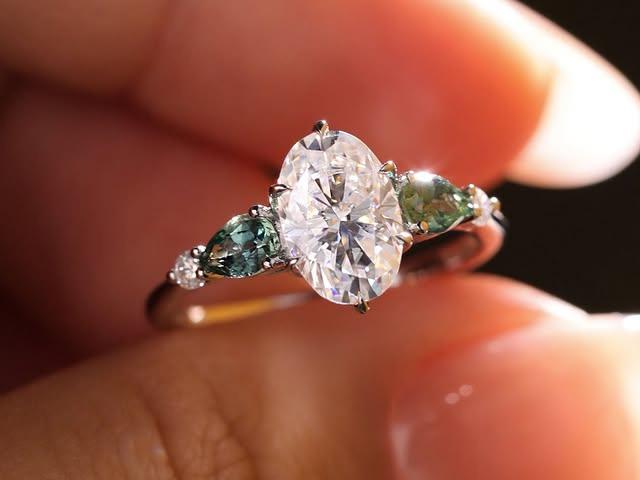
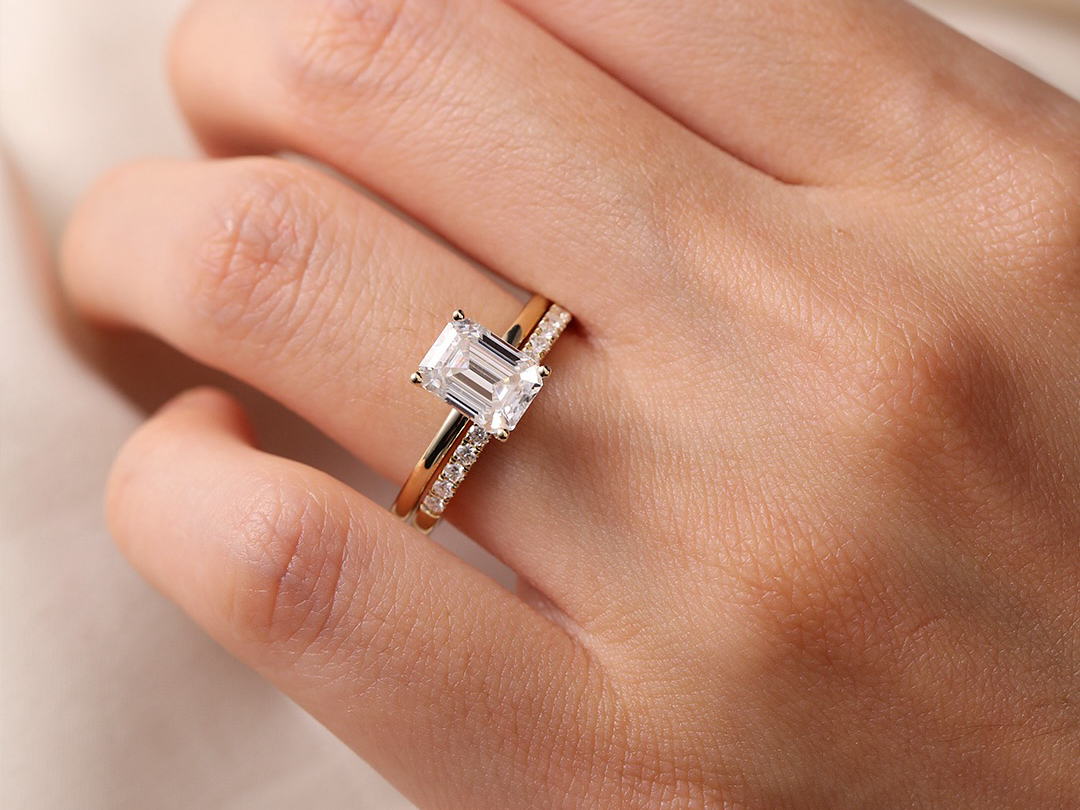
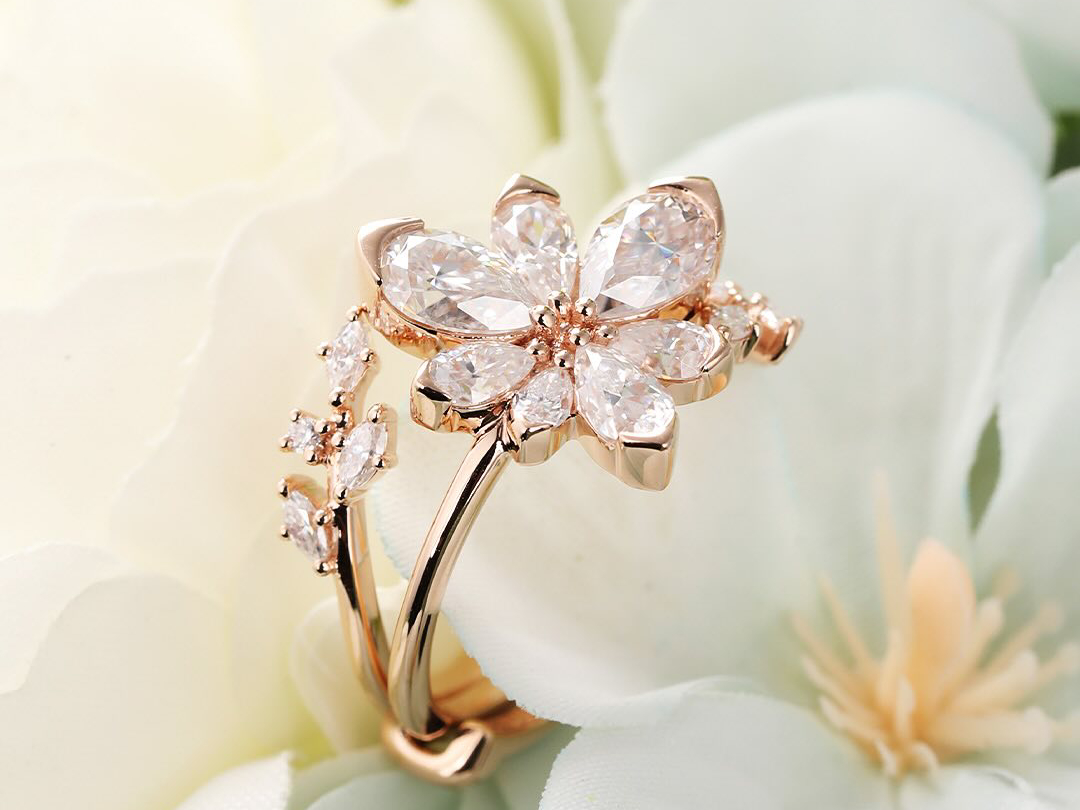
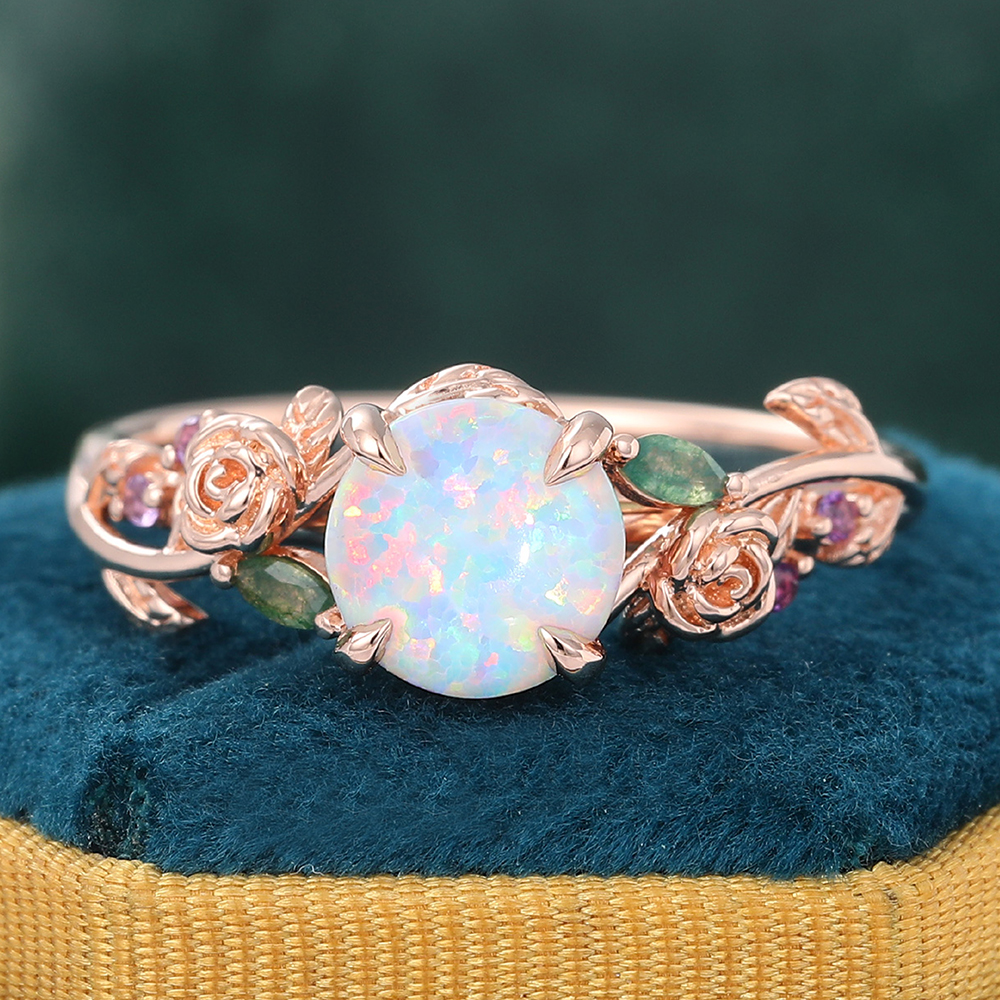
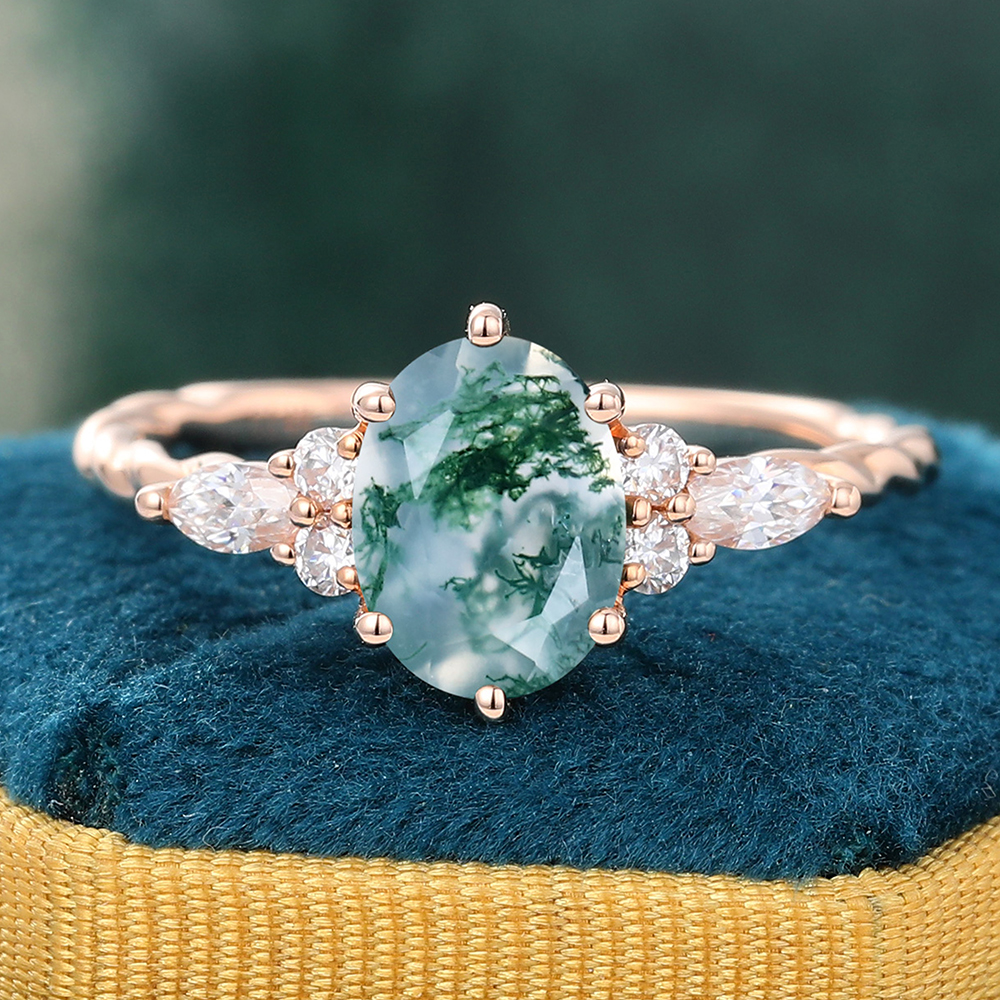
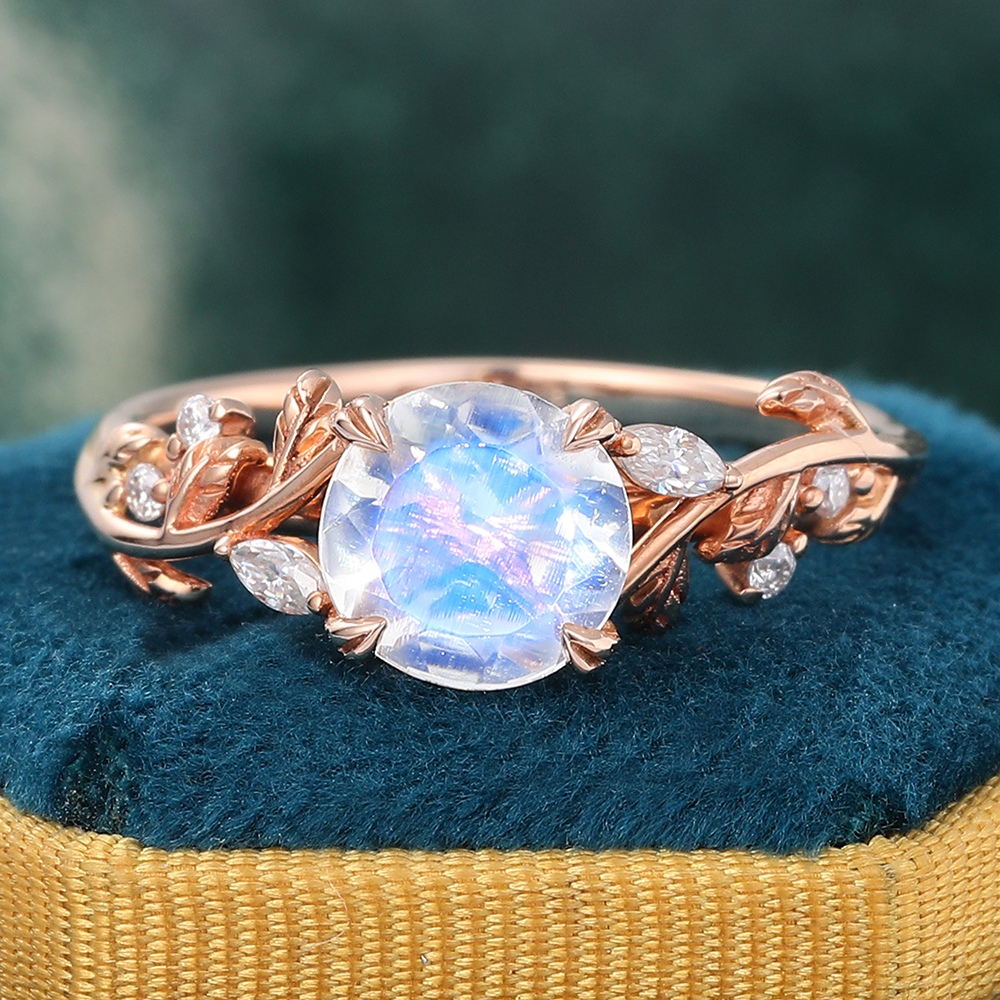
| 14K Rose Gold Round Opal Engagement Ring Rose Leaf Nature Inspired Wedding Ring | Oval Cut Opal Ring with Moissanite & Moonstone Accents for Women | Rose Gold Pear Shaped Pink Opal Engagement Ring Nature Inspired Leaf Vine Promise Ring | Oval Cut Opal Rose Gold Twisted Engagement Ring |
How to Wear & Care for Opals
Although opals are more delicate than harder gems like diamonds or sapphires, don't let that stop you from enjoying their mesmerizing beauty. With a few simple practices, you can wear and preserve your opals' magic with confidence for years to come.
Wearing Your Opals Smartly:
- The "Last On, First Off" Rule: Put your opal ring on after applying makeup, perfume, and hairspray. Take it off first when you get home, before doing any chores or washing your hands.
- Activity Matters: It is essential to remove opal jewelry before engaging in physical activities, housework, gardening, or swimming, as these activities may be detrimental to the jewelry's integrity.
- Choose the Right Setting: For rings, protective bezel settings that encircle the stone are ideal. Opal pendants and earrings are excellent low-risk choices because they are less prone to knocks.
- Choosing the Right Opal:
- Black Opals: These are highly prized for their dark body tone and vibrant color play.
- White Opals: Milky or translucent with pastel flashes.
- Fire Opals: They are transparent to translucent with a warm background color.
Care Tips for Opal Jewelry:
- Avoid harsh chemicals and ultrasonic cleaners.
- Store your opal jewelry separately in a soft pouch.
- Gently clean with mild soap and water.
- With proper care, opals can be passed down for generations, just like any other fine gemstone.
Conclusion: Should You Buy or Wear an Opal?
So, are opals bad luck, or is it just a myth?
No, they are a symbol of good luck, tainted by a 19th-century ghost story.
The only power this superstition has is the power we give it. For 99% of human history, opals were cherished treasures.
Now that you know the truth, you can wear your opal with confidence and pride, as it has been worn for millennia.
Ready to find your story? Explore our curated Juyoyo collection of opal jewelry. From unique opal engagement rings to classic October birthstone pendants, you're sure to find a piece that speaks to your unique spirit.
Your Questions Answered: Busting Specific Opal Worries
Is It Bad Luck to Buy an Opal for Yourself?
Absolutely not! This is a modern fabrication that piggybacked on the original myth. There is no historical or folkloric basis for this belief. Buying a gemstone for yourself, especially a unique stone like an opal, is an act of self-love and empowerment, not bad luck.
Can Opal Rings Be Worn Every Day?
While opals are delicate, they can be worn daily if handled with care. Consider protective settings like bezels.
Are Opals Unlucky for Engagement Rings?
An opal engagement ring is a beautiful and meaningful choice. However, because of a myth, some people fear that it will doom a marriage. This is completely false. An opal engagement ring symbolizes a love that is as unique, passionate, and fiery as the stone itself. It's a statement of individuality.
Do Opals Bring Good Luck in Relationships?
In many cultures, opals symbolize love and passion. However, the power of a gemstone ultimately depends on your belief!
Are Synthetic Opals Less "Unlucky"?
No—the superstition applies to all opals. Lab-grown opals have the same physical and optical properties as natural ones.
Also Read
Opal Properties: Complete Guide to Physical & Spiritual Healing
The 10 Most Expensive Opal Gemstones in the World (And Why They're Worth Millions)
Diamond vs. Opal: Ultimate Guide to Price, Durability & Beauty
The Truth About Opal Engagement Rings: Why It Might Be the Perfect Choice for You
Comment