
Is Opal More Expensive Than Diamonds? The Surprising Truth About Price
Nov 01,2025 | Juyoyo
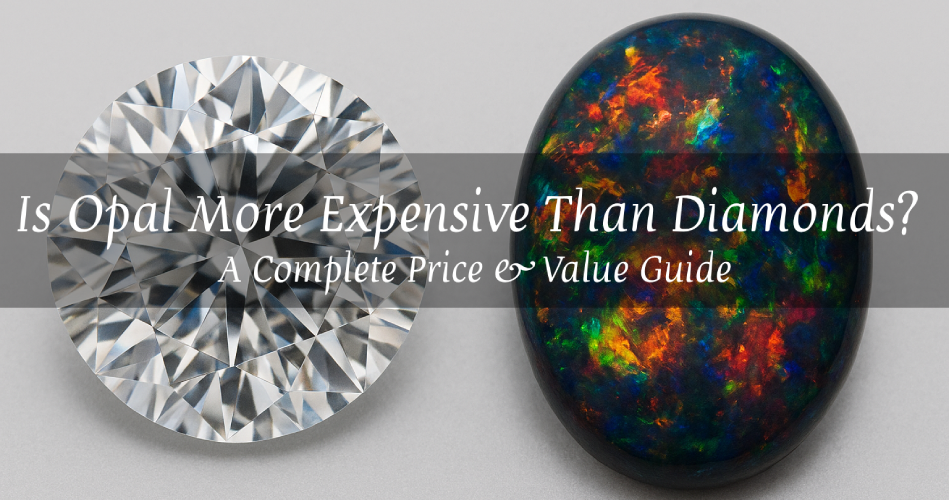
When people think of luxury gemstones, diamonds usually come to mind first. But opals, with their fiery flashes of color, often spark the question: Are opals more expensive than diamonds? The short answer is that diamonds are generally more expensive per carat, though rare opals can surpass many diamonds in value.
In this guide, we’ll break down the price comparison and explore what drives the value of each gemstone to help you decide which is the right choice for you.
Opal vs. Diamond on Price & Value
| Gemstone | Average Price per Carat | Average Price per Carat | Notes |
| Diamond | $1,500 – $16,000+ | $50,000+ | Prices depend on the 4Cs (carat, cut, color, clarity) |
| Opal | $50 – $5,000 | $10,000+ (Black Opal) | Value depends on rarity, color play, and origin |
👉 Key Takeaway: On average, a diamond costs significantly more than an opal of the same carat weight.
- For Accessible Beauty: Opal is the clear winner. With a smaller budget, you can acquire a stunning, sizeable opal that will become the centerpiece of your collection.
- For High-End Investment: both gems can reach astronomical prices, but the minimum price for a "respectable" diamond is significantly higher. The diamond market consistently values all qualifying stones highly, whereas the opal market has a much wider value spread.
Why Are Diamonds More Expensive?
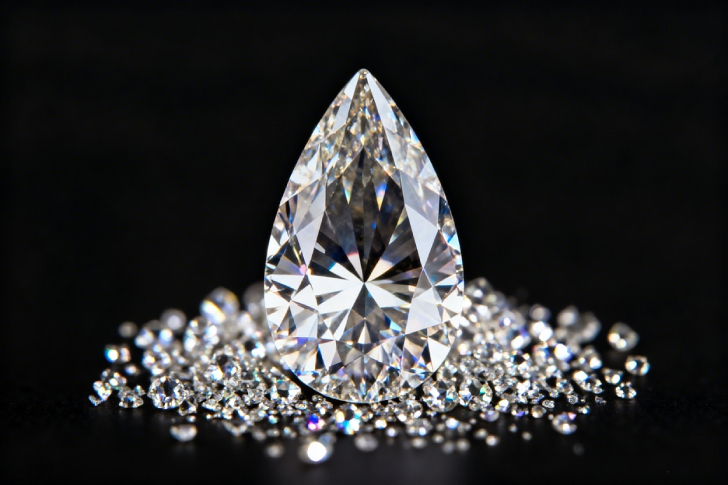
To understand the price comparison between opals and diamonds, we first need to know why diamonds are considered the benchmark of "expensive." Their value is standardized by the Gemological Institute of America (GIA) using the "4 Cs."
- Cut: Often called the most important "C," the cut grade (Excellent, Very Good, Good, etc.) determines how well the diamond interacts with light to create its signature sparkle, including brilliance, fire, and scintillation. A poor cut can make a high-color, high-clarity diamond appear dull.
- Color: Graded on a scale from D (colorless) to Z (light yellow or brown). The closer to D, the rarer and more expensive the stone. There are also "fancy color" diamonds (blue, pink, etc.) that have their own pricing scale and can be extremely expensive.
- Clarity: This measures the diamond's internal (inclusions) and external (blemishes) imperfections. Flawless (FL) diamonds are extremely rare, while diamonds in the VS (very slightly included) and SI (slightly included) ranges offer a good balance of an eye-clean appearance and value.
- Carat Weight: This is a measure of size. The price of a diamond increases exponentially with carat weight because larger diamonds are significantly rarer. For example, a 2-carat diamond of a given quality is always worth more than two 1-carat diamonds of the same quality.
This system makes diamond pricing very predictable. One of the most expensive stones you can buy is a 1-carat, D-color, flawless, excellent-cut diamond. This standardization, combined with brilliant marketing and the fact that diamonds are the hardest mineral on Earth (a 10 on the Mohs scale), gives diamonds their consistently high price.
The Value of an Opal: It’s All About the "Play of Color"
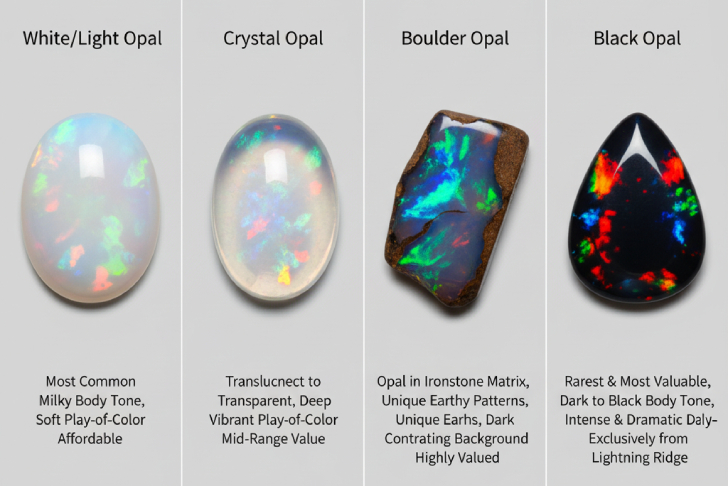
Unlike diamonds, which are valued using a strict, globally standardized system, the value of an opal is driven by its unique and mesmerizing beauty. The core of its worth lies in the play of color—the brilliant flashes of rainbow light that seem to dance within the stone.
This is why some opals are so expensive.
1. The Type of Opal (The Biggest Price Factor)
"Opal" is an umbrella term for a family of gems. A "white opal" is the most common type and what most people picture. A "black opal" is the rarest and most valuable.
- White/Light Opal: The most common type, with a milky white or light body tone. It is the most affordable and what you'll typically find in commercial jewelry.
- Crystal Opal: It is translucent or transparent, allowing you to see the play of color through the stone. It is more valuable than white opal.
- Boulder Opal: This unique Australian opal forms within a dark ironstone matrix. The dark background makes the colors stand out, and it is highly valued.
- Black Opal: The king of all opals. Found almost exclusively in Lightning Ridge, Australia, these opals have a dark or black "body tone." This dark background acts like a black canvas, making the play of color explode with electric intensity. It's a gem that rivals diamonds.
2. Play of Color
This is the rainbow flash that appears when the opal is moved. Its price is judged by:
- Brightness (Brilliance): A "dull" opal is inexpensive. An "excellent" opal that can be seen in low light is expensive.
- Colors: Red and orange fire are rarer and more valuable than green and blue alone. An opal displaying a full spectrum of colors is considered a top-tier gemstone.
- Pattern: Large, sweeping flashes of color ("harlequin" pattern) are rarer and more expensive than small pinfire patterns.
3. Rarity: Are Opals Rarer Than Diamonds?
This is a key part of the price puzzle.
- Diamonds: Gem-quality diamonds are rare. Large, flawless, colorless diamonds are extremely rare.
- Opals: Common white opals are not rare. However, gem-quality black opal is much rarer than diamonds.
Only one place on Earth, Lightning Ridge, produces a consistent supply of gem-quality black opal, and even that supply is dwindling. You could mine for months and not find a single high-quality red-on-black gemstone. This scarcity drives the price of top-tier opals into the stratosphere.
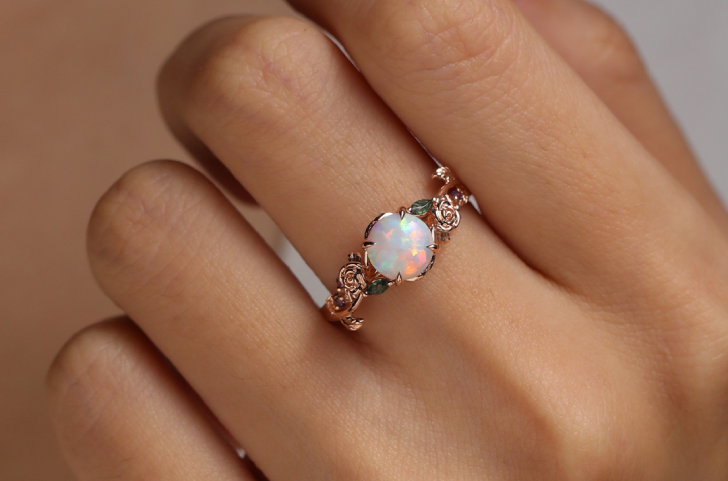 |
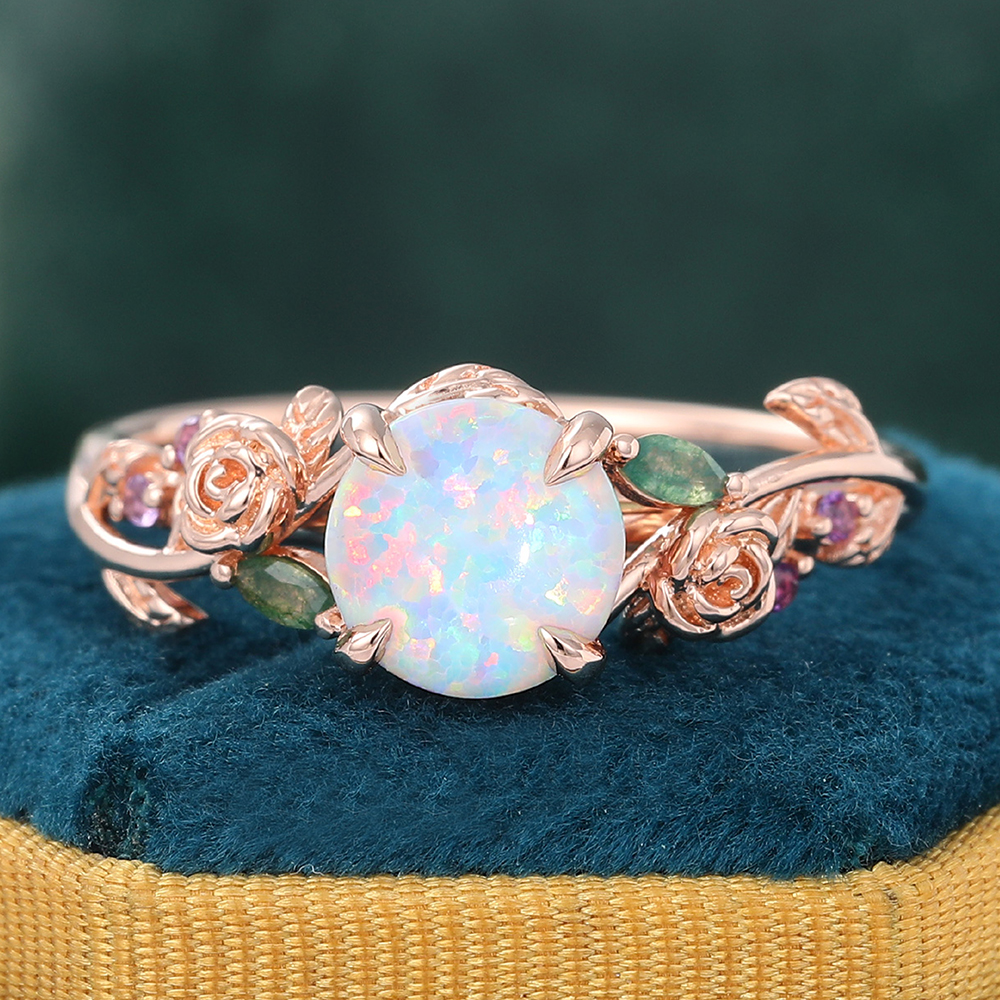
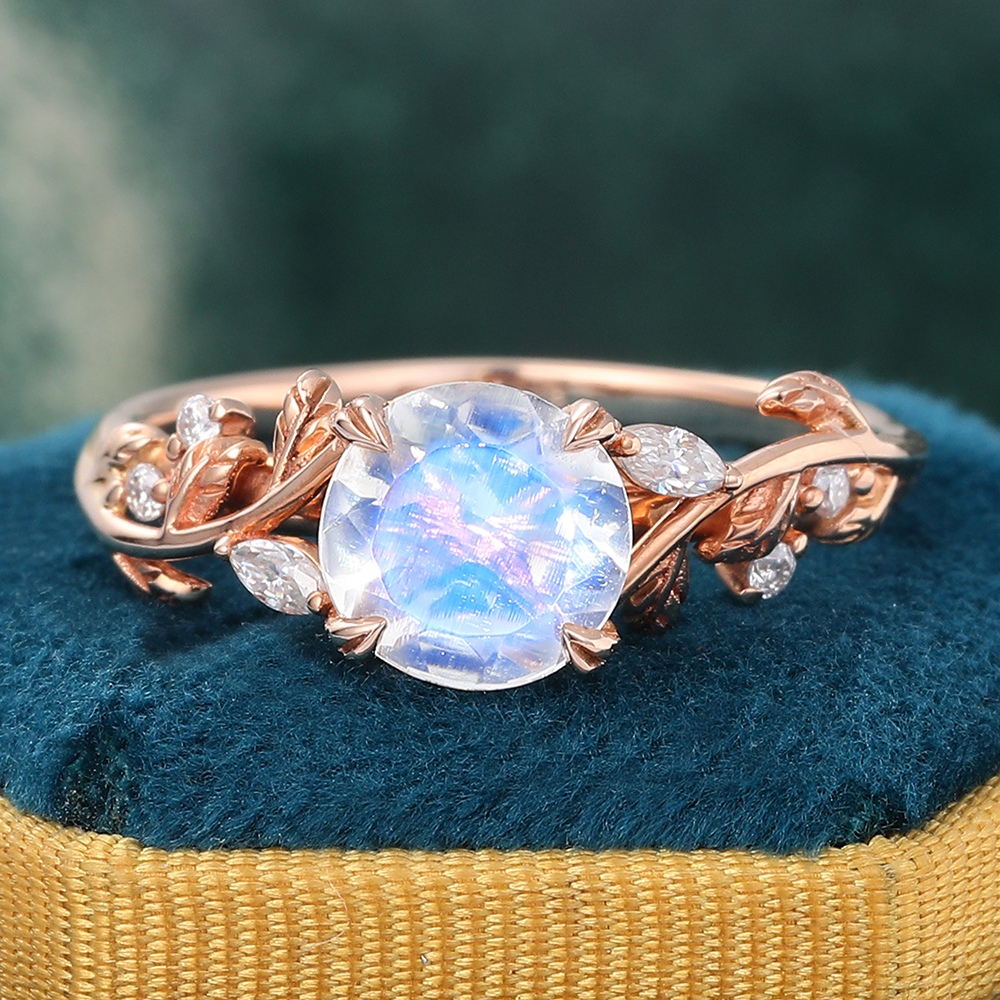
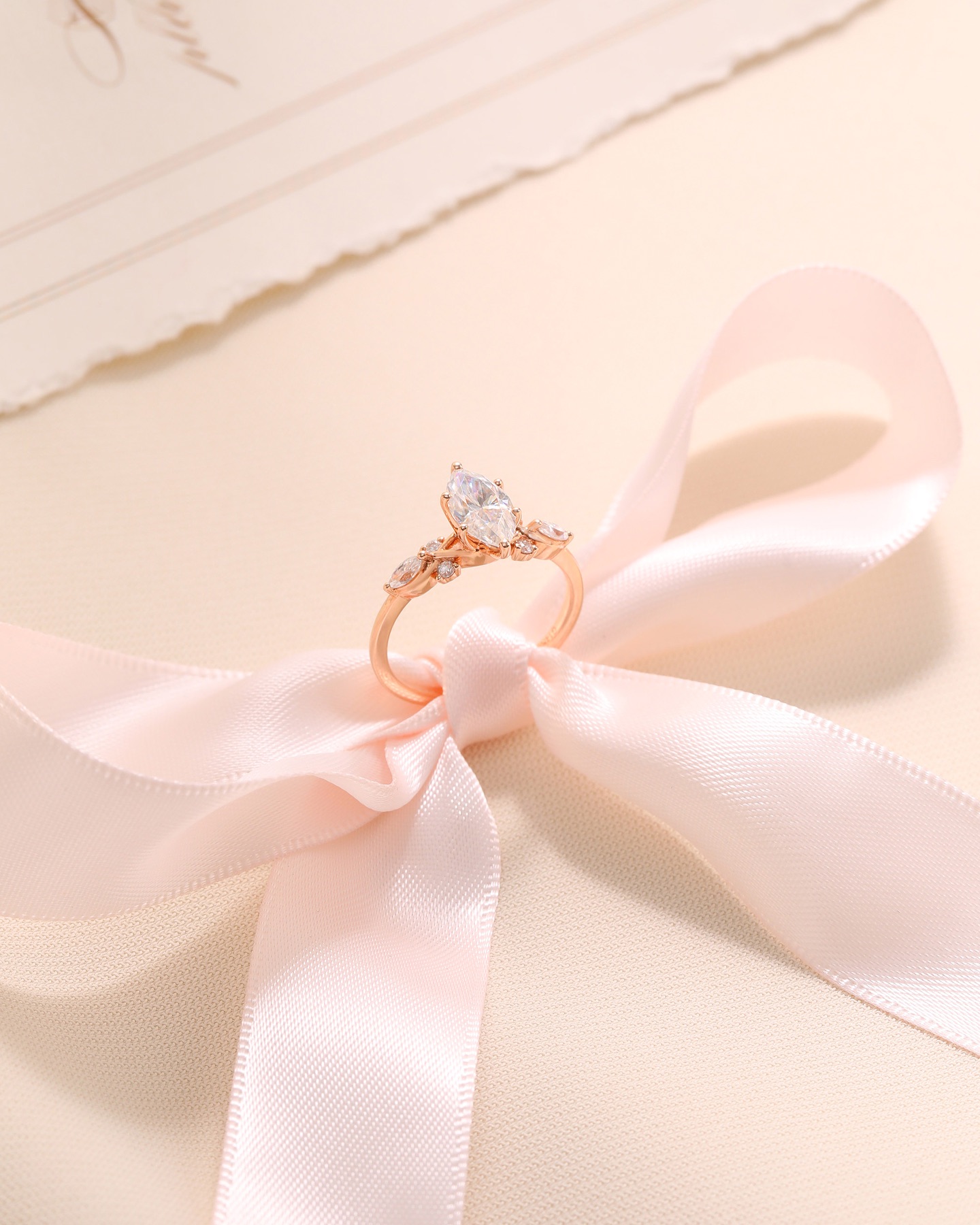
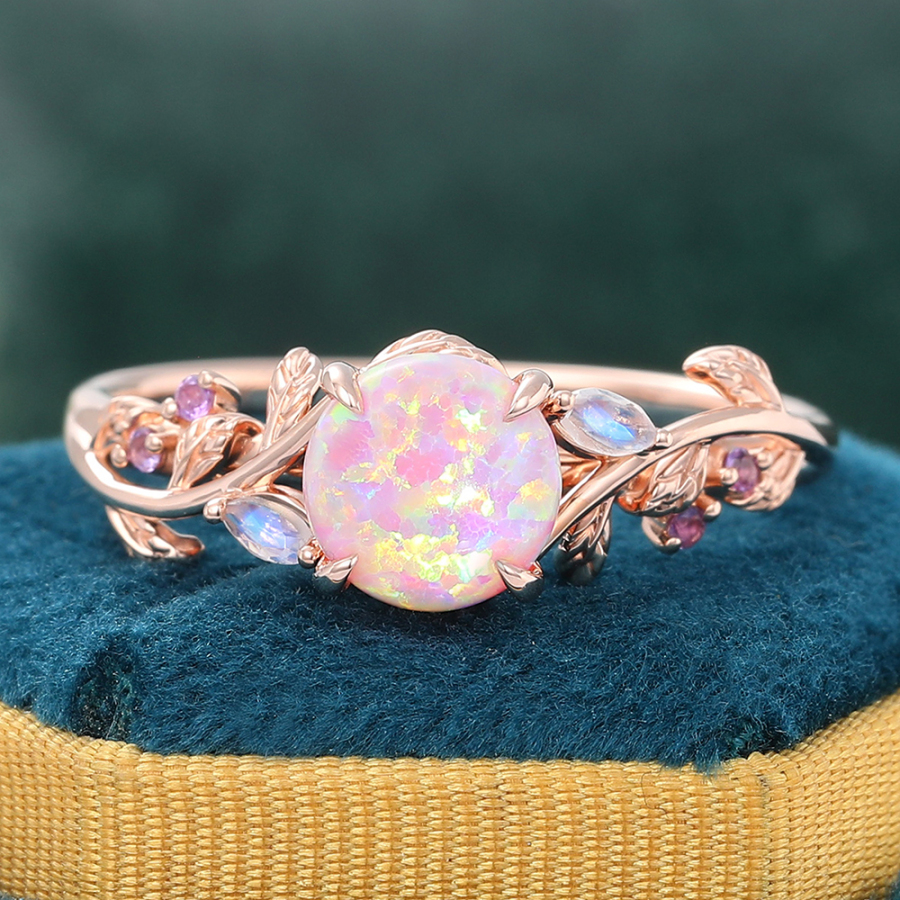
| 14K Rose Gold Round Opal Engagement Ring Rose Leaf Nature-Inspired Wedding Ring |
When Can Opal Be More Expensive Than Diamond? Three Real-World Scenarios
Let's be practical. An opal will cost more than a diamond in these three situations:
- A Rare Black Opal vs. a Standard "Mall" Diamond: A top-tier, two-carat black opal with brilliant red and green flashes can easily cost $20,000. A two-carat diamond with a mediocre cut, SI2 clarity, and K color might cost only $8,000–$10,000. In this case, the opal is both more expensive and more visually stunning, according to many.
- A Museum-Grade Opal vs. a Commercial-Grade Diamond: Specimens like the legendary "Virgin Rainbow" or "Olympic Australis" opals are priceless. Their value per carat far exceeds that of the average commercial-grade diamond used in mass-market jewelry.
- A Unique Collector's Piece vs. a Small Diamond Accent: A finely crafted boulder opal ring with a unique, landscape-like pattern may cost more than a simple solitaire necklace with a small, high-quality diamond because the opal is considered a one-of-a-kind work of art.
Continue reading: How Much is Opal Worth? Unveiling the Secrets to Opal Value
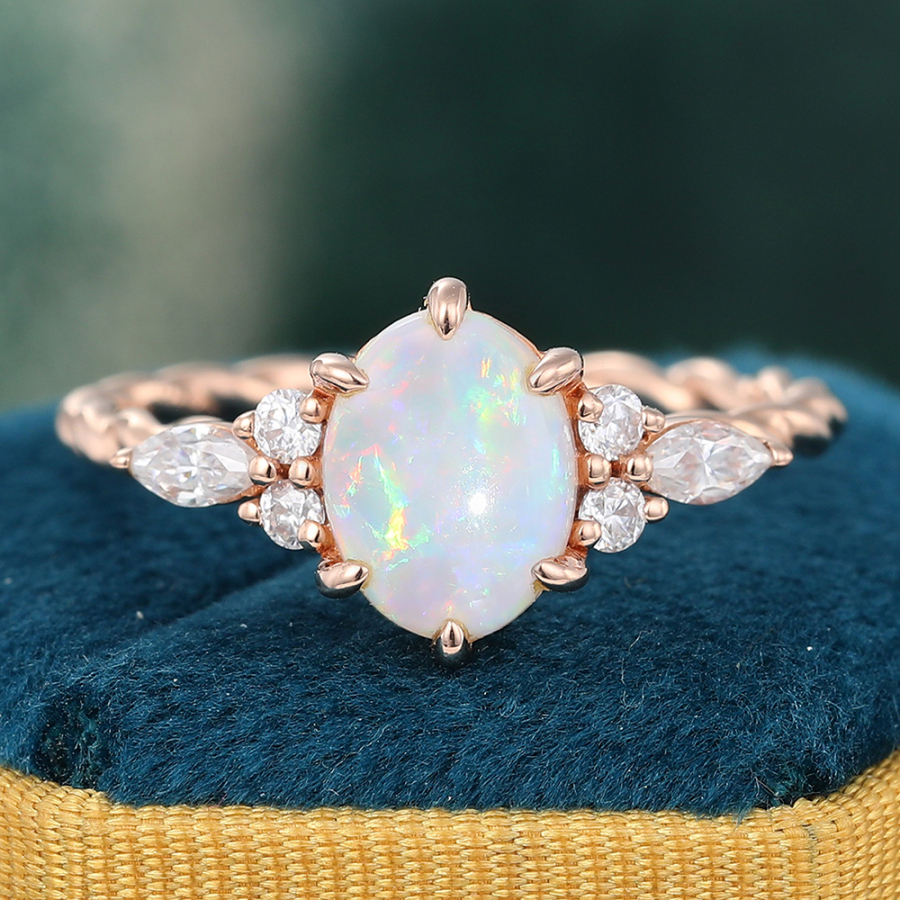
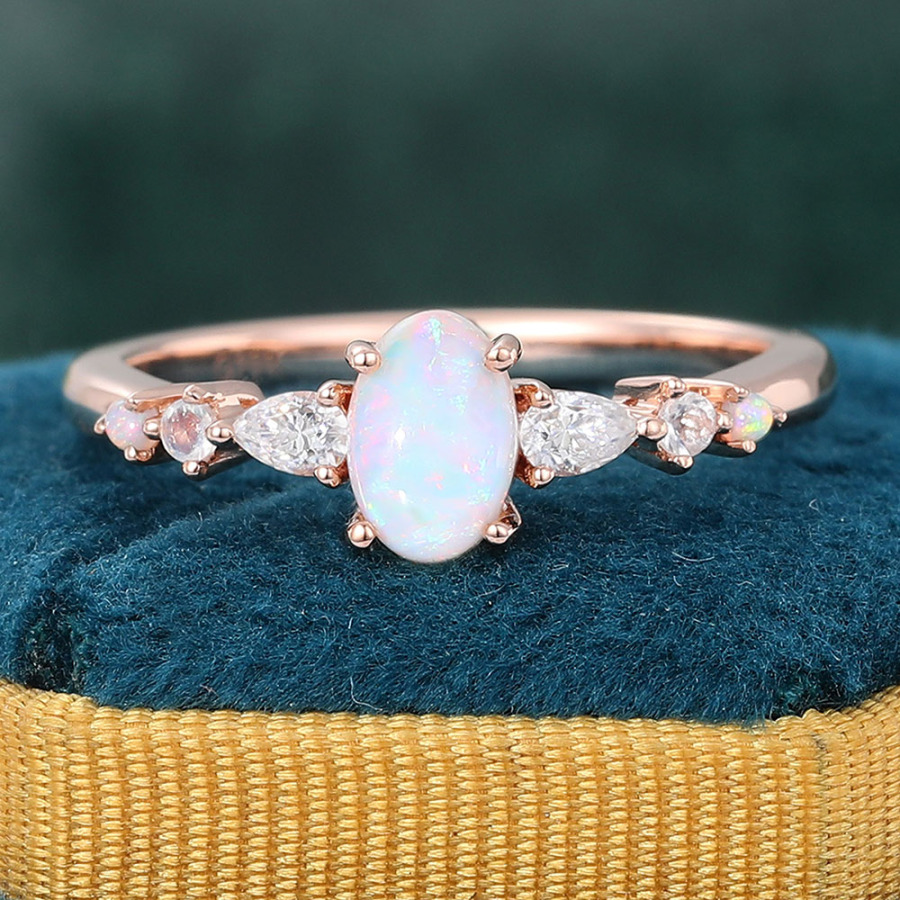
Which Women's Opal Ring is Your Favorite One?
 |
 |
 |
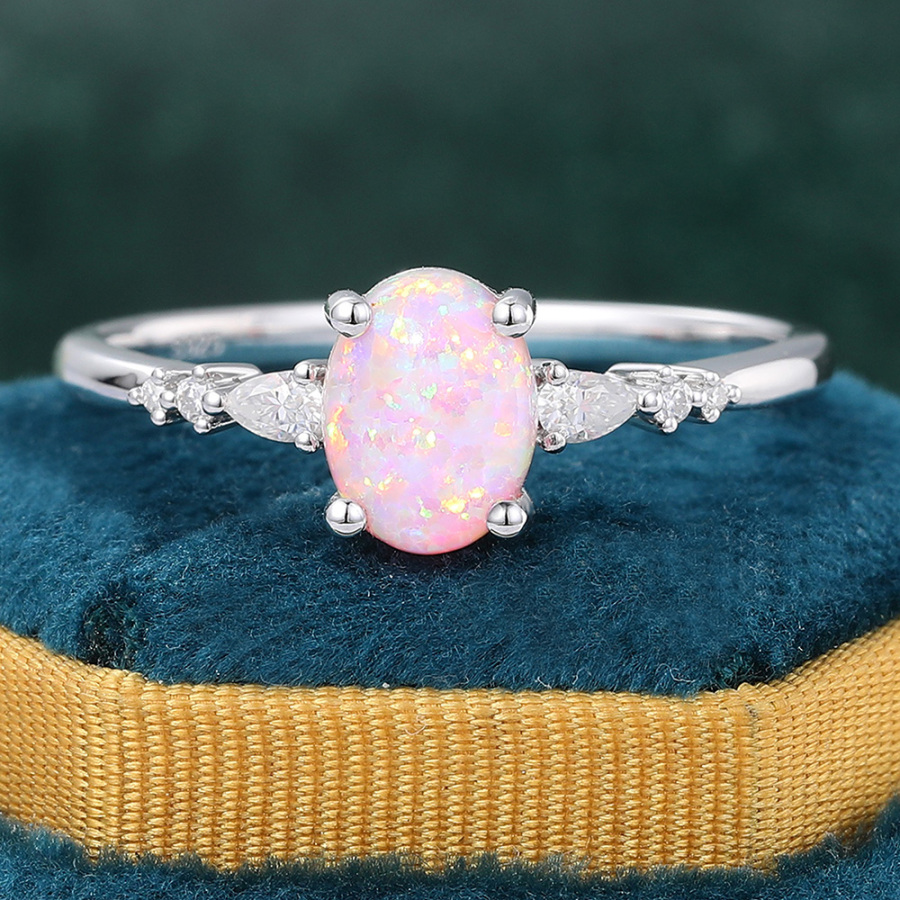 |
| Oval Cut Opal Rose Gold Twisted Engagement Ring | Oval Cut Opal Ring with Moissanite & Moonstone Accents for Women | Round Cut Pink Opal Ring Nature Inspired Leaf Engagement Ring 14K Rose Gold | Simple 6*8mm Oval Cut Lab Pink Opal Engagement Ring with Diamond Accents |
Price vs. Value: What Are You Really Paying For?
At Juyoyo, with over a decade of experience hand-selecting gems for our clients, we see the difference not just in price, but in personality. We've witnessed the moment a customer finds their opal—the one with a color play that speaks only to them. That unique connection is a value you can't quantify with the 4Cs.
When you buy a diamond, you are paying for:
- Tradition: It's the undisputed symbol of engagement.
- Durability: With minimal care, it will last a lifetime.
- Standardized Sparkle: Its beauty is quantifiable and predictable.
When you buy an opal, you are paying for:
- Uniqueness: Literally. No two opals on Earth are the same. Your stone will have a play of color and pattern that is 100% unique to you.
- Art: It's like a miniature abstract painting or a captured galaxy. Its beauty is subjective and personal.
- Rarity (in the truest sense): You are wearing a piece of a specific, rare geological event.
The value of an opal lies in its unique characteristics. Diamonds are valued for their perfection.
Beyond the Price Tag: Durability & Practicality
When it comes to value, longevity is a key consideration. You may be wondering, "Can I wear my opal rings every day?" This is where diamonds and opals diverge drastically.
- Diamond (Mohs Hardness: 10): The hardest natural substance on Earth. They are virtually scratch-proof and ideal for everyday wear, whether in an engagement ring or a signature piece that never comes off.
- Opals: They rate between 5.5 and 6.5 on the Mohs scale. They are much softer and similar in hardness to glass. They can be scratched or cracked if hit hard and require more mindful care.
For a full breakdown of how these two gems compare in terms of durability, care, and style, we recommend reading our Diamond vs. Opal Comparison Guide, which covers durability, care, and style in detail.
Conclusion
So, is opal more expensive than diamond? For the average purchase, no. But for the discerning eye seeking unrivaled uniqueness, the value of a top-tier opal is immeasurable. Your choice ultimately depends on what you value more: the timeless, resilient light of a diamond or the captured, ever-changing fire of an opal.
At Juyoyo, we built our brand on unique, handcrafted jewelry. We adore diamonds for their timeless, resilient light. However, we have a deep passion for opals because they are the storytellers of the gem world.
Selecting an opal isn't merely a transaction; it's a connection. You're choosing a gem that speaks to you—a piece of cosmic art that no one else will ever have.
Ready to find a gem as unique as you are? Explore our curated collection of handcrafted opal rings. Find the story you want to wear.
FAQs
Is Opal More Expensive Than Diamonds?
In most cases, diamonds are more expensive per carat due to their standardized grading system (the 4Cs) and high global demand. However, rare black opals with exceptional play-of-color can exceed the price of many diamonds, especially commercial-grade ones.
Why Are Diamonds Usually More Expensive Than Opals?
Diamonds benefit from a highly structured market, global branding, and consistent demand for engagement rings. While opals are rarer, they don't have the same universal demand or standardized pricing system, which keeps average prices lower.
Are Opals Rarer Than Diamonds?
Yes, gem-quality opals, especially black opals from Lightning Ridge, Australia, are rarer than diamonds. However, rarity doesn't always equate to a higher price since market demand plays a bigger role in determining value.
Can Opals be Used in Engagement Rings?
Yes, but with caution. Opals are softer (5.5–6.5 on the Mohs scale) and more prone to scratches and cracks than diamonds (10 on the Mohs scale). If you choose an opal engagement ring, consider protective settings, like bezels, and avoid wearing it during heavy daily activities.
Do Opals Hold Their Value Like Diamonds?
Diamonds have a more stable resale market thanks to their global recognition and standardized grading. While opals can appreciate significantly if they are rare and high-quality, the resale market is smaller and less predictable.
Comment