
Types of Opal: The Ultimate Guide to Varieties & Values
Oct 10,2025 | Juyoyo
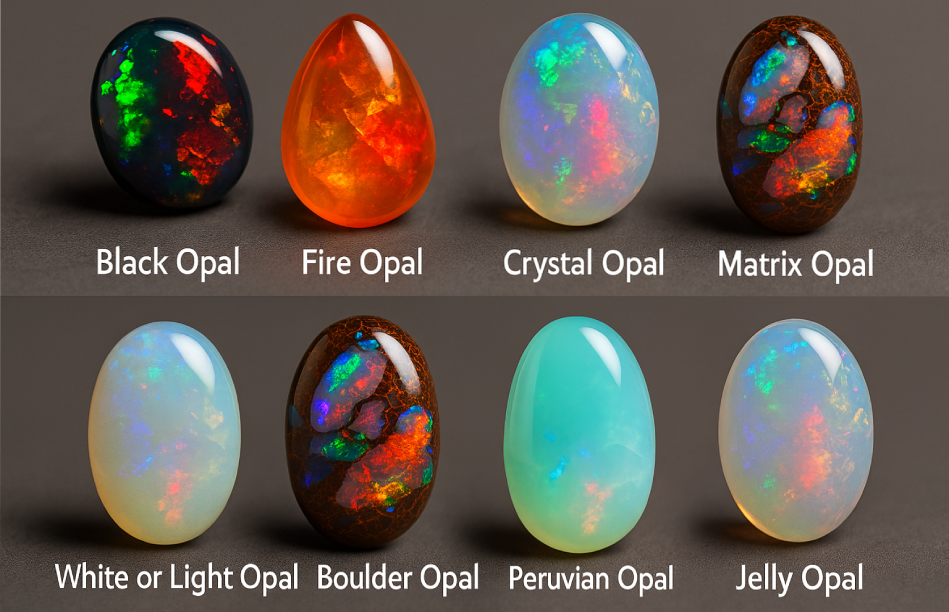
Opal has long been called the "Queen of Gems" because of its dazzling play of color and endless variety. But did you know that not all opals are the same? From the deep, dark allure of black opal to the fiery glow of fire opal, each variety has its own story to tell. Finding an opal ring with a unique design is the perfect way to let your personal story shine through.
This guide will walk you through the different types of opal gemstones, their origins, values, and meanings. You'll learn how they form and understand what makes certain opals rare and expensive. We'll also share practical tips to help you identify, select, and care for opals with confidence. Let's dive in!
What Is Opal? Precious vs. Common Opal
At its core, opal is a gemstone composed of tiny silica spheres that are arranged in a delicate three-dimensional grid. When light enters this structure, it bends and breaks into spectral colors—a phenomenon known as "play of color." This gives the October birthstone its magical, shifting hues.
Unlike diamonds or sapphires, opals are amorphous, meaning they lack a fixed crystal structure, which makes each stone unique.
Two main categories exist for all opals. Understanding this is key.
- Precious Opal: This is the star of the show. The stone displays the magical effect known as play-of-color, which is characterized by brilliant flashes of color that dance and shift as you move it.
- Common Opal (or "Potch"): This opal does not display play-of-color. However, it’s beautiful in its own right and often appears in serene opaque or translucent shades, such as pink, blue, and yellow.
How Is Opal Formed?
Opal forms in areas that were once filled with silica-rich water, such as ancient lakes or hot springs. As water seeped through rocks, it collected silica, which it then deposited into cracks and cavities. Over millions of years, this silica hardened into the opal we know today.
Australia is the world’s most famous source of opals, especially the prized black opal. In fact, over 95% of the world’s black opal supply comes from Lightning Ridge, Australia. Other significant sources include Ethiopia, Mexico, and Brazil.
How Are Opals Classified?
Opals are classified based on three main features.
- Body Tone: From black to white.
- Transparency: From opaque to transparent.
- Play-of-Color Pattern: Examples include harlequin, pinfire, and flame.
These classifications help you identify the type of opal you’re looking at.
Different Types of Opal Gemstones
Let's explore the most important varieties of opal. To make it easier, here’s a quick comparison table of the main types:
| Type of Opal | Category | Body Tone / Key Feature | Primary Source(s) |
| Black Opal | Body Tone | Dark to black | Lightning Ridge, Australia |
| White Opal | Body Tone | Light or white | Australia, Ethiopia |
| Fire Opal | Body Tone | Orange to red | Mexico |
| Crystal Opal | Body Tone | Transparent to translucent | Brazil, Australia |
| Boulder Opal | Structure | Natural ironstone host rock | Queensland, Australia |
| Matrix Opal | Structure | Color infused in the host rock | Andamooka, Australia |
| Ethiopian Opal | Origin | Often hydrophane, vibrant | Ethiopia, Wollo Province |
| Australian Opal | Origin | The classic opal standard | Australia (multiple fields) |
| Peruvian Opal | Origin | Blue-green, no play-of-color | Peru |
| Jelly Opal | Appearance | Translucent, faint play-of-color | Mexico, Brazil |
1. Black Opal: The King of Opals
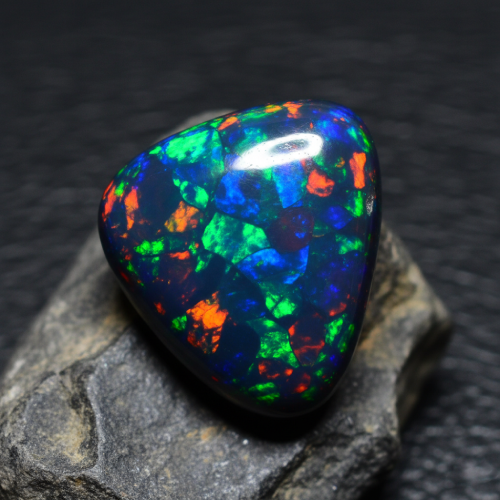
Black opal is the king of opals. Its dark body tone, which can be black, dark blue, or deep gray, makes the play of color stand out vividly. This contrast is why black opal is the most sought-after and expensive type.
- Why It's Prized: Its dark, opaque background acts like a velvet canvas, making the play of color appear incredibly vibrant and dramatic. High-quality black opal from Lightning Ridge can sell for over $15,000 per carat.
- Primary Origin: The legendary Lightning Ridge in New South Wales, Australia.
- What to Look For: Bright, multicolored patterns (such as reds and blues) against a dark background.
- Symbolism: Black opal is often seen as a stone of amplification and protection. Its deep base is believed to magnify one's inner traits and desires while shielding against negativity. It is also associated with deep personal transformation and realizing one's full potential.
- Juyoyo's Insight: A genuine black opal can be a significant investment. It's ideal for someone seeking the pinnacle of opal beauty and rarity — a true heirloom piece. It's also the perfect gem to commemorate a major life achievement, such as a promotion or a period of significant personal growth.
2. White or Light Opal: Classic Elegance
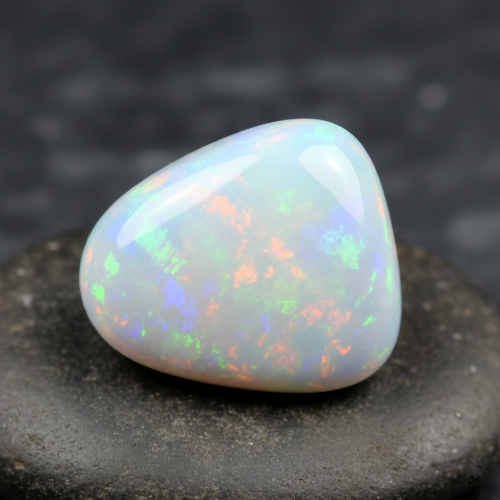
This is the most common and recognizable type of opal. Its body tone ranges from white to milky to light gray (N7 to N9). Its play of color is often more subdued and pastel compared to black opal, giving it a soft, ethereal glow. This makes it a popular choice for engagement rings.
- Why It's Loved: It offers the classic opal look at a more affordable price. Its dreamy appearance is perfect for everyday wear and special occasions.
- Primary Origin: Australia (Coober Pedy and Mintabie).
- Symbolism: White opal represents hope, purity, and angelic connection. It is considered a stone of emotional balance and clarity and is thought to soothe a chaotic mind and inspire optimism. It is often associated with divine guidance and the protective energy of light.
- Juyoyo's Insight: Look for a white opal with bright, lively color flashes across its surface. It’s a versatile choice for first-time opal buyers, classic opal rings, and meaningful gifts for occasions like graduations or the birth of a child.
3. Fire Opal: A Blaze of Glory
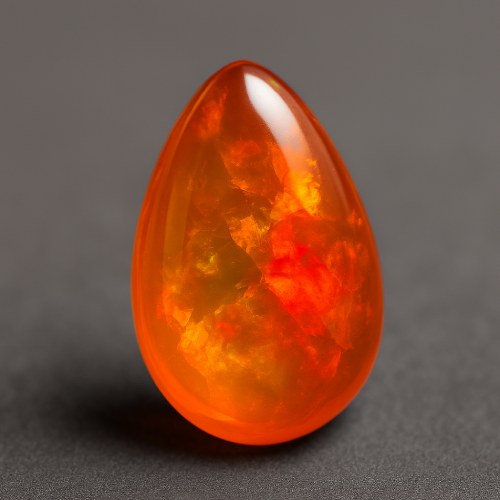
Fire opals stand out because of their warm body colors, which range from yellow and orange to bright red. Unlike most opals, fire opals often don't exhibit a strong play of color. Its value mainly comes from the beauty and intensity of its body color.
- Why It's Distinct: They are often transparent and faceted like traditional gems, which is rare for opals.
- Primary Origin: Mexico is the most famous source of high-quality fire opals.
- Did You Know? The best fire opals are transparent and faceted to enhance their brilliance.
- Symbolism: As its name suggests, fire opal is a powerful emblem of passion, energy, and confidence. It is believed to stimulate the "fire" within, encouraging creativity, positive action, and a zest for life. It is also considered a stone of luck and a catalyst for new beginnings and revitalized relationships.
- Juyoyo's Insight: Fire Opal is an exciting and passionate choice for those who love warm, vibrant colors. It stands out and radiates energy.
4. Boulder Opal: Nature's Artwork
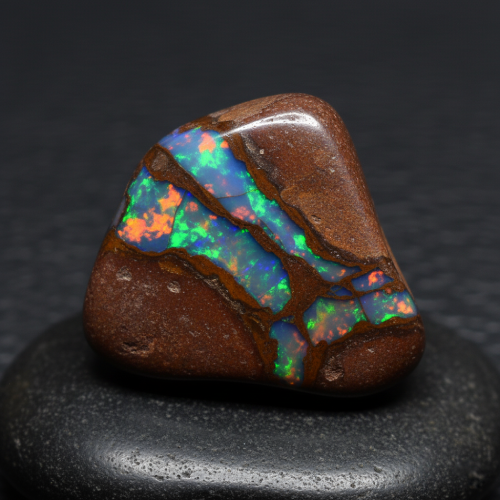
This fascinating natural wonder occurs when a thin seam of precious opal forms within its host rock, usually ironstone. Skillful cutters shape the stone to showcase the opal, leaving the ironstone as a natural backing.
- Why It's Unique: No two pieces are alike. The dark ironstone enhances the opal's color, much like a black opal, but with an earthy, organic feel. Boulder opals are also very durable.
- Primary Origin: Exclusively from Queensland, Australia.
- Symbolism: Boulder opal is a powerful symbol of grounding, stability, and strength. It represents the beautiful union of the earthly host rock and the celestial play of color. This union teaches us to find magic in the mundane and to stay resilient through challenges.
- Juyoyo's Insight: Boulder opal is perfect for those who appreciate natural, untamed beauty. Its unique formation story makes it a powerful and personal choice for pendants and statement rings.
5. Crystal Opal: A Window of Color
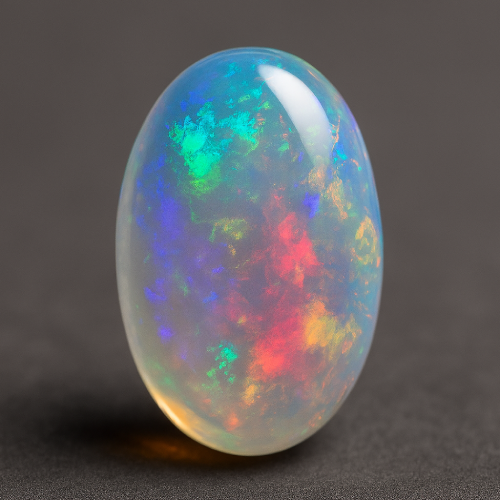
The name says it all. Crystal opal is any opal that is transparent or semi-transparent with a visible play of color inside. It can be found with any body tone, light or dark. When a crystal opal has a dark background, it’s sometimes called "crystal black opal."
- Why It's Special: Its transparency gives it an incredible sense of depth and clarity. The play of color has a sharp, distinct appearance.
- Primary Origin: Various Australian opal fields.
- Symbolism: Crystal opal is a stone of transformation and inner vision. It is believed to amplify the wearer's energy and insight, promoting clear communication and self-awareness. It is also associated with boosting creativity, clearing spiritual blockages, and revealing hidden potential.
- Juyoyo's Insight: Those who value depth and transparency in gems and in life. It is ideal for meditation or as a personal talisman for those seeking emotional balance and clearer thinking.
6. Matrix Opal: A Celestial Network
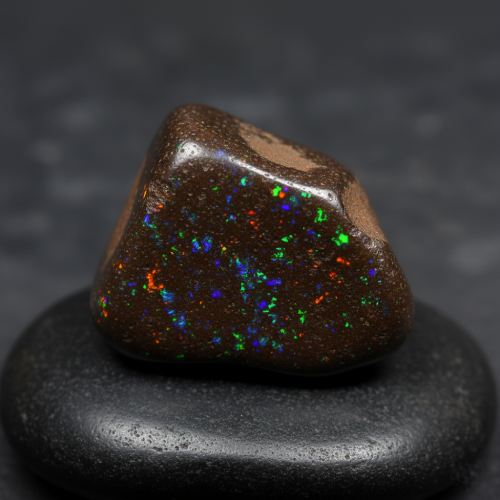
Unlike boulder opal, where opal forms in distinct seams, matrix opal features precious opal intimately mingled within the pores and spaces of its host rock, often ironstone or sandstone. This creates a mesmerizing pattern throughout.
- Why It's Captivating: The effect resembles a starry night sky, with pinpricks and webs of color scattered throughout the dark matrix. It offers a distinctive and often more budget-friendly approach to appreciating the allure of natural opal patterns.
- Primary Origin: Most famously, it comes from Andamooka, Australia, though other varieties are found in Queensland.
- Symbolism: Matrix Opal is considered a stone of interconnectedness and balance. It is believed to help one see the bigger picture and understand complex situations. Its grounding host rock provides stability and strength during times of change.
- Juyoyo's Insight: For a truly organic and cosmic look, matrix opal is unparalleled. It’s perfect for those who appreciate intricate details and the story of how a gem is woven into its natural foundation.
Famous Origin-Based Opals: Australian vs. Ethiopian Opals
Beyond the physical characteristics of an opal, its origin is one of the most significant factors affecting its appearance, behavior, and care requirements. Currently, the market is dominated by two main sources: Australia, the classic powerhouse, and Ethiopia, the exciting newcomer.
Australian Opal: The Enduring Classic
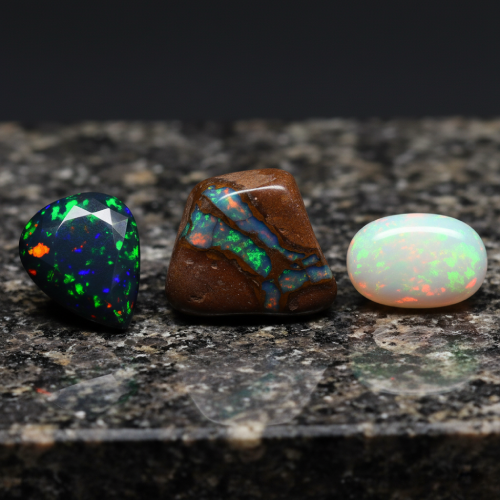
Australian opal is not a single type, but rather a prestigious term. Australia is the world's primary source of the most highly valued opals, including black, boulder, and crystal opals. When people hear "Australian opal," they think of the highest standards of quality and brilliance.
- Key Characteristics: Australian opals form in ancient, arid environments. They have a relatively low water content, typically 3-6%, which makes them stable and durable for jewelry. Their play of color is renowned for its richness and depth.
- Reputation: They are the industry benchmark for quality and value. Black opals from Lightning Ridge are among the world's most prized gemstones.
Ethiopian Opal: The Vibrant Newcomer
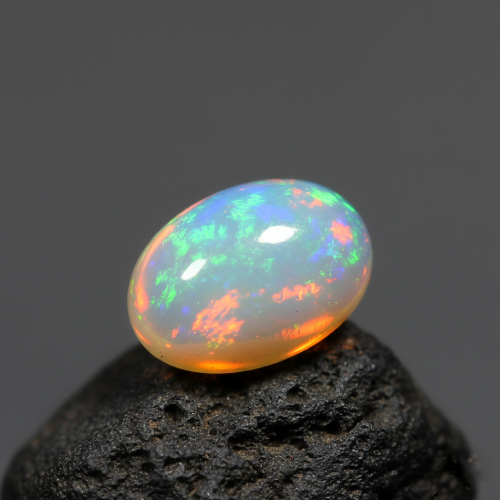
Since its discovery in the 1990s, Ethiopian Opal has taken the market by storm. This relatively new player on the world stage has quickly become a major player in the gemstone industry. It is known for its spectacular play-of-color and hydrophane nature, meaning it can absorb water.
- Key Characteristics: Most Ethiopian opals are hydrophane, meaning "water-loving" in Greek. This is their most critical feature. They have a porous structure that can absorb water. When soaked, they may temporarily become transparent, and their fire may subside, but their original beauty returns once they slowly dry out naturally.
- Appearance: They often have a stunning, vivid three-dimensional play of color that appears to float within the stone's body, which is typically a translucent white, yellow, or "crystal" base.
Other Unique Opal Varieties: Peruvian Opal & Jelly Opal
The opal family is vast and contains many fascinating types beyond the major varieties. These unique varieties offer different forms of beauty for the true gem enthusiast, from serene, uniform color to subtle, mysterious fire.
Peruvian Opal: The Gift of the Andes
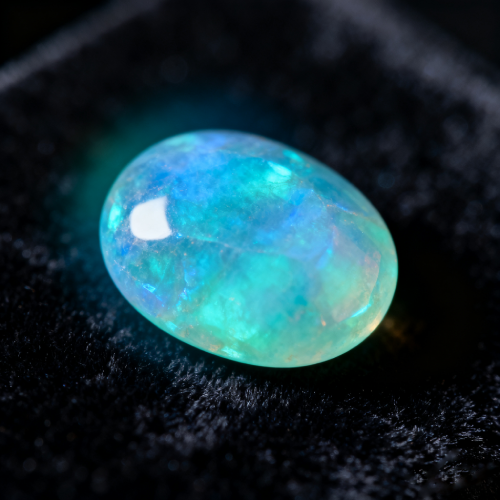
A beautiful anomaly in the common opal family, Peruvian opal lacks the classic play-of-color. This opaque stone is cherished for its solid, soothing blue-green colors, which are often accompanied by matrix patterns. A national stone of Peru, it originates from the Andes mountains.
Key Varieties:
- Blue Opal: It has a captivating blue-green color that evokes images of the Caribbean Sea. It's a stone of tranquility and communication.
- Pink Opal: A gentle, creamy pastel pink associated with love, hope, and emotional healing.
Why It's Special: It offers a soft, calming energy and a modern, minimalist aesthetic. Its beauty lies in the purity and serenity of its color rather than fiery flashes.
Jelly Opal (or Water Opal): A Drop of Liquid Light
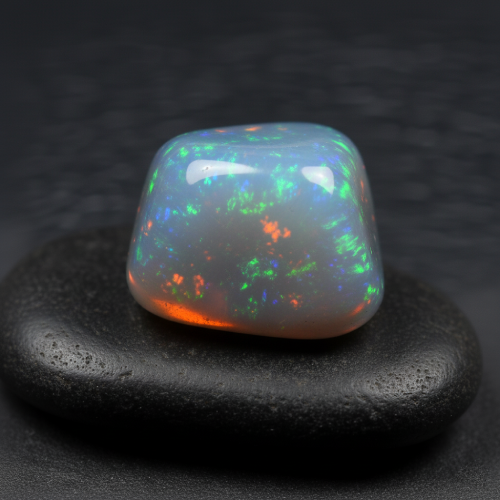
Jelly opal is a type of precious opal that is highly transparent with a gelatinous or "watery" appearance. Its play of color is often more subtle, seeming to float in the stone's deep, clear body.
- How it Differs from Crystal Opal: While both are transparent, a high-grade crystal opal is prized for its sharp, brilliant, and abundant play of color. By contrast, jelly opal is valued for its exceptional clarity and more subdued, ethereal flashes of color. It's the definition of understated elegance.
- Why It's Unique: Looking into a jelly opal is like gazing into a drop of pure spring water containing a secret rainbow. Its beauty is quiet, mysterious, and deeply captivating.
Differences between Opal Solid, Opal Doublet, and Opal Triplet
Transparency is everything here. At Juyoyo, we want you to know exactly what you're buying. Not all "opals" for sale are solid gemstones.
| Type | Composition | Pros | Cons |
| Solid Opal | 100% natural, solid opal gemstone. | Most valuable, authentic, heirloom quality. | Most expensive. |
| Doublet Opal | A thin slice of precious opal glued to a dark backing (like potch or ironstone). | More affordable, mimics the look of Black Opal. | Less valuable, can be damaged by water. |
| Triplet Opal | A paper-thin slice of opal sandwiched between a dark backing and a clear domed top (like quartz or glass). | Most affordable, it offers a vibrant look. | Least valuable, prone to damage, lacks the feel of a real gem. |
What About Synthetic Opal?
Yes, synthetic opals exist! Created in labs, they share the same chemical composition and physical appearance as natural opals. The global synthetic opal market is experiencing growth, with various types available, including white, black, and colored variants, such as blue and green. Synthetic opals are an affordable alternative, especially for fashion jewelry.
How to Tell the Difference: Natural opals often have a more random, chaotic color pattern, while synthetic ones may appear too perfect or orderly.
Continue reading: How to Identify Opal: A Comprehensive Guide to Tell If An Opal Is Real or Fake
What Determines Opal Value? A Buyer's Guide
Beyond type, the value of an opal is determined by a few key factors.
- Body Tone: Darker body tones (like black opal) generally command higher prices because the colors appear more vivid.
- Play-of-color:
- Brightness: Brighter, more intense colors are valued higher.
- Number of Colors: Reds and oranges, especially when combined, are rarer and more valuable than blues and greens.
- Pattern: Rare patterns, such as "harlequin" (regular diamond-shaped patches), can significantly increase value.
- Size and Cut: Larger, well-proportioned stones are rarer. A skilled cut maximizes the play of color.
- Origin: Opals from Lightning Ridge, Australia, are often the most prized.
Opal Color Meanings
For centuries, opals have fascinated cultures, often being seen as mystical stones with protective and transformative powers. Each type carries its own symbolic meaning:
- Red Opal Color: The rarest and most fiery color. It symbolizes passion, intense love, desire, and raw power. A red flash in your opal is like a spark of life force and courage.
- Orange Opal Color: Full of vitality and joy. Orange represents creativity, enthusiasm, and optimism. It's a warm, social color that can boost your confidence and help you enjoy the present moment.
- Yellow Opal Color: The color of sunshine and intellect. Yellow is linked to happiness, wisdom, and personal power. It can inspire new ideas, clarity of thought, and a sense of cheerful abundance.
- Green Opal Color: A color of balance, growth, and healing. Green opals are often associated with compassion, fertility, and prosperity. It’s a calming yet prosperous color that promotes emotional harmony and a connection to nature.
- Blue Opal Color: The color of calm and communication. Blue hues promote peace, tranquility, and spiritual openness. Blue is associated with honest expression, soothing anxiety, and enhancing intuition.
- Purple Opal Color: The color of royalty and spirituality. Purple embodies intuition, wisdom, and divine connection. It can calm the mind during meditation and connect you to higher states of consciousness.
How to Choose the Right Opal for Jewelry
With so many stunning options, choosing an opal can be overwhelming. Ultimately, the "best" opal is the one that speaks to you. However, this guide will help you make an informed and confident choice based on your needs and budget.
1. Consider Your Lifestyle
- Everyday Wear: Choose sturdier options, such as white opal or boulder opal, which are less prone to cracking.
- Occasional Wear: Black and crystal opals are stunning, but they are more delicate and are best suited for special occasions.
2. Match the Opal to the Jewelry Type
- Rings: Opal engagement rings featuring black or fire opals are stunningly bold. For everyday wear, consider boulder or white opals, which offer beauty and durability.
- Necklaces & Pendants: Crystal opals shine beautifully when light passes through them.
- Earrings: Lightweight white or Peruvian opals are elegant and versatile.
- Bracelets: Choose durable stones, such as boulder opals, since bracelets are more susceptible to impact.
3. Budget Considerations
- High-End Investment: Black opals from Lightning Ridge can cost thousands of dollars per carat.
- Mid-Range: Crystal opals and Ethiopian opals (bright colors, good value).
- Affordable: White opals, Peruvian opals, and common opals.
4. Trust Your Instincts (The Most Important Step)
Opals are stones of emotion and intuition. After considering all the practical factors, trust your instincts and make your final decision from the heart. Look at the opals and hold them if you can. Which one captures your gaze? If you have a specific vision, the best way to trust your instincts is to design your own opal ring. This allows you to control every detail, from the type of opal to the setting.
Opal Care and Maintenance
Opals are relatively delicate, ranking 5.5-6.5 on the Mohs hardness scale. They require some care.
- Avoid: Harsh chemicals, extreme temperatures, and dry environments.
- Clean: Gently with a soft, damp cloth. Store them separately to avoid scratches.
- Wear Often: Your skin’s natural oils can prevent opals from drying out.
Conclusion: Find Your Perfect Opal
Opals are among the most enchanting gemstones. They offer a variety of colors and types to suit every taste and budget. Whether you’re buying your first opal or adding to a collection, understanding these varieties will help you choose a stone that’s beautiful and a perfect fit for you.
Ready to find your perfect opal? Browse our curated collection of opal ring jewelry and discover the unique piece waiting for you.
 |
 |
 |
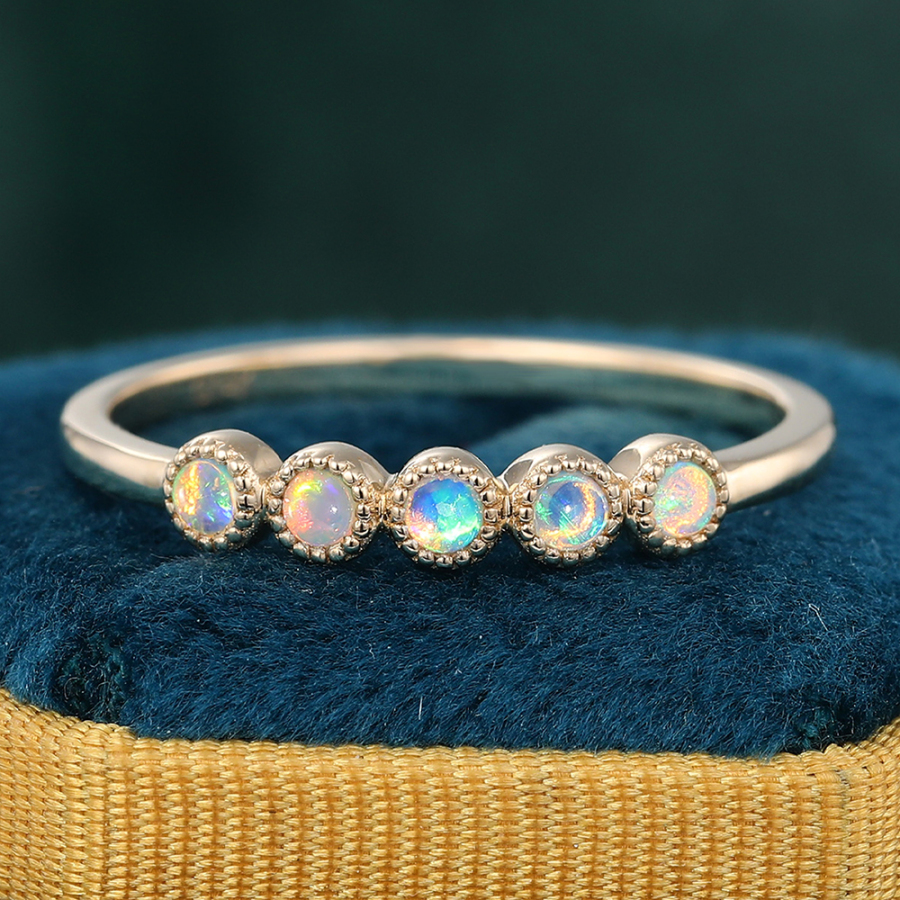 |
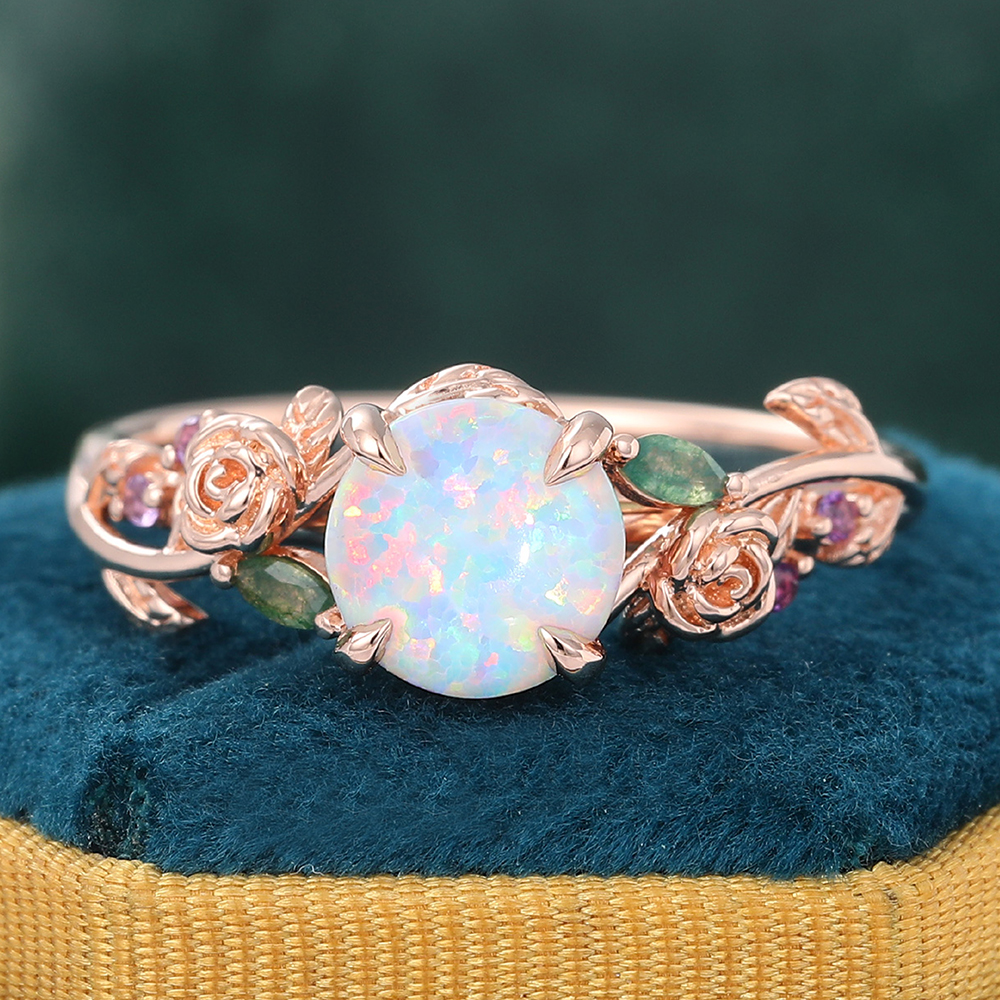
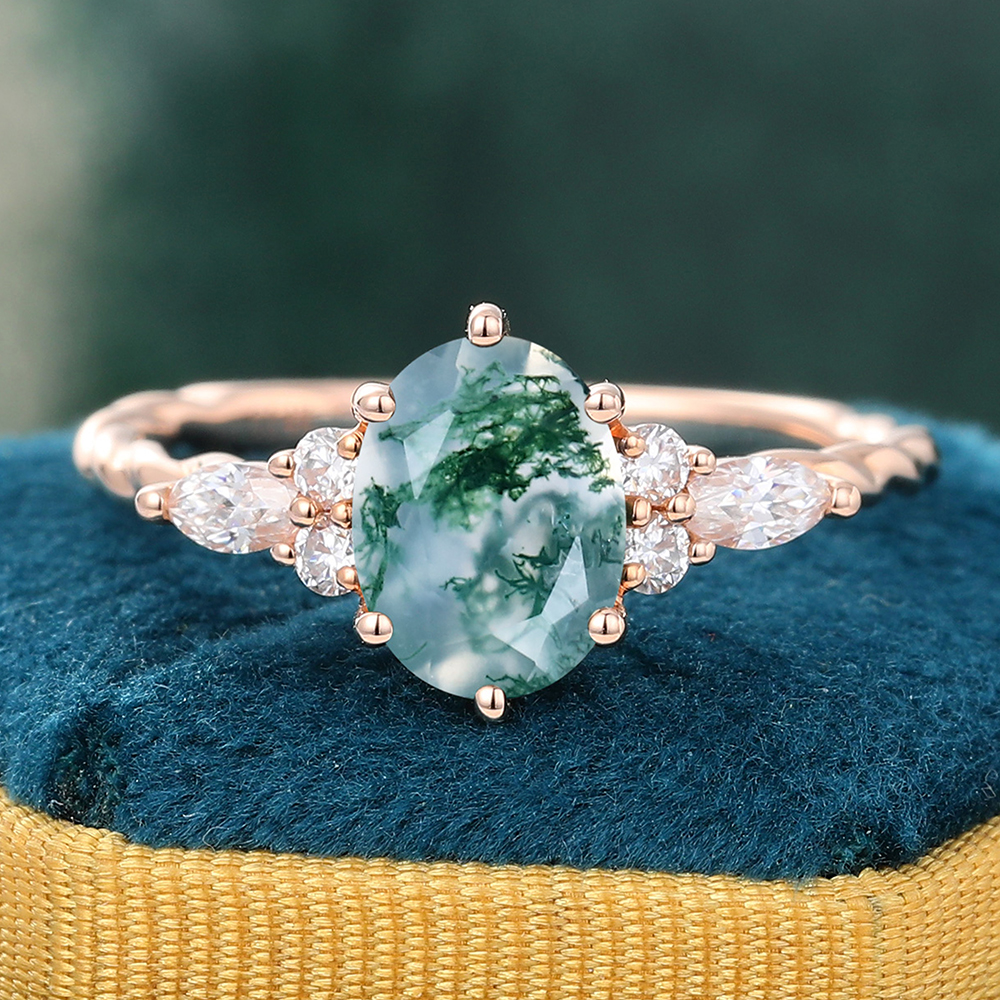
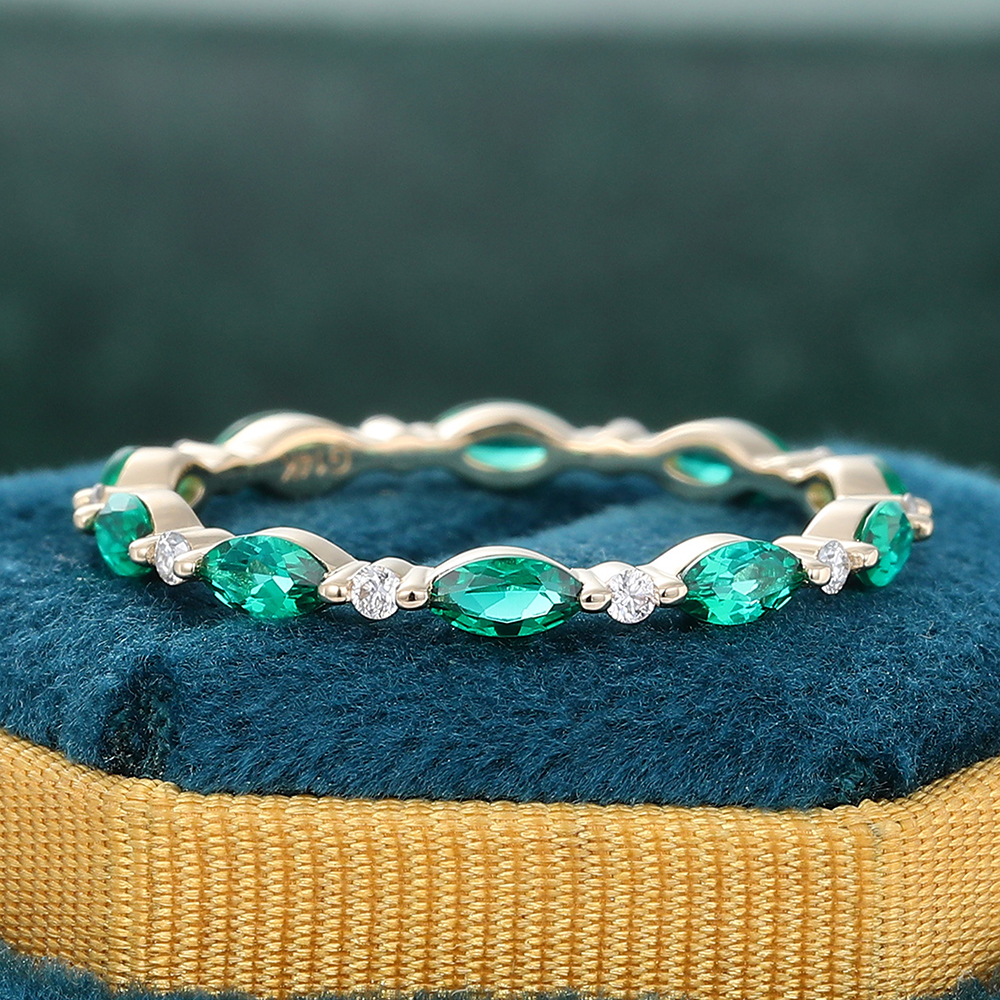
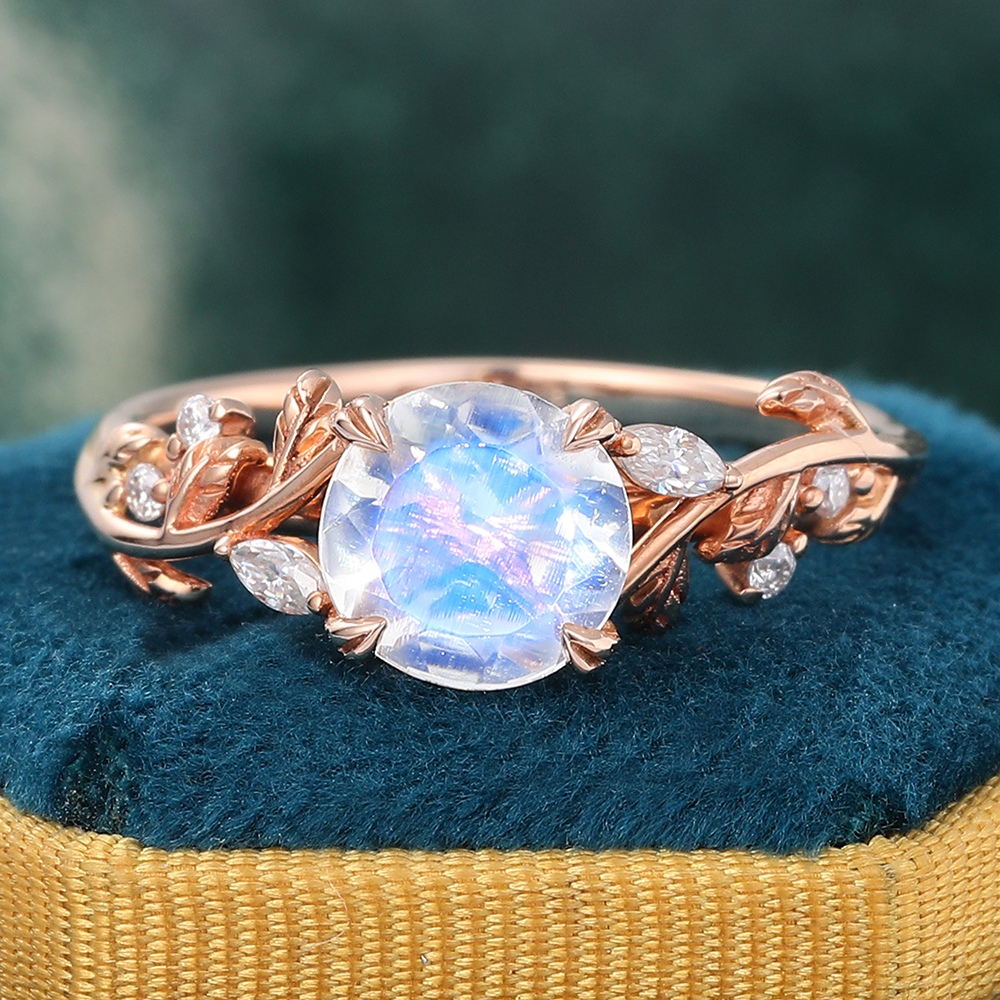
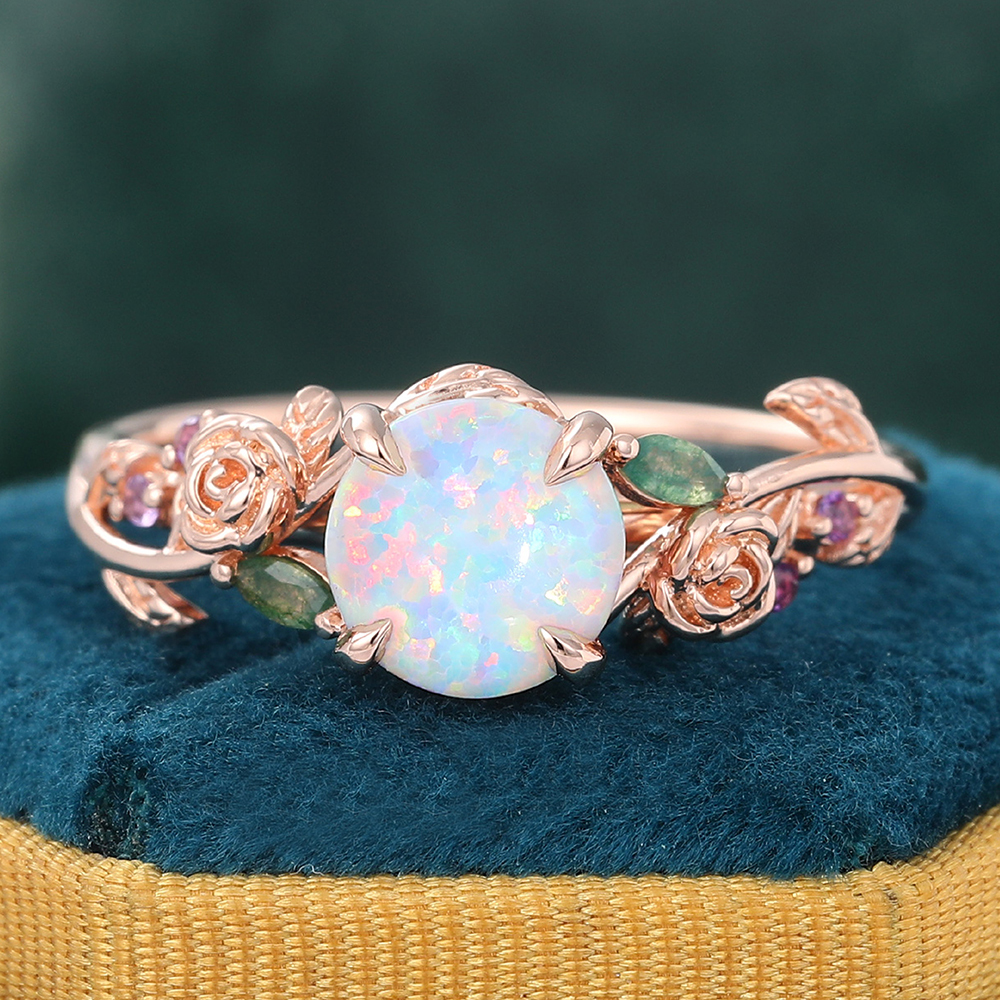
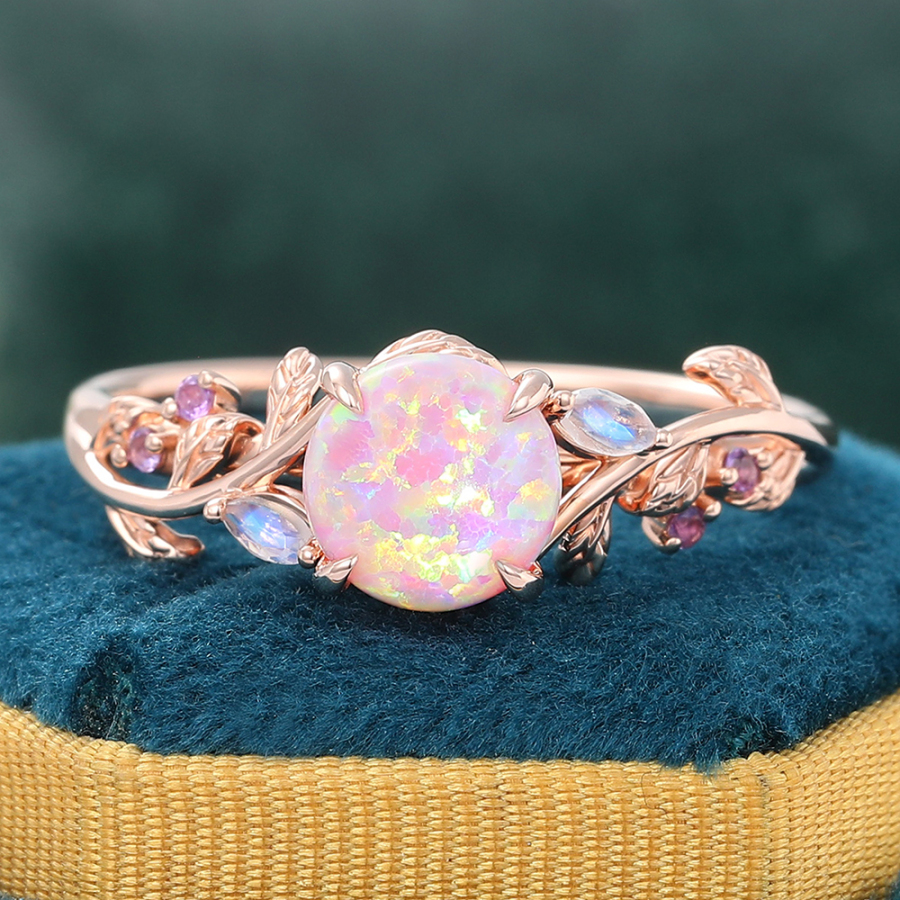
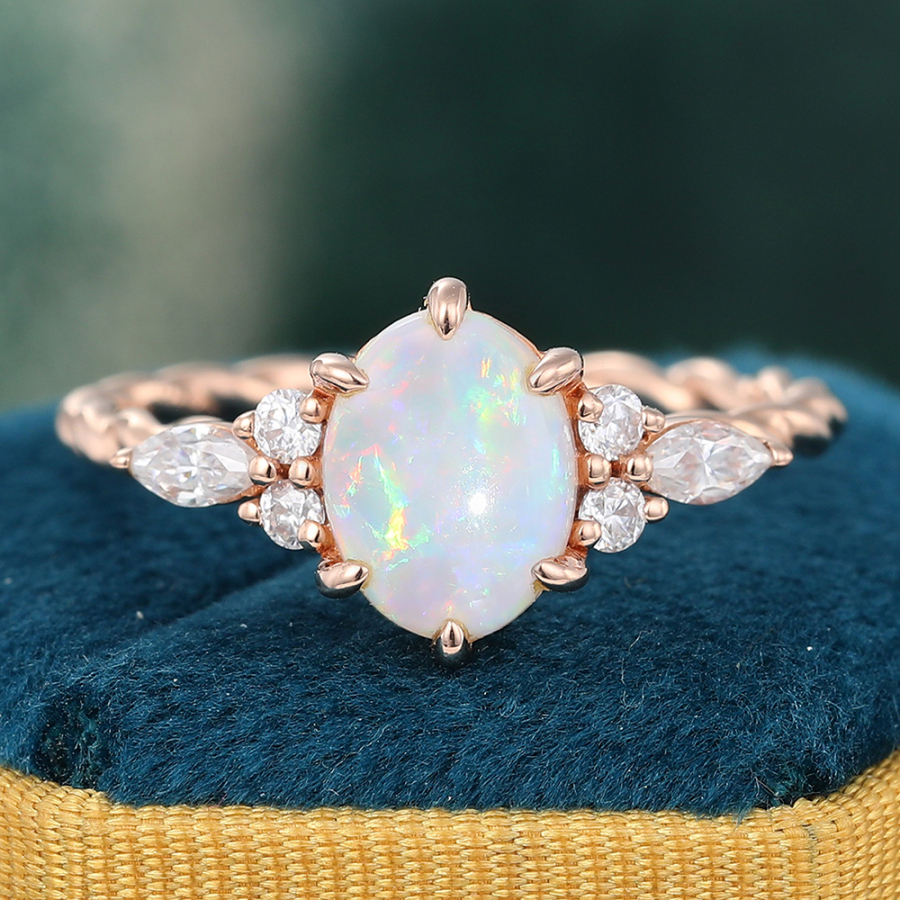
| 14K Rose Gold Round Opal Engagement Ring Rose Leaf Nature-Inspired Wedding Ring | Round Cut Pink Opal Ring Nature Inspired Leaf Engagement Ring 14K Rose Gold | Oval Cut Opal Rose Gold Twisted Engagement Ring | Exquisite 14K Yellow Gold Bezel Opal Wedding Band Anniversary Stacking Ring |
Frequently Asked Questions About Opal Varieties
What is the Most Valuable Type of Opal?
Black opal is usually the most valuable, especially specimens from Lightning Ridge, Australia, which have vibrant multicolored patterns.
What is the Difference Between Precious and Common Opal?
Precious opal exhibits a play of color, which are brilliant flashes of rainbow hues caused by light diffraction. In contrast, common opal (also called potch) lacks this optical effect and appears as solid pastel or opaque colors.
How Many Varieties of Opal Are There?
There are more than a dozen recognized types, including white, black, fire, boulder, crystal, Ethiopian, Peruvian, and common opal.
What is the Rarest Opal Color?
Red play-of-color on a black body tone is the rarest, found mainly in Australian black opals from Lightning Ridge. This vivid red against a dark background is the scarcest and most valuable combination.
Comment