
Mother of Pearl vs. Opal: A Complete Guide to Choosing the Right Gem
Oct 03,2025 | Juyoyo
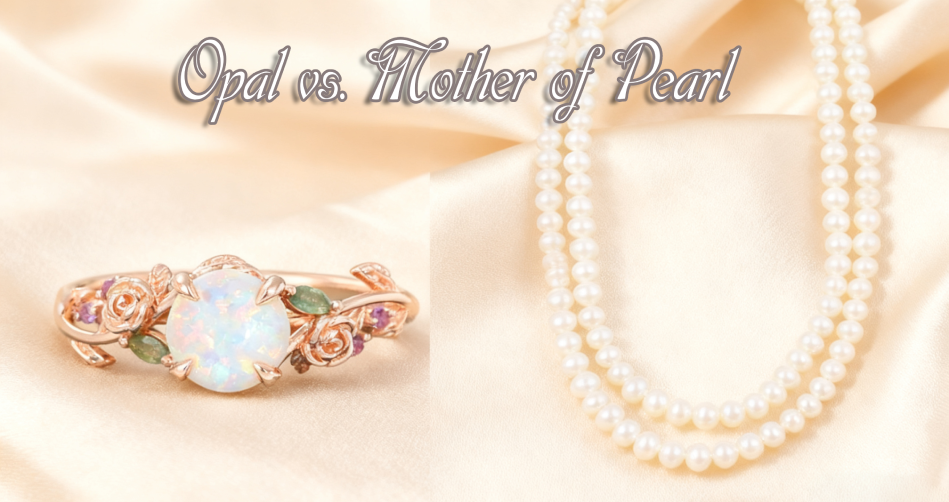
When choosing between Mother of Pearl vs. Opal, you're selecting from two completely different stories of shimmer and light. Pearl is a gift from the sea, a protective shield born of life. It is known for its serene, milky iridescence and soft elegance. Opal, on the other hand, is a marvel of geology. This gemstone has been forged over millennia and is renowned for its vibrant play of color that dances with every movement. A true symbol of creativity and passion, opal is perfect for crafting a unique statement piece.
Understanding their distinct origins is more than just academic; it's the key to knowing which one is perfect for you. This guide will walk you through everything you need to know, from their origins and durability to their symbolism, price, and jewelry applications. By the end, you’ll know exactly which opal fits your lifestyle, budget, and personal style.
Quick Comparison: Mother of Pearl vs. Opal
For a quick overview, here are the main differences:
| Feature | Mother of Pearl | Opal |
| Origin | Organic (Inner Shell Lining) | Mineral (Silica Gel) |
| Hardness (Mohs) | 3.5 - 4 (Much Softer) | 5.5 - 6.5 (Softer) |
| Durability | Scratches easily, sensitive to acids | Sensitive to knocks, drying out |
| Key Visual | Iridescence (soft, uniform glow) | Play-of-Color (fiery rainbows) |
| Value & Rarity | Generally affordable and common | Can be very high (especially black opal) |
| Personality | Classic, elegant, subtle, and serene | Fiery, unique, passionate, and mysterious |
What Is Mother of Pearl? The Gem of the Sea
Mother of pearl, also known as nacre, is the iridescent inner layer of mollusk shells. While not a traditional gemstone, it is a natural composite material. Its beauty lies in its soft, milky luster, often called "orient." When light hits its microscopic layers, a gentle, shifting rainbow of colors is created. This makes it a popular choice for delicate, elegant jewelry.
What Is Opal? The Fire of the Earth
Opal is a precious gemstone formed from silica spheres that diffract light, creating the famous "play of color." When light travels through opal, it diffracts and bends between these spheres, splitting into brilliant flashes of color within the stone. This is why every opal is utterly unique. Unlike mother-of-pearl, opal is a true gemstone with wide varieties, including white, black, and fire opals.
Mother of Pearl vs. Opal
Now, let's take a closer look at the key differences that will affect your decision, your wallet, and your daily life.
1. Origin: Mineral vs. Organic
Mother of pearl (nacre) is an organic substance. It's the iridescent substance secreted by mollusks, such as oysters and abalone, to protect their shells. It's a product of the sea.
Opal, on the other hand, is a mineraloid formed from silica gel that seeps into rock crevices and hardens over millions of years. Its signature play of color comes from its unique internal structure that diffracts light. It's born from the earth.
2. Appearance & Vibe: Luster vs. Play-of-Color
While both shine, they shine in fundamentally different ways.
Mother-of-pearl offers a softer, more uniform glow. Its colors—often milky white, silvery, pink, or green—shimmer and shift like an oil slick. However, the effect is smooth and sheet-like without the distinct, fiery flashes of opal.
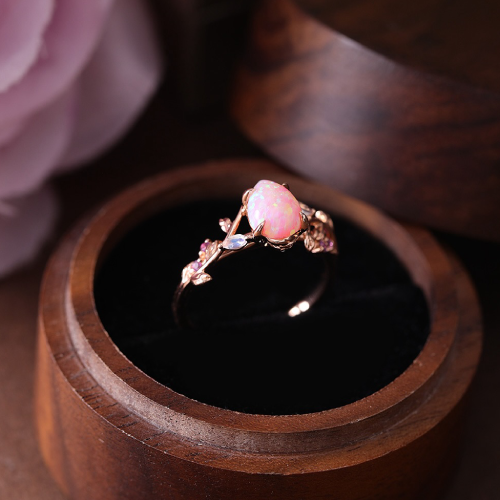
True opal displays a dynamic, flashing rainbow effect, with colors that shift and change as the stone is moved under light. You might see bright reds, greens, and blues all dancing within a single gem. This is a result of its microscopic silica spheres.
3. Durability & Hardness: Which Gem Can Handle Daily Life?
This is where your buying decision becomes important. We use the Mohs scale of mineral hardness, in which a diamond is a 10.
Mother of Pearl (Mohs Hardness: 2.5 - 4.5): This makes it quite soft and delicate. It can easily be scratched by metals, such as keys in a pocket, or even abrasive dust. It is best suited for pieces that won't be subject to hard knocks, such as earrings, pendants, or carefully worn brooches.
Opal (Mohs Hardness: 5.5 - 6.5): Although opal is significantly harder than mother-of-pearl, it is still considered a delicate stone that requires care. It can be scratched by common materials, such as steel or quartz, which are found in sand and dust. It is also sensitive to sudden temperature changes, which can cause it to crack.
So, which is more durable: opal or mother-of-pearl? In terms of impact resistance, a thick piece of mother-of-pearl is less likely to crack than a thin piece of opal. However, opal is more durable and can be used in a wider range of jewelry styles as long as it is treated properly.
4. Care & Maintenance: Keeping Your Gem Glowing
Both gems require gentle care to maintain their beauty. However, based on their durability, their care needs differ greatly.
- Caring for Pearl: The primary threat is scratches. Store it separately from harder gems. It is also highly sensitive to acids, such as vinegar or perfume, and chemicals, which can etch and dull its beautiful surface. Clean only with a soft, damp cloth.
- Caring for Opal: Because opals contain water, they should be protected from drying out. Don't store them in a bank vault or under hot lights for extended periods of time. It's best to store them in a soft cloth and occasionally wipe them with a damp cloth to prevent dehydration. They thrive on the natural humidity in the air.
- For Both: Avoid harsh chemicals, ultrasonic cleaners, and extreme temperatures. Clean them with a soft, damp cloth and mild soap.
5. Value, Price, & Rarity
Mother of Pearl: Since it is sustainably harvested from shellfish, it is consistently affordable and accessible. The value of mother-of-pearl lies in the quality of its luster and the craftsmanship of the piece rather than the raw material itself.
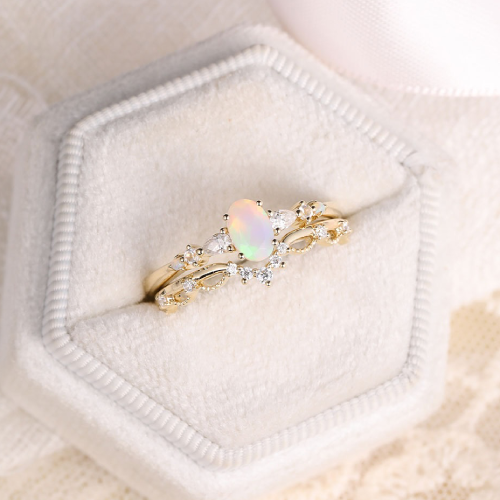
Opal: Its value can vary dramatically. A common white opal with modest play-of-color can be quite affordable. However, a rare black opal from Lightning Ridge, Australia, with intense red and blue flashes, can cost more per carat than a diamond. Its value lies in its uniqueness and optical performance.
Also Read: How Much is Opal Worth? Unveiling the Secrets to Opal Value
6. Symbolism & Meaning
Mother of Pearl: This material is universally linked to protection, tranquility, and wisdom. Its calming and lunar energy make it a popular choice for jewelry meant to soothe the wearer.
Opal: Historically, opal symbolizes hope, purity, and truth. It is the official birthstone for October and is often associated with creativity and magic.
7. Jewelry Applications
Both materials shine in jewelry, but in different ways.
Mother-of-Pearl Jewelry: Earrings, pendants, watch dials, and inlays. Best for subtle, everyday elegance.
Opal Jewelry: Rings, necklaces, and statement earrings. Perfect for special occasions or when you want to stand out.
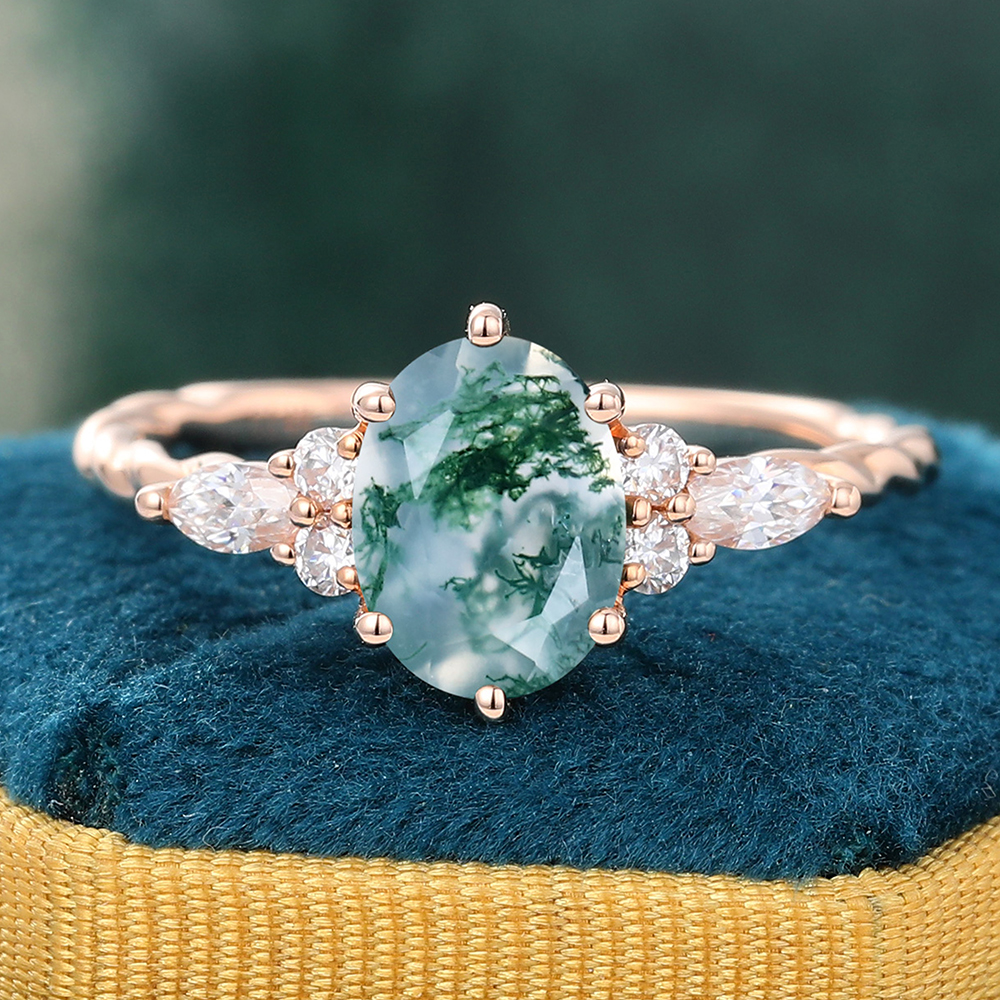
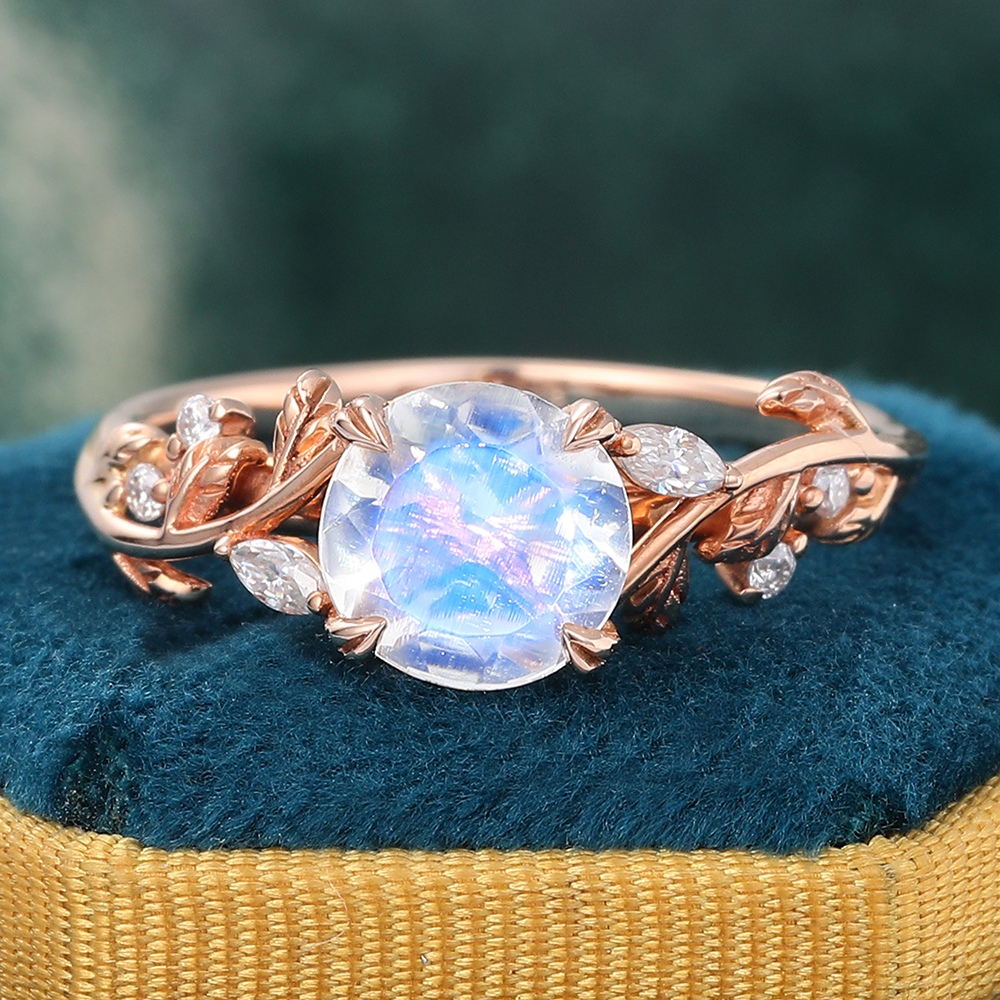
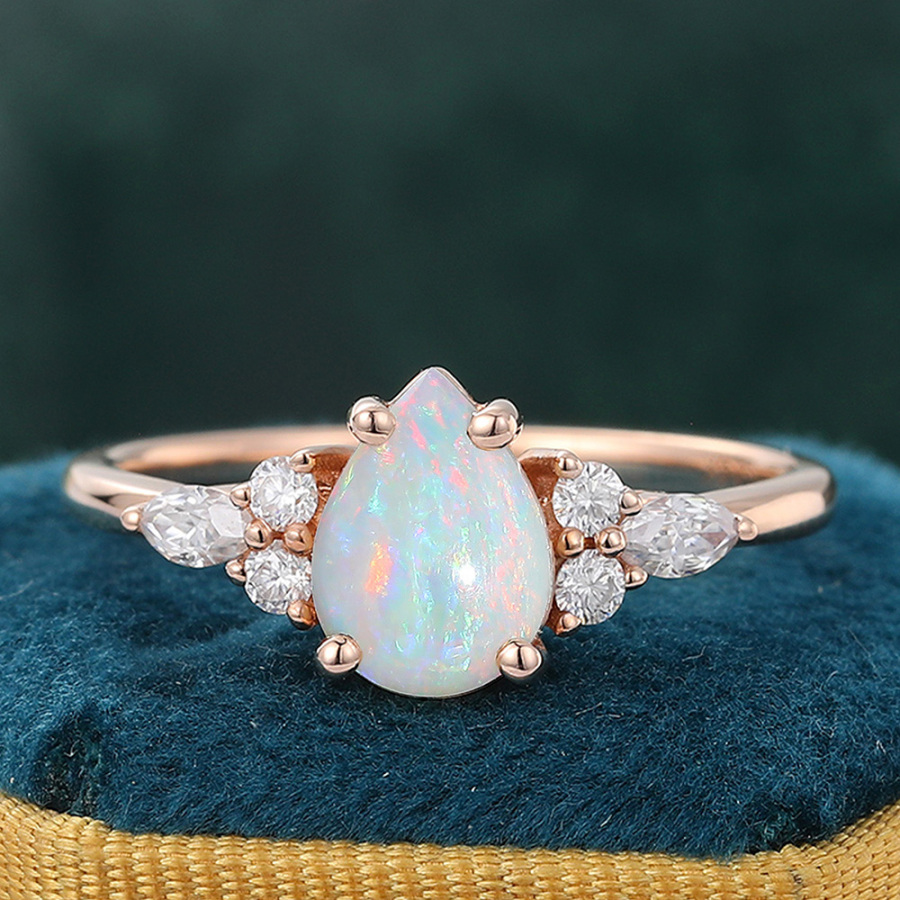
💡Tip: If you’re considering an engagement ring, an opal engagement ring is a more popular choice than a mother-of-pearl because it's a genuine gemstone and durable.
Discover Popular Opal Engagement Rings
 |
 |
 |
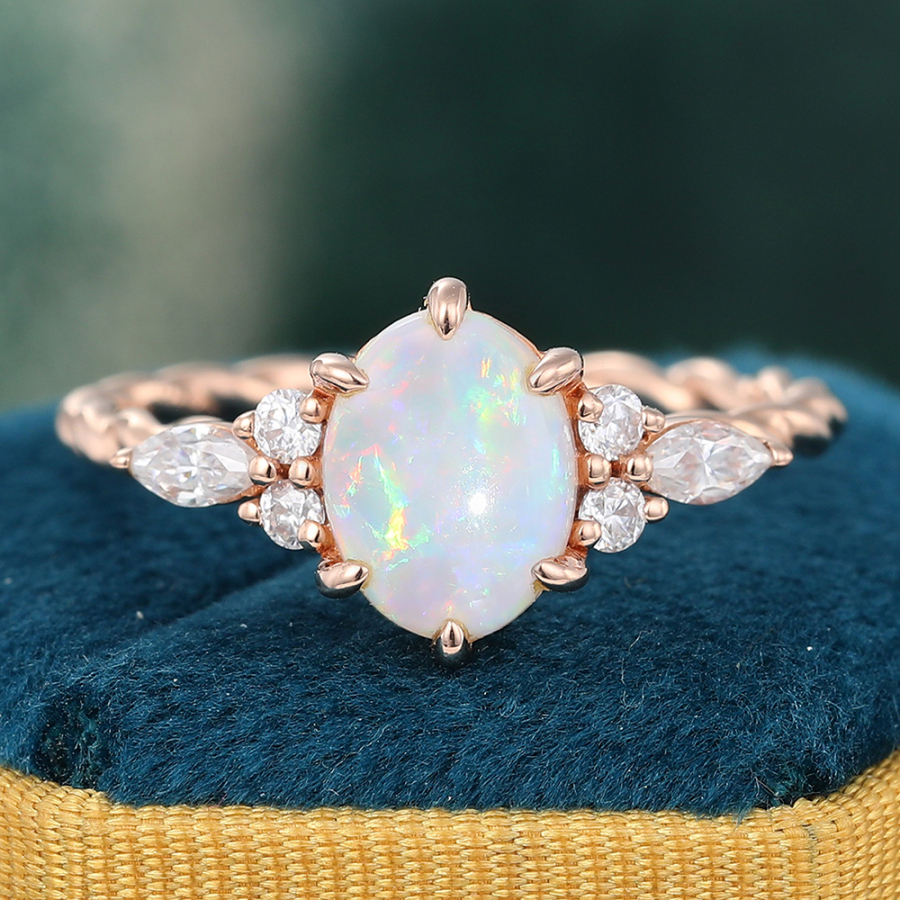 |
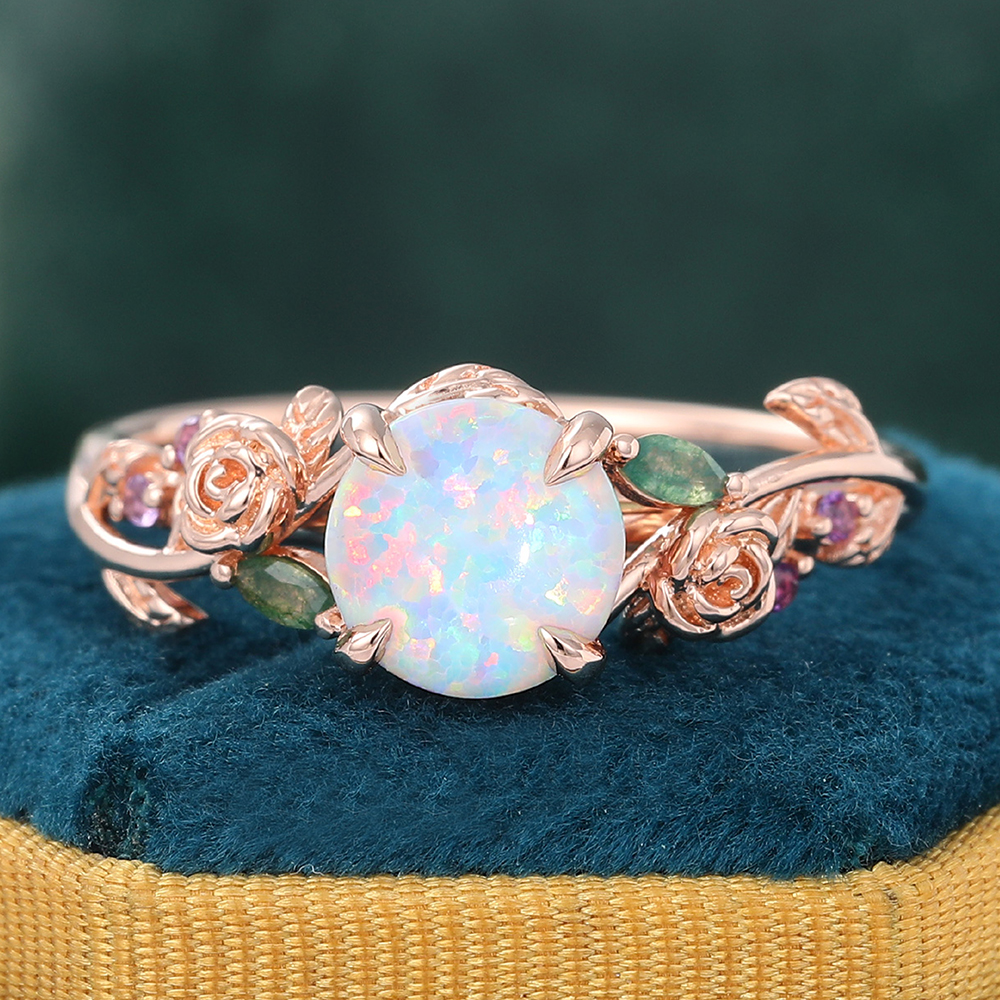
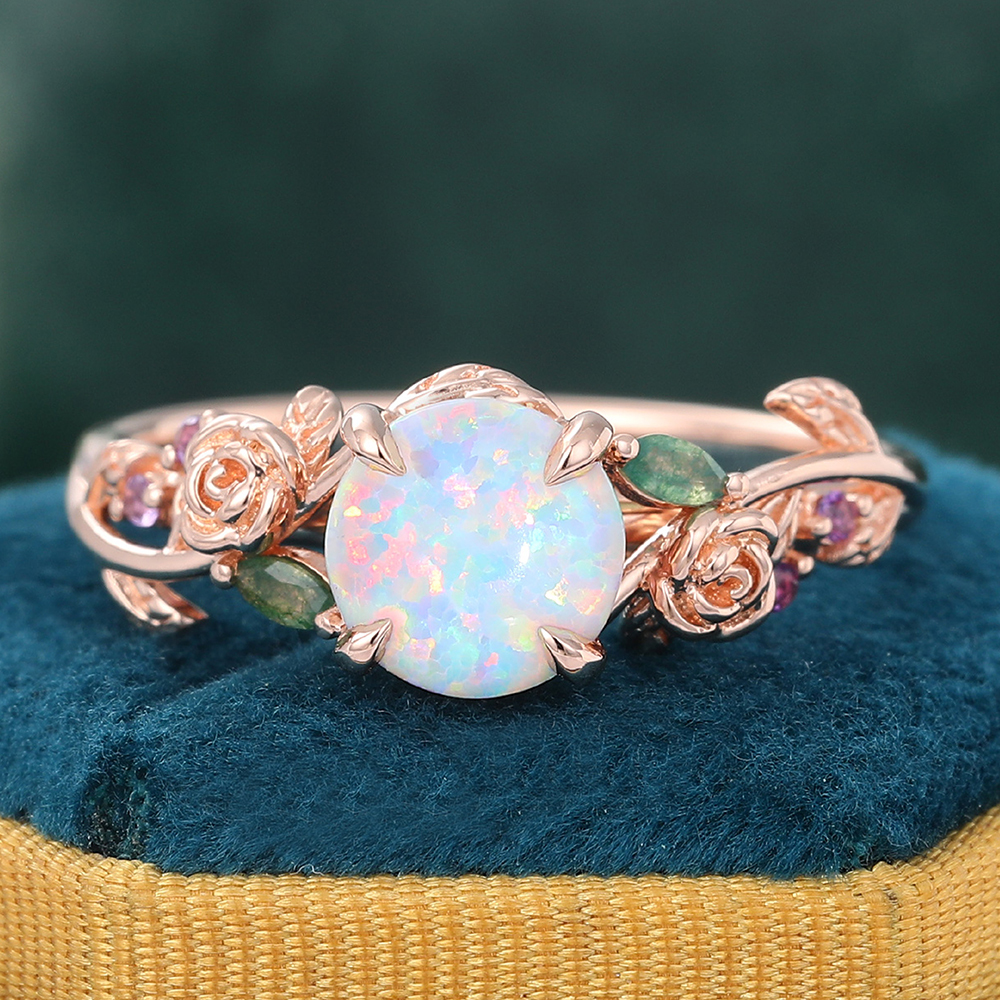
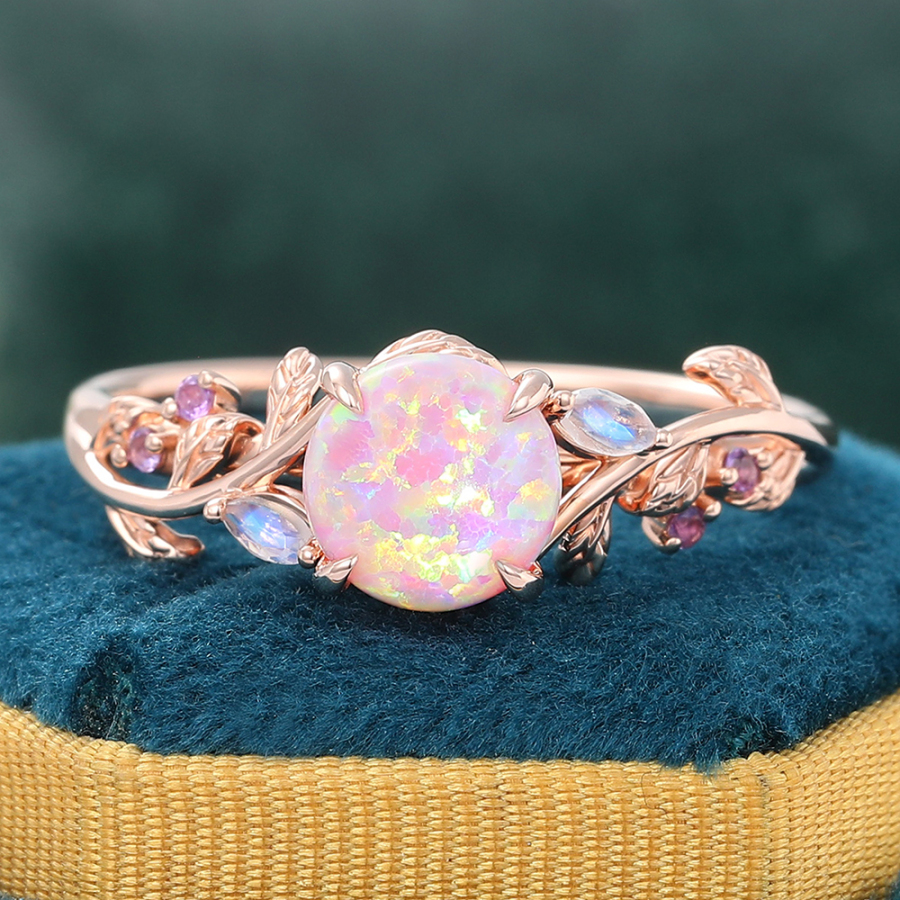
| 14K Rose Gold Round Opal Engagement Ring Rose Leaf Nature-Inspired Wedding Ring | Round Cut Pink Opal Ring Nature Inspired Leaf Engagement Ring 14K Rose Gold | Classic Pear Opal Engagement Ring with Diamond Cluster Accents | Oval Cut Opal Rose Gold Twisted Engagement Ring |
Opal vs. Mother of Pearl: Which to Choose?
The best gem isn't necessarily the most expensive or durable; it's the one that resonates with you. Here's how to choose based on your lifestyle and personality.
Choose Mother of Pearl If...
- You are the Everyday Dreamer. You love classic, feminine elegance that's easy to wear and style.
- You're gifting thoughtfully on a budget. It's the perfect choice for a meaningful graduation, bridesmaid, or birthday gift that looks luxurious without breaking the bank.
- You value serenity. The calming, gentle energy of mother-of-pearl resonates with your desire for peace and protection.
Choose Opal If...
- You are the bold artist. You are unique and creative, and want a gem that reflects your one-of-a-kind personality. No two opals are alike.
- You're marking a milestone: An opal is a spectacular choice for a major anniversary (it's the traditional gift for the 14th anniversary), a push present, or a significant birthday gift.
- You Embrace Transformation: Opal is known as a stone of inspiration, creativity, and emotional healing. You're drawn to its dynamic and passionate energy.
Final Verdict: Mother of Pearl vs. Opal
Having the choice between mother-of-pearl and opal is a beautiful thing. One is a whisper of oceanic elegance—timeless, serene, and accessible. The other is a fiery dance of earthly magic—unique, passionate, and captivating.
Neither is better than the other; they simply tell different stories. The real question is, which one will you choose to tell yours?
Ready to find your perfect piece? Explore our curated collection of one-of-a-kind opal treasures and begin your story today.
Opal vs. Mother of Pearl: Frequently Asked Questions (FAQs)
Is Mother of Pearl an Opal?
No, mother-of-pearl is a type of nacre found in mollusks, while opal is a gemstone formed from silica.
Can I Wear an Opal Ring Every Day?
Yes, but with caution. A protective bezel setting is essential for an everyday opal ring.
How Can I Tell the Difference Between Real Mother of Pearl and Plastic?
Here's how to tell if your pearls are real: You can touch the surface. Real mother-of-pearl feels cool and dense, while plastic feels warm and lightweight. The iridescence of real mother-of-pearl shifts more subtly and organically when moved in the light.
Which is Better for an Engagement Ring: Opal or Mother of Pearl?
If you must choose between the two, opal is the better option. It is a true gemstone that is more durable than mother-of-pearl and carries a stronger symbolic association with passion, creativity, and love.
Is Mother of Pearl expensive?
Generally, mother-of-pearl is more affordable than opal and other gemstones. Its value depends on quality, color, and craftsmanship. However, it is widely available and often used in jewelry, watch dials, and decorative inlays.
Comment