
How Much Is a Ruby Worth? Value, Rarity, Quality, & Price
Jul 08,2025 | Juyoyo
For centuries, the ruby has reigned as the "King of Gems." Its fiery red glow has captivated emperors, adorned royalty, and symbolized the deepest passions of the human heart. If you’re intrigued by this gemstone and are considering adding a ruby piece to your jewelry collection, you may be wondering: How much is a ruby worth?
The answer is more complex than a simple price tag. A ruby’s value is a blend of ancient geology, expert craftsmanship, and market dynamics. While one ruby might cost a few hundred dollars, another of the same size could command millions.
This guide demystifies Ruby pricing, equipping you with the knowledge you need to shop with confidence and maximize your investment.
Understanding the Ruby Gemstone
Before we briefly discuss its value, let's take a moment to get acquainted with this captivating gemstone. Grasping its essence, historical significance, and physical properties will enhance your appreciation of its unique charm.
What is a Ruby?
Essentially, a ruby is a variety of the mineral corundum. Corundum comes in many colors, and when it appears red, it is called a ruby. All other colors of corundum are known as sapphires. The trace element that gives rubies their lifelike red color is chromium-a masterpiece of nature's artistry.
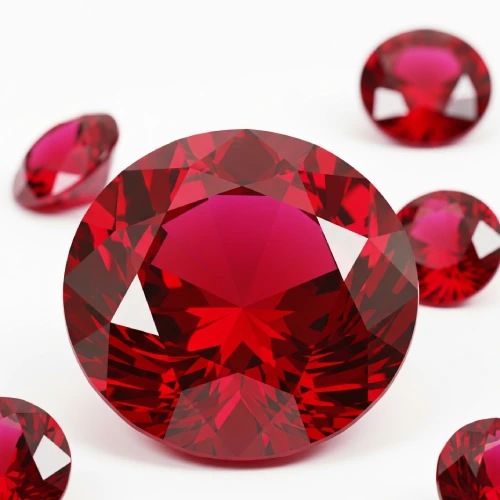
The Legendary History of the Ruby
The history of the ruby is as old as human civilization. In ancient India, it was known as "ratnaraj," meaning "king of precious stones." Ancient cultures believed it contained the power of the sun and that wearing a ruby would bring protection, wealth, and wisdom.
From biblical references to the crowns of European royalty, the ruby has always symbolized power and wealth. Ancient warriors even embedded rubies into their skin, believing that it would make them invincible in battle. This rich historical background adds an intangible value to the ruby that transcends its physical beauty.
Core Characteristics of a Ruby
Hardness: With a Mohs hardness rating of 9, rubies are second only to diamonds, which have a rating of 10. This makes it exceptionally durable and ideal for jewelry meant for daily wear, such as engagement rings or family heirlooms.
Color: As we will explore in depth, color is the soul of the ruby. Its color spectrum ranges from lovely pinks to the most prized deep, pure red known as "pigeon's blood."
Fluorescence: Many high-quality rubies, especially those from Myanmar, exhibit natural fluorescence. Under UV light, such as sunlight, they emit a soft red glow that makes the gem appear to burn from within, greatly enhancing its visual appeal.
How Rare Are Rubies? Expert Insight
Many gems are rare, but gem-quality rubies are a geological miracle. They are among the world’s most precious gemstones, celebrated for their fiery red hues and storied legends. Understanding this is the first step to appreciating their value.
Geological Rarity:
- It only forms when chromium, zero iron, and extreme pressure combine (ultra-rare conditions).
- Burmese "pigeon's blood" rubies, the rarest, come from mines that are 90% depleted.
Market Reality:
- Less than 1% of mined rubies are gem quality.
- Unheated Burmese rubies appreciate by ~10% yearly (versus 3% for gold).
- Lab-grown rubies are flooding the low-end market, making natural stones more exclusive.
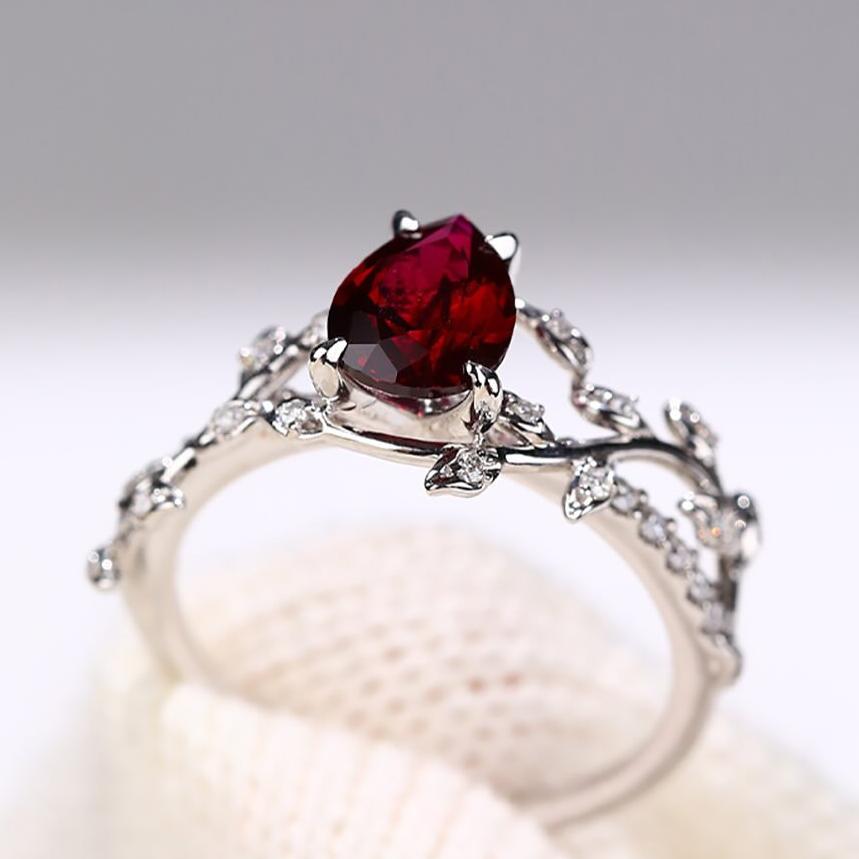 |
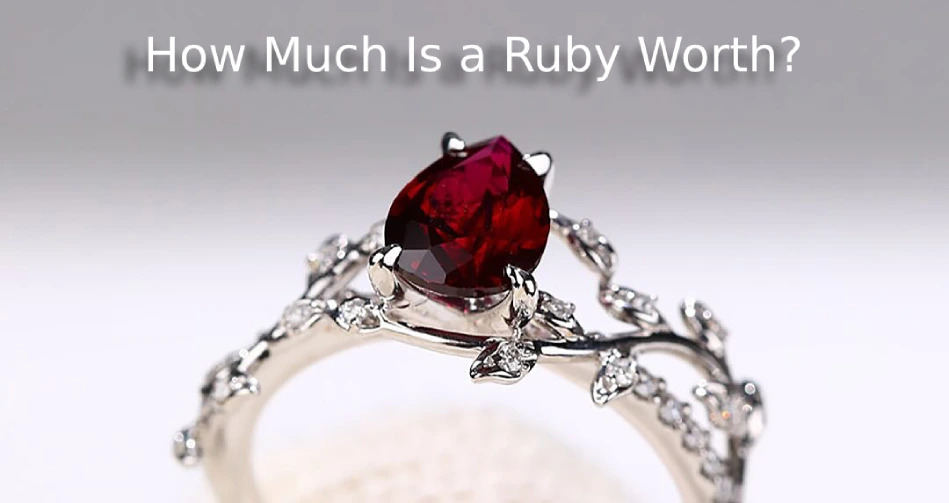
| Juyoyo Pear Shaped Ruby Engagement Ring Nature Inspired Vintage Bridal Ring 14K White Gold |
How Much Are Rubies Worth? Six Key Factors That Drive Ruby Prices
Like diamonds, rubies are graded using the 4Cs: Color, clarity, cut, and carat weight. However, the emphasis placed on each factor differs, with color being the undisputed king.
1. Color: The Soul of the Ruby
Color is the single most important factor in determining a ruby's worth, accounting for a huge portion of its value. The most desirable hue is a vibrant, pure red with a subtle hint of blue. This legendary color is known as "pigeon's blood."
A spectrum of ruby colors:
- Pinkish-Red: While beautiful, these are less valuable than pure reds.
- Strong Red: A rich, well-saturated red that is highly desirable.
- Pigeon's Blood Red: The pinnacle of ruby color. It is a deep, vivid red with a fluorescent quality that makes it seem to glow from within. These colors are exceptionally rare and command the highest prices.
- Dark Red: Rubies that are too dark with brown or orange undertones are less valuable because they lack the vibrancy and brilliance of finer stones.
Top-quality color can increase a ruby’s value tenfold compared to a stone of the same size and clarity with a lesser hue.
2. Clarity: A Window into Its Natural Origin
Clarity refers to the presence of inclusions, or tiny imperfections, within a stone. Unlike diamonds, which are valued for their flawlessness, rubies are expected to have some inclusions. These inclusions are nature's fingerprints and a hallmark of a natural gemstone.
However, the type, location, and number of inclusions matter.
- Eye-Clean: Rubies that appear flawless to the naked eye are extremely rare and valuable.
- Slightly included: Minor inclusions that don't detract from the stone's beauty are common and acceptable.
- Heavily Included: Prominent Inclusions, reduce transparency or brilliance, or pose a durability risk will significantly lower a ruby's value.
In a fascinating twist, however, some inclusions can increase a ruby's value. Fine, intersecting needles of the mineral rutile (called "silk") can create a phenomenal effect known as asterism, resulting in the coveted and mystical star ruby.
3. Cut: Unleashing the Fire Within
A ruby's cut is about much more than its shape. A master cutter's goal is to maximize the stone’s color, minimize the visibility of inclusions, and preserve as much carat weight as possible.
Common shapes include round and pear cuts, as these best complement the natural crystal shape of rough rubies. A well-cut ruby will have a lively brilliance, directing light back to the eye and showcasing its rich color. A poor cut can make the most beautiful rough stone appear dull or uneven in color, drastically reducing its market value.
4. Carat Weight: The Rarity of Size
Carat weight is a measure of size, but its effect on price isn't linear-it's exponential. A 3-carat ruby is not simply three times the price of a 1-carat ruby; it could be ten or twenty times more expensive.
This is because large, gem-quality rubies are exponentially rarer than smaller ones. The price per carat increases substantially at significant milestones, such as 1, 3, and 5 carats. A large ruby that also possesses top-tier color and clarity is one of the rarest treasures on Earth.
Beyond the 4Cs, two final factors can determine a ruby’s value: its birthplace and whether it has been enhanced.
5. Ruby Origins: Why Some Locations Command Higher Prices
Rubies are mined in several countries, but not all sources are equal. The most prized rubies come from:
- Myanmar (Burma): The legendary Mogok Valley produces the finest "pigeon’s blood" rubies, which have unmatched color and fluorescence. However, due to political issues, ethical sourcing is a concern.
- Mozambique: The fastest-growing source of high-quality rubies that often rival Burmese stones at lower prices.
- Madagascar and Tanzaniaare renowned for their vivid red rubies, though some may exhibit subtle hints of purple or orange.
6. Ruby Treatments: How They Affect Value
The vast majority of rubies are heated to improve their color and clarity permanently. This is a practice that is universally accepted and stable. An unheated ruby of fine quality is exceptionally rare and commands a significant premium, often 50% to 100% more than a comparable heated stone.
However, be aware of other treatments, such as glass-filling. In this non-permanent treatment, fractures in a low-quality ruby are filled with lead glass to improve its appearance. These stones are not durable and are worth only a fraction of an untreated or simply heated ruby.
How Much Is a Ruby Worth? Price & Cost
Now, let's translate this into real numbers. The following table provides estimated price ranges for a standard, heated, one-carat ruby. Prices for unheated rubies and larger stones will be significantly higher.
| Quality | Appearance | Estimated Price Per Carat (USD) |
| Commercial Grade | Opaque to semi-translucent, often heavily included, with weaker color (overly pink or dark). | $100 - $500 |
| Good Grade | Good color and saturation, some visible inclusions but overall attractive. The standard for fine jewelry. | $1,000 - $4,000 |
| Fine Grade | Vivid, strong red color with minor inclusions. Very brilliant and beautiful. | $5,000 - $12,000 |
| Heirloom/Top Grade | Exceptional "Pigeon's Blood" color, eye-clean or nearly so. The rarest and most valuable. | $15,000 - $30,000+ |
Is Ruby Good for an Engagement Ring?
Yes! Rubies are exceptional engagement rings, scoring a 9 on the Mohs scale for everyday durability, and a ruby engagement ring carries profound symbolic meaning.
- Passion and Love: It is the July birthstone and an alternative to diamond engagement rings.
- Wealth & Power: It is worn by royalty. It is similar to the British Crown Jewels.
- Protection: Ancient warriors believed rubies made them invincible.
💡 Modern Trend: Rubies are surging in popularity as non-traditional engagement rings, especially vintage and Art Deco styles.
Also Read: The Symbolism of Ruby Engagement Rings
Ruby vs. Other Red Gems: Don't Get Fooled!
Many red gemstones are mislabeled or mistaken for rubies.
| Gemstone | Key Differences | Price (Per Carat) |
| Ruby | Deep red, chromium-based | $100 – $1M+ |
| Pink Sapphire | Lighter, no "pigeon’s blood" hue | $50 – $5,000 |
| Red Spinel | Often mistaken for ruby, slightly softer | $200 – $10,000 |
| Garnet | Darker, more affordable | $10 – $500 |
| Lab-Grown Ruby | Identical chemically, but no rarity | $20 – $500 |
Also Read: Garnet vs Ruby; Ruby vs. Diamond.
How to Tell if a Ruby Is Real
Natural rubies are significantly more valuable than synthetic or imitation ones. Confirming authenticity protects you from overpaying or falling for deceptive marketing tactics.
Here's how to quickly identify a real ruby:
- Check for natural inclusions, such as silk or fingerprints, under 10x magnification.
- Verify that the color is strong and doesn't change under different lighting.
- Demand a GIA/AGL lab report confirming that the ruby is untreated.
- Fake rubies (made of glass or spinel) often appear too perfect or filled with bubbles, while synthetic rubies lack natural flaws.
The Juyoyo Guide: Buying and Caring for Your Ruby with Confidence
 |
| Juyoyo Round Cut Ruby Engagement Ring 14K Gold Diamond Cluster Bridal Ring for Women |
Choosing a ruby is a significant investment and a deeply personal experience. At Juyoyo, our mission is to empower you with the knowledge to make a choice you’ll cherish forever.
How to Buy Your Ruby
- Prioritize the Certificate: This is non-negotiable for any significant ruby purchase. Insist on a report from a reputable gemological laboratory, such as the Gemological Institute of America (GIA) or the American Gemological Laboratories (AGL). The report provides independent proof of the ruby’s identity, origin, and treatments.
- Focus on Color: Look for a ruby whose color speaks to you. View it under different lighting conditions (natural daylight and indoor light) to see its true color. At Juyoyo, we provide high-quality, unedited photos and videos to show you exactly what you're getting.
- Embrace Natural Imperfections: Don’t be afraid of minor inclusions. They are your guarantee that the stone is natural. The important thing is that they don't compromise the gem's overall beauty and integrity.
- Ask Questions: A trustworthy jeweler welcomes questions. We are here to explain every detail of a certificate and help you find the perfect stone for your budget and style.
How to Care for Your Ruby
Rubies are the second hardest gemstone after diamonds (a 9 on the Mohs scale), making them ideal for everyday wear.
- Cleaning: Gently scrub your ruby jewelry with a soft toothbrush and a solution of mild dish soap and warm water.
- Storage: Store your ruby jewelry separately in a soft pouch or lined box to prevent scratching other, softer gems.
- Avoid: Although rubies are tough, it’s best to avoid harsh chemicals and extreme heat.
Conclusion: Appreciate the Rarity
Rubies owe their enduring allure to a combination of geological scarcity, historical reverence, and breathtaking beauty. For buyers seeking true rarity in terms of color, clarity, size, and provenance, rubies represent the ultimate trophy gemstone. By partnering with Juyoyo, you gain access to a curated collection of exceptional rubies.
Ready to discover the rarest rubies on earth? Explore Juyoyo’s limited-edition collection and find a gemstone as unique as your story.
FAQs about Rubies
How Much Is a Ruby Worth Today?
Prices vary widely, from $100 to over $100,000 per carat, depending on color, clarity, origin, and treatment.
How Much Does a Ruby Cost?
Commercial-grade rubies start at around $100–$500 per carat, while fine-quality, untreated Burmese rubies can exceed $50,000 per carat.
How Much Is a 1-Carat Ruby Worth?
The price of a one-carat ruby can range from $200 to over $15,000, with the highest prices commanded by top-tier stones (e.g., pigeon blood red, untreated).
Are Rubies Worth More Than Gold?
Yes! High-end rubies appreciate by ~8–12% yearly, compared to gold's ~3%.
What Does a Ruby Symbolize in a Ring?
A ruby ring symbolizes passion, love, courage, and commitment. They are often chosen for engagement or anniversary rings to represent deep emotional bonds.
Comment