
Choosing Between Rubies & Sapphires: Expert Guide for Engagement Rings & Investment
Jul 14,2025 | Juyoyo
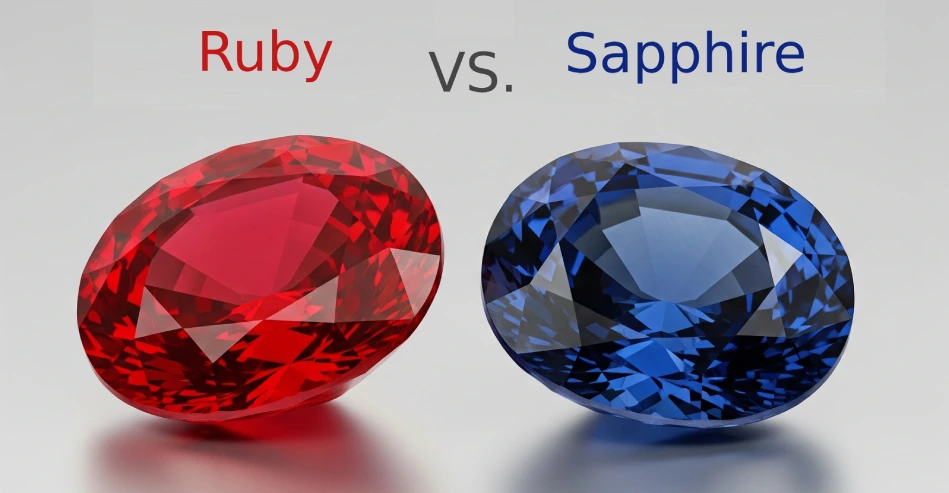
The choice between a ruby and a sapphire is about more than just picking red or blue. Both gems belong to the corundum family, have a Mohs hardness rating of 9, and have a rich history associated with them, ranging from royal insignia to engagement rings. Whether you’re looking for the perfect engagement ring, a birthstone gift, or an eye-catching addition to your collection, understanding their unique qualities can help you make a confident purchase.
At Juyoyo, we believe that selecting a gemstone is a personal journey and that true appreciation begins with understanding its story. This guide will reveal the differences between rubies and sapphires, from their shared origins to the subtle nuances that give each its unique identity. Ready for a gem adventure? Let's dive in!
Are Sapphires and Rubies the Same? A Tale of One Gemstone Family
This is one of the most frequently asked questions in the jewelry world. Are sapphires and rubies the same? The answer is a fascinating yes. Both are born from the same mineral: Corundum (Al₂O₃).
Think of corundum as the pure base for a masterpiece. Composed of aluminum oxide, corundum is colorless in its natural state. It's a harder, durable crystal waiting for a touch of magic to give it an identity.
So, where do the breathtaking reds and brilliant blues come from? The magic lies in the tiny impurities, or trace elements, that found their way into the crystal structure as it formed deep within the Earth millions of years ago.
- Ruby's Secret: A ruby gets its iconic red hue from chromium. The more chromium, the more intense the red. This element absorbs other colors in the spectrum, reflecting that unmistakable fiery glow back to your eye.
- Sapphire's Secret: A classic blue sapphire owes its color to a combination of iron and titanium. These elements work together to absorb red and yellow light, leaving behind the stunning shades of blue and violet we adore.
The Ultimate Comparison Chart: Ruby vs. Sapphire at a Glance
For those who love a quick overview, this chart breaks down the key differences and similarities.
| Feature | Ruby | Sapphire |
| Gem Family | Corundum | Corundum |
| Color | Shades of Red (from vibrant pinkish-red to deep "pigeon's blood" red) | All colors except red (Classic Blue, Pink, Yellow, Green, Purple, Orange) |
| Hardness | 9 on the Mohs Scale (Extremely durable) | 9 on the Mohs Scale (Extremely durable) |
| Key Symbolism | Passion, Love, Power, Courage, Vitality | Wisdom, Loyalty, Nobility, Faith, Serenity |
| Birthstone | July | September |
| Anniversary | 15th and 40th | 5th and 45th |
| Rarity & Price | Fine-quality rubies are exceptionally rare and often command higher prices per carat than sapphires. | More widely available than ruby, offering a broader price range. Rare colors can be extremely valuable. |
| Best For | Romantic statements (engagement rings), symbols of power, protective talismans. | Expressions of loyalty, everyday luxury, something blue for a wedding, and versatile color options. |
Ruby vs Sapphire: What Are the Key Differences?
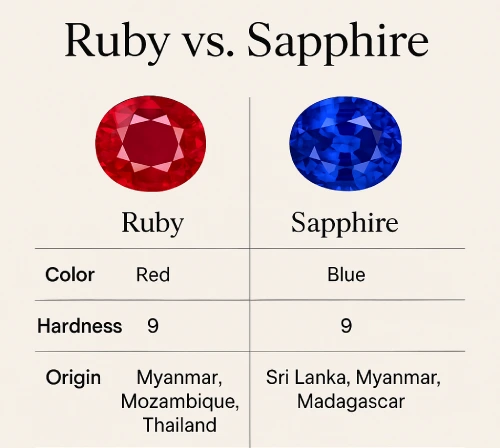
Now, let's explore the details that excite gemologists and captivate buyers. Here, you'll transition from a curious observer to a confident connoisseur.
Ruby vs. Sapphire Color
- The Ruby Spectrum: The most coveted ruby color is "pigeon's blood": a vibrant, pure red with a hint of blue-purple. This term originated in Burma (now Myanmar) and describes a color so vivid that it is said to match the first two drops of blood from a killed pigeon's nose. While the name is dramatic, the color is the pinnacle of rarity and value in the ruby world.
- The Sapphire Rainbow: Many are surprised to learn that sapphires are not just blue. These "fancy sapphires" come in a breathtaking array of colors, including sunny yellows, lush greens, royal purples, and delicate violets. The rarest and most prized fancy sapphire is the padparadscha, a stunning pinkish-orange gem named after the Sinhalese word for "lotus blossom."
- Pink Sapphire vs. Ruby: A "light ruby" and a "vivid pink sapphire" might appear identical. Pink sapphires occupy the lighter end of the red spectrum. According to the GIA, any corundum with red saturation above 50% is considered a ruby, while those with saturation below 50% are considered pink sapphires.
 |
 |
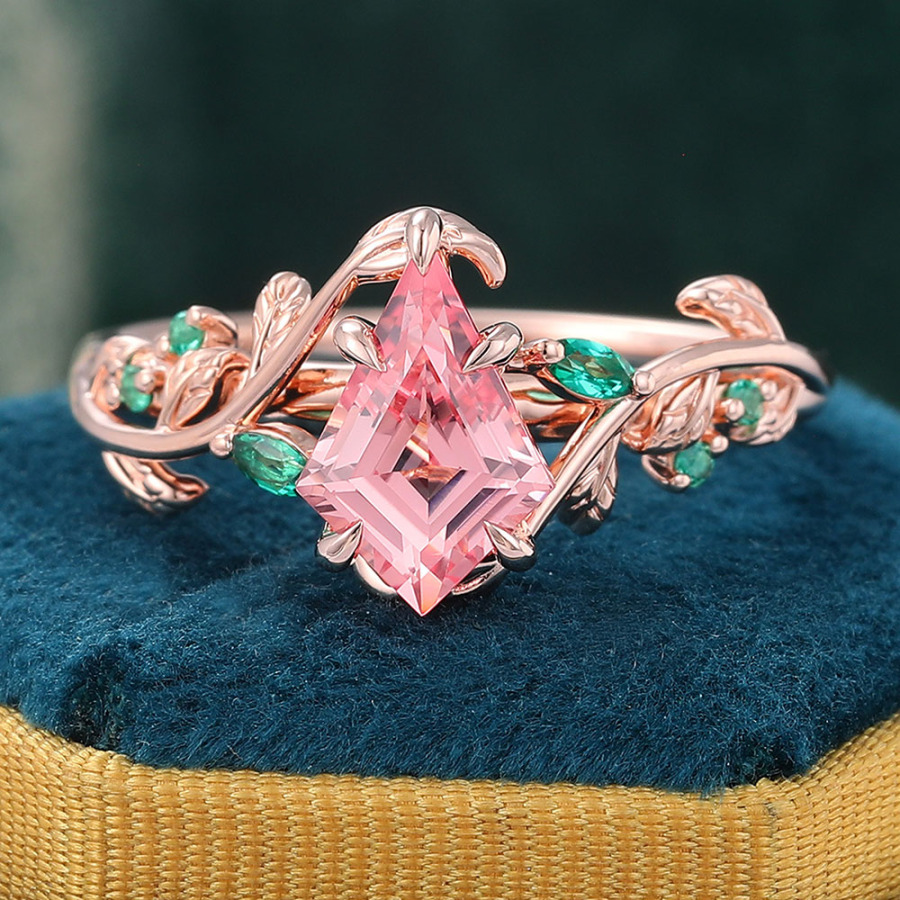 |
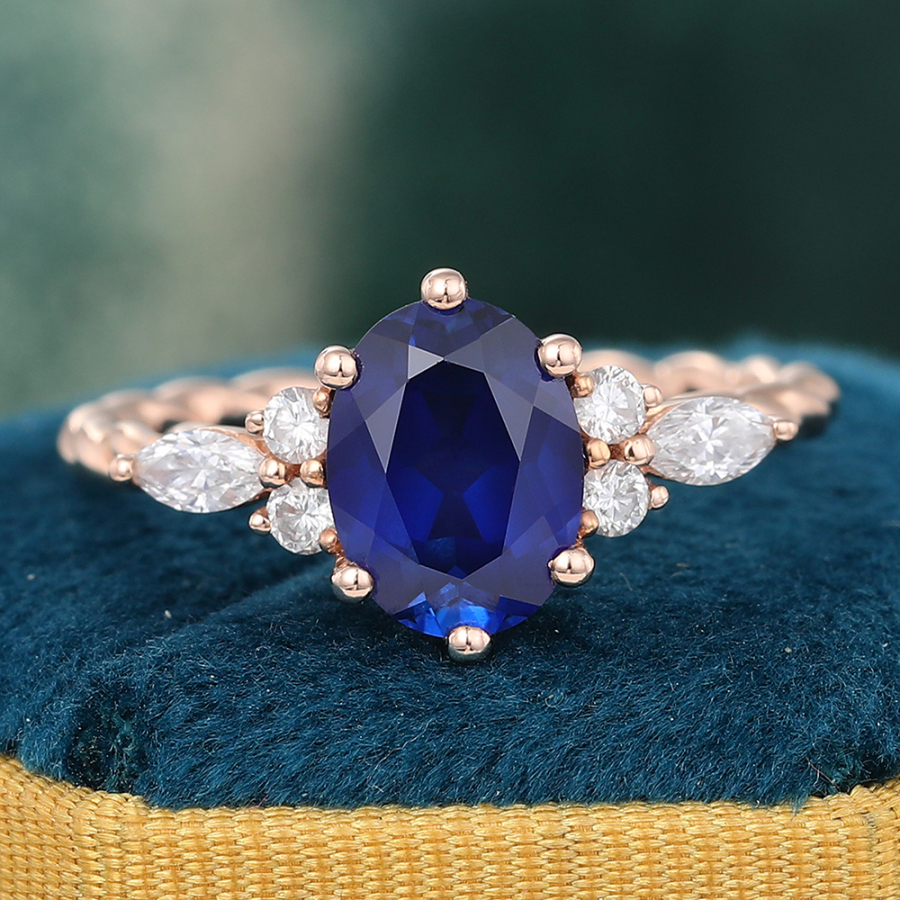
| Round Cut Ruby Engagement Ring 14K Gold Diamond Cluster Bridal Ring for Women | Juyoyo Oval Cut Lab Sapphire Rose Gold Twisted Engagement Ring | Kite Cut Lab Pink Sapphire Engagement Ring, Emerald Leaf Nature Inspired Bridal Ring |
Ruby vs. Sapphire Durability & Daily Wear
Both rubies and sapphires score a 9 on the Mohs scale, which is second only to diamonds (which score a 10). This makes them exceptionally durable and resistant to scratches. This makes them a perfect choice for pieces meant to be worn daily, such as engagement rings, which need to withstand the test of time. However, toughness and cleavage matter too.
| Property | Ruby | Sapphire |
| Mohs Hardness | 9 | 9 |
| Toughness | Very good | Very good |
| Common Cleavage | Absent | Absent |
| Daily Wear Safety | Highly recommended | Highly recommended |
Ruby vs. Sapphire Price & Value
Beyond the name, a gem's value is determined by the globally recognized 4Cs.
- Color: This is king. For rubies, it’s the intensity and purity of the red. For sapphires, it's the richness of the blue or the vibrancy of a fancy color.
- Clarity: This refers to the absence of internal inclusions (flaws). A completely flawless natural ruby is almost mythical, and some inclusions are expected. They can prove a gem's natural origin.
- Cut: The cut unlocks a gem's brilliance and fire. A masterfully cut stone will sparkle intensely, while a poorly cut stone will appear dull regardless of its color or clarity.
- Carat Weight: This is the stone's physical weight. Large, high-quality rubies and sapphires are exponentially rarer than smaller ones, so their price per carat increases dramatically with size.
Pro Tips: Pink sapphires cost $10,000-$50,000 per carat for vivid hues - the "stealth wealth" alternative to rubies.
Also Read: How much is a ruby worth?
Ruby vs. Sapphire Origin & Ethical Sourcing
The origin of a gem influences its color, price, and sustainability.
- Myanmar (Burma) Rubies: They have a legendary pigeon’s blood hue, but they are often associated with conflict.
- Mozambique & Madagascar: Vibrant rubies with transparent trade channels.
- Sri Lanka (Ceylon) Sapphires: Delicate cornflower blue and ethically mined.
- Kashmir & Burmese Sapphires: Historical classics that are now nearly depleted.
- Australia & Montana (USA): Unique dark teal and greenish-blue sapphires.
| Origin | Ruby Avg.Price/ct | Sapphire Avg.Price/ct | Notes |
| Myanmar | $5,000-$12,000 | N/A | Pigeon's blood remains rare |
| Mozambique | $1,500-$4,000 | N/A | Increasing supply |
| Sri Lanka | N/A | $300-$1,200 | Cornflower hues are most valued |
| Montana | N/A | $200-$700 | Teal and greenish-blue |
| Lab-Grown(Both) | $50-$300 | $50-$300 | identical optics, lower cost |
Ruby vs. Sapphire Treatments
Most rubies and sapphires are treated to enhance their clarity and color. It is a stable and accepted practice. High-quality untreated stones are exceptionally rare and valuable. Here’s what to expect:
- Heat Treatment: This standard industry practice stabilizes color and clarifies inclusions.
- Diffusion Treatment: Rare for rubies, but sometimes used for blue or yellow sapphires. It permanently alters the surface color.
- Irradiation: Less common, mainly used for fancy sapphires.
- Lab-Grown: Created in a controlled environment, they are free of natural inclusions and ethical concerns.
Ruby vs. Sapphire Meaning & Symbolism
Both rubies and sapphires carry centuries of cultural lore and emotional resonance. Choosing one over the other can reflect your personality, intentions, and aspirations.
Ruby: The Stone of Passion & Power
- Love & Vitality: Known as the "King of Gemstones" in ancient Sanskrit, rubies symbolize eternal love, courage, and life force. Discover why they're the ultimate choice for a ruby engagement ring meaning.
- Royalty & Protection: Medieval warriors embedded rubies in armor for invincibility. According to Burmese legend, they make the wearer unconquerable.
- Modern Meaning: Celebrities like Jessica Simpson choose ruby engagement rings for their bold, fiery energy.
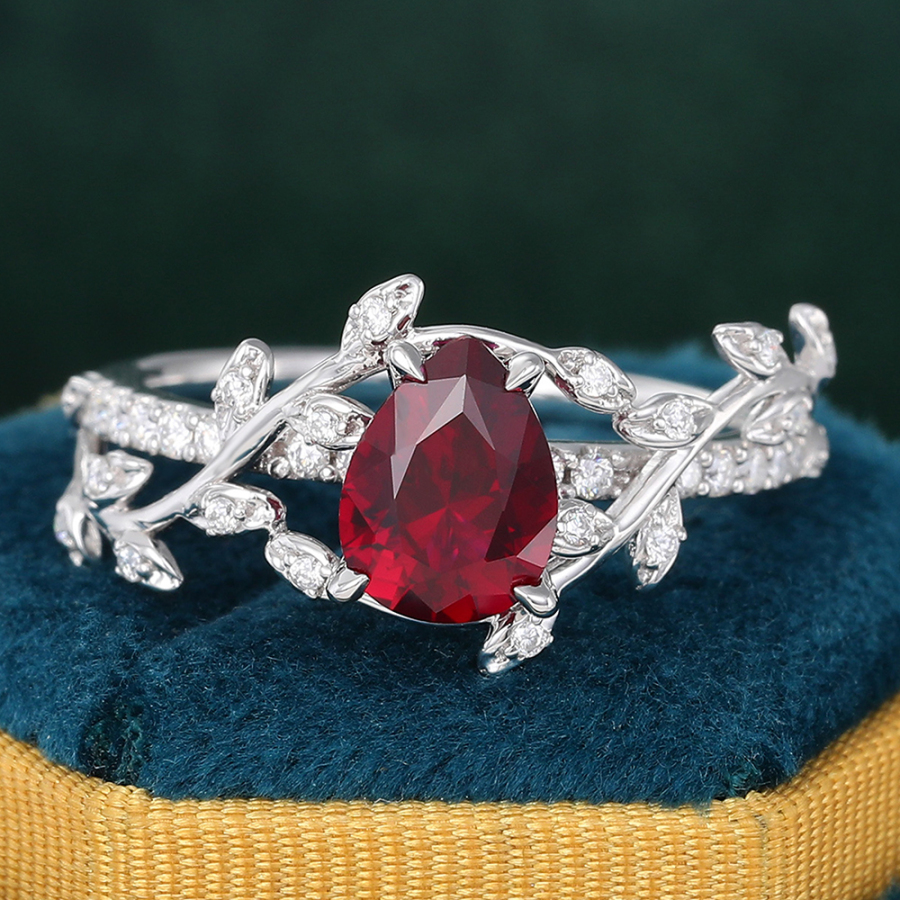 |
| Pear Shaped Ruby Engagement Ring, Nature Inspired Vintage Bridal Ring, 14K White Gold |
Sapphire: The Stone of Wisdom & Destiny
- Divine Favor: The ancient Persians believed that the sky was painted blue by sapphires. Kings wore them to attract heavenly blessings.
- Truth & Loyalty: The most famous sapphire engagement ring meaning is embodied by Princess Diana’s (now Kate Middleton’s) iconic piece, representing fidelity and enduring love.
- Tech Era Symbol: Silicon Valley elites wear sapphires as a "logic over emotion" talisman.
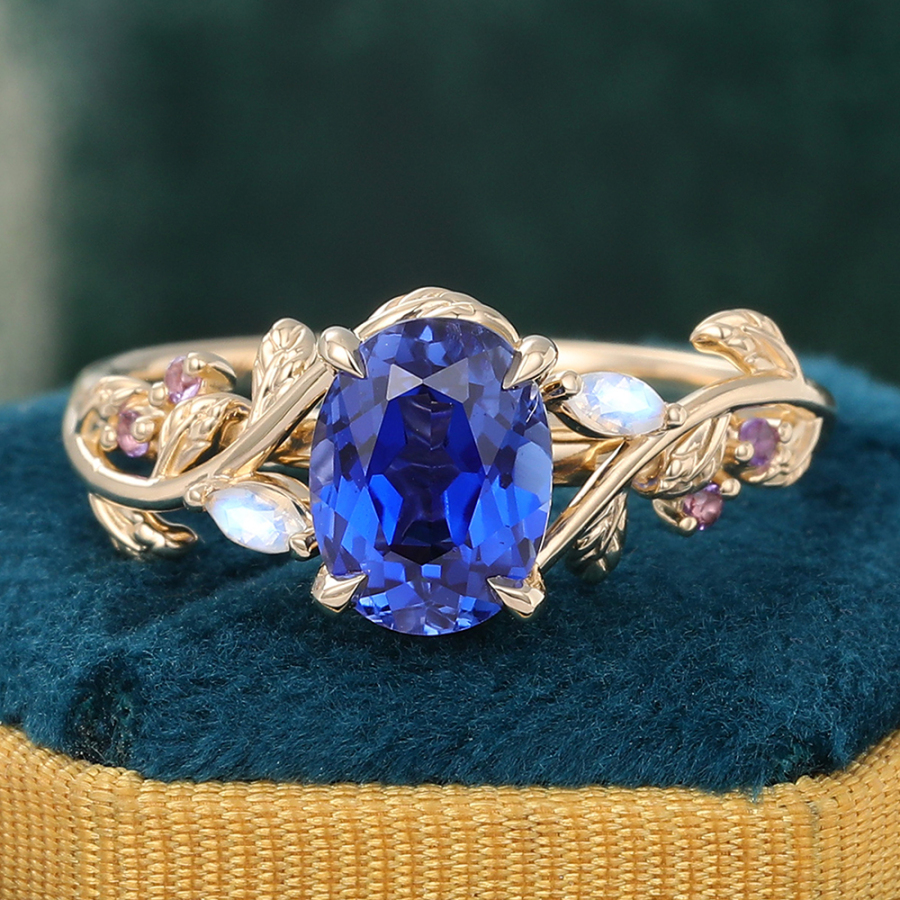 |
| Unique Oval Cut Blue Sapphire Engagement Ring Nature Inspired Promise Ring 14K Yellow Gold |
Pink Sapphire: The Romantic Alternative
- Gentle Strength: Combines the love energy of rubies with the calm of sapphires. It is ideal for second marriages or fresh starts.
- Feminine Empowerment: There has been a rising trend of women purchasing rings for themselves (searches have increased by 300% since 2020).
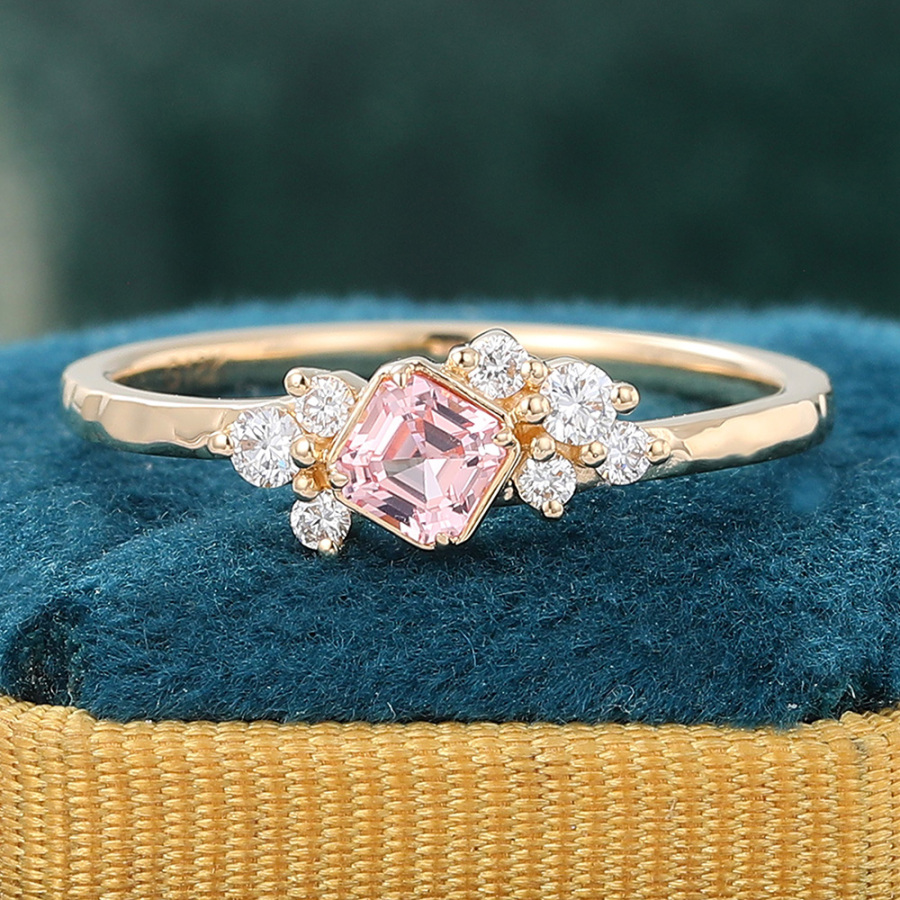 |
| Asscher Cut Pink Sapphire Engagement Ring, Diamond Cluster Promise Ring, Yellow Gold |
Ruby vs. Sapphire: Which to Choose?
The best gemstone is the one that tells your story. Which one calls to you?
Choose a Ruby if...
- You want to make a bold statement about passionate, unwavering love.
- You are drawn to power, energy, and a touch of drama.
- You're celebrating a July birthday or a 15th or 40th wedding anniversary.
- You believe in timeless classics that command attention.
Choose a Sapphire if...
- You value wisdom, loyalty, and a calm, noble presence.
- You want a universe of color options beyond the traditional.
- You're celebrating a September birthday or a 5th or 45th anniversary.
- You want a durable, beautiful, versatile gem for everyday elegance.
Caring for Your Ruby or Sapphire
To keep your gemstone looking its best:
Do's:
- Clean gently with warm, soapy water and a soft brush every six to 12 months.
- Store it separately in a fabric-lined box to avoid scratches.
- Have a jeweler inspect the settings annually.
Don'ts:
- Avoid ultrasonic cleaners for heavily included stones.
- Do not expose them to harsh chemicals (chlorine or acids).
- Avoid extreme temperature changes.
Conclusion: More Than Just Red vs. Blue
Now that you're armed with expert knowledge, the most exciting step is finding the gem that speaks to you. Whether you're drawn to the fiery pulse of a ruby or the tranquil depth of a sapphire, every gemstone has its own story and soul.
At Juyoyo, we don’t just sell jewelry - we curate stories. Our collection is curated with an unwavering commitment to beauty, quality, and authenticity. Explore our world of color and find the piece that will become part of your legacy.
| 🛒 Shop Now | » | 🔥 Ruby Jewelry | 🌊 Sapphire Jewelry |
Frequently Asked Questions
What is the Difference Between Pink Sapphire and Ruby?
Pink sapphires contain less than 50% red saturation, making them a rosy alternative to true rubies. Although they share the same chemical formula, they differ in chromium levels.
Can You Wear a Ruby Every Day?
Absolutely! With a Mohs hardness rating of 9 and a proper setting, rubies can withstand daily wear. Opt for protective designs to ensure long-term durability.
Are Lab-Grown Rubies and Sapphires "Real"?
Yes. Lab-grown corundum has the same chemical, physical, and optical properties as natural corundum. The only difference is its origin. Lab-grown corundum offers a beautiful, more accessible alternative.
Which is More Expensive: a Ruby or a Sapphire?
Generally, on a per-carat basis, a fine-quality ruby is significantly more expensive than a fine-quality blue sapphire of the same size. This is due to the extreme rarity of high-quality rubies.
Can a Sapphire Ever be Red?
No, because by definition, if a corundum gem is dominantly red, it is classified as a ruby. Any other color, ranging from blue to pink to yellow, falls under the sapphire category.
Is a Sapphire Better Than a Ruby?
Neither gemstone is inherently better. Both rubies and sapphires are corundum with an equal hardness of 9. Your choice comes down to color preference, rarity - rubies often cost more per carat - and personal meaning.
Comment