
7 Most Protective Opal Ring Settings for Daily Wear: Style Meets Safety
Nov 25,2025 | Juyoyo
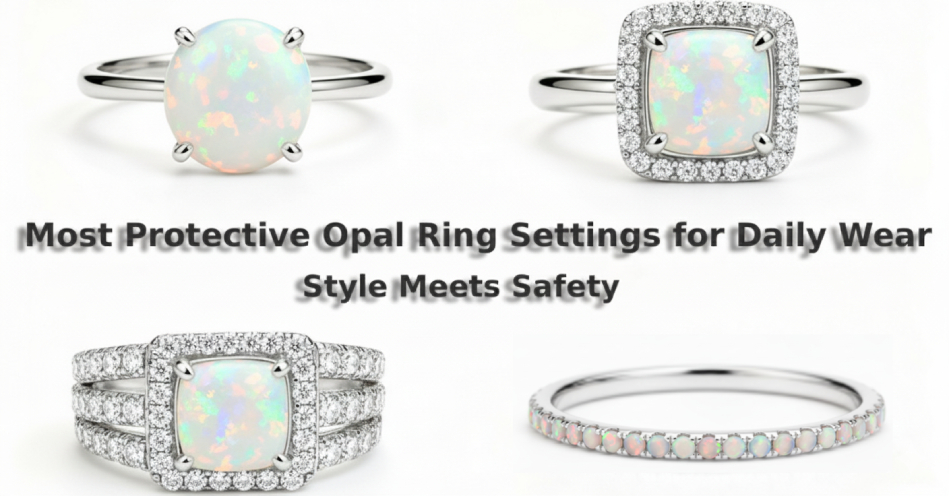
Have you fallen for an opal ring's play of color, but are worried about daily wear? Whether you prefer the fiery Australian black opal or the soft glow of a white opal, the right opal ring setting, such as a bezel or reinforced halo, allows you to showcase its color daily without worrying about chipping.
At Juyoyo, we specialize in designing opal jewelry that stands the test of time. In this guide, we’ll explore the seven most protective opal ring settings for daily wear, explain their pros and cons, and help you select a style that balances beauty with durability.
Why the "Setting" Matters More for Opals
Before exploring the different styles, it's important to understand how to protect them. Opals are stunning, but they have a Mohs hardness rating of around 5.5-6.5. Unlike diamonds, which can withstand exposed prongs, opals need a "shock absorber." A protective setting serves three purposes:
- Protects the Girdle: Covers the edges of the stone where chipping is most likely.
- Lowers the Center of Gravity: A "low profile" setting reduces the chance of knocking the ring against doors or tables.
- Secure Impact: It distributes force away from the stone.
The right setting acts like a suit of armor, shielding your stone from the bumps and scrapes of daily life.
For an overview of opal care and durability, see "Can Opals Get Wet?" to learn the basics of water safety and how to choose the right setting.
The 7 Most Protective Opal Ring Settings for Daily Wear
Here are our top picks, ranked with your opal’s safety as the top priority:
1. The Bezel Setting (The Gold Standard)
If safety is your number one priority, the bezel setting is the undisputed champion.
In this setting, a thin strip of precious metal (gold or platinum) completely encircles the opal, holding it securely in place.
Why it’s Protective: The bezel completely encloses the opal’s vulnerable girdle (the outer edge), protecting it from side impacts. It also holds the stone more securely than any other setting, minimizing the risk of it coming loose.
The Style Factor: Bezel settings offer a sleek, modern, minimalist look. They also prevent the ring from snagging on sweaters or hair.
- Pros: Maximum protection, sleek modern look, ideal for flat cabochon opals.
- Cons: They can cover part of the stone’s surface, which slightly reduces the visible play of color.
- Perfect For: Anyone with an active lifestyle. It's the most protective opal ring setting available.
Readers interested in durability and practicality for daily wear can refer to our guide, "Can You Wear an Opal Ring Every Day?", which explains how settings influence opal longevity.
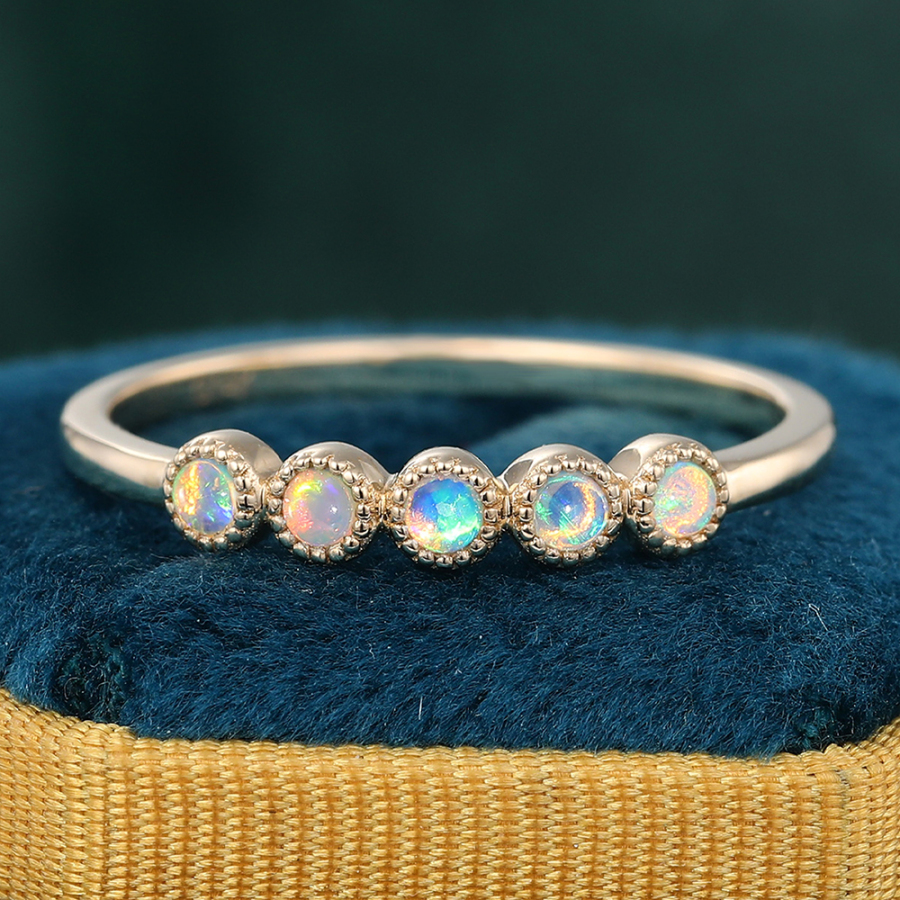 |
| Bezel Setting |
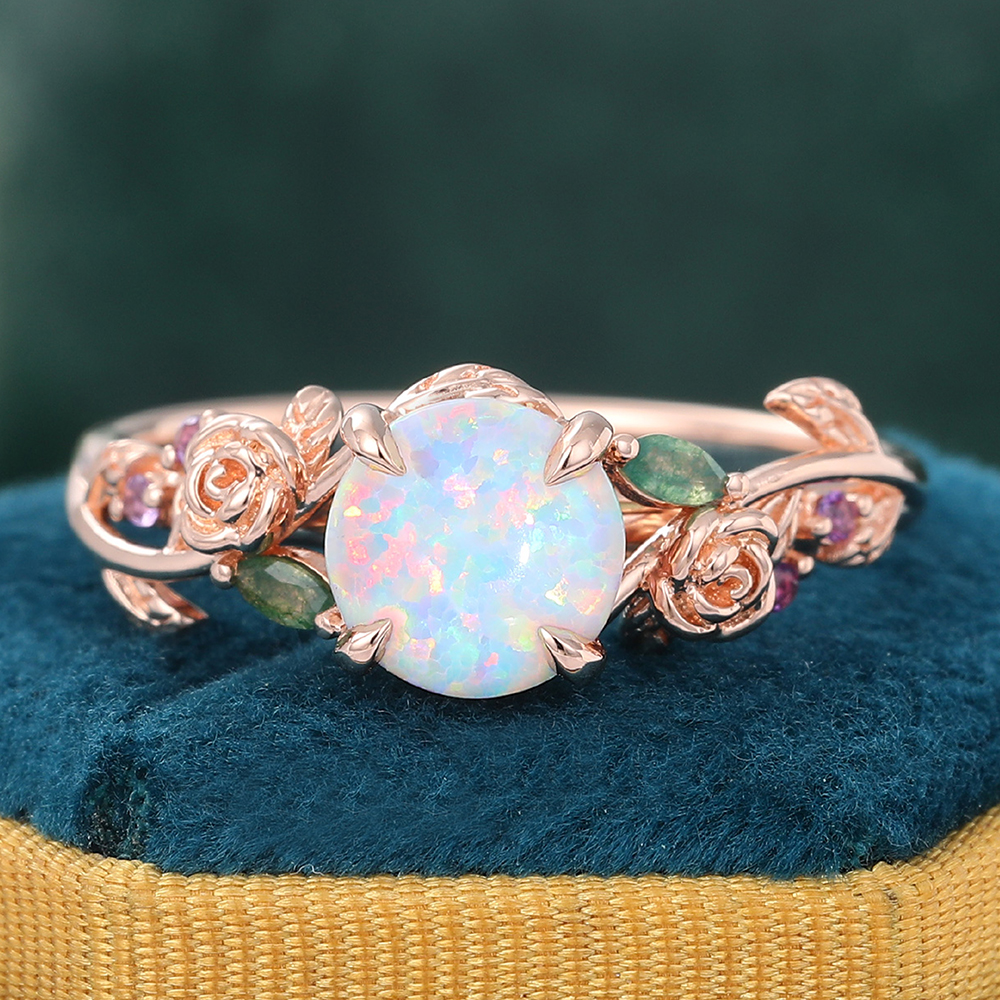
2. The Halo Setting (The "Bodyguard" Style)
A circle of tiny accent stones, often diamonds or moissanites, surrounds your central opal, creating a brilliant frame.
Why It’s Protective: The metal halo and smaller stones act as a protective bumper, absorbing the initial impact and shielding the opal's girdle.
- Design Tip: A "sunburst" halo offers protection and adds a vintage, floral aesthetic that complements the opal's romantic vibe.
- Pros: Adds sparkle and distributes impact away from the opal.
- Cons: It still uses prongs, so the edges may be exposed.
- Perfect For: Adding maximum sparkle and making your opal appear larger. This glamorous yet practical setting is ideal for an engagement ring or a statement piece.
To learn more about how stone type affects setting protection, see the Ethiopian Opal vs. Australian Opal comparison, especially if you're considering a halo design.
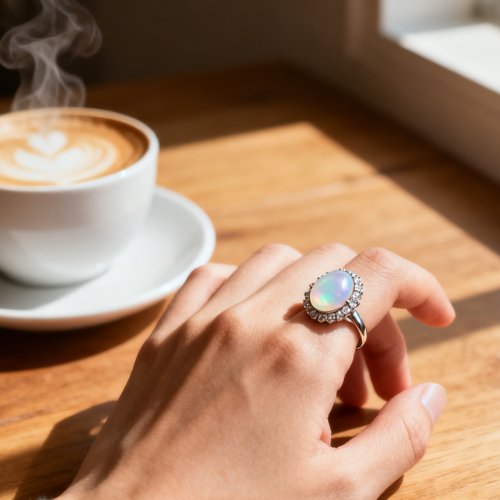
Halo Setting
3. The Reinforced Prong Setting (Basket & Claw Focus)
The prong setting is the quintessential symbol of elegance. However, for a softer stone like opal, the open design requires intelligent engineering to withstand daily wear. This is where the basket setting and claw prongs become essential.
Why It’s Protective: Juyoyo’s reinforced prong settings feature two layers of security: 1) A Gallery Rail connecting the prongs below the girdle for structure; and 2) Claw Prongs that grip the stone more securely than round prongs.
- Pros: Maximum light entry, classic look, and high structural security.
- Cons: Exposed prongs require professional check-ups and offer less side protection than a bezel.
- Perfect For: Anyone who wants a timeless, brilliant look and insists on a well-engineered, protective opal ring setting.
Juyoyo’s Craft: Most of our prong-set opal rings are designed with this reinforced basket setting. This setting provides the necessary hidden strength while giving you the delicate, dainty look you want.
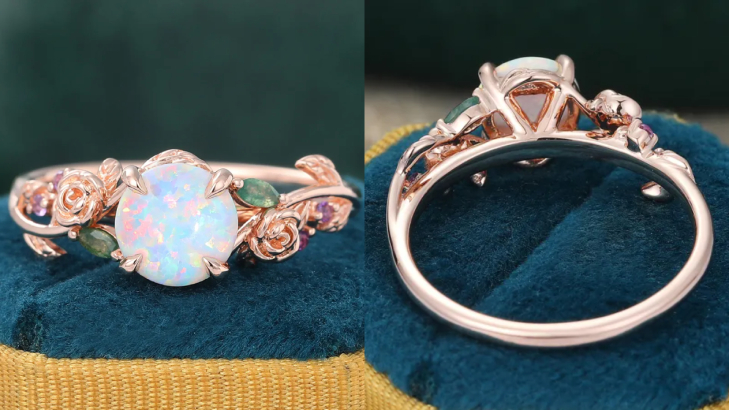 |
| Prong Setting with Gallery Rail |
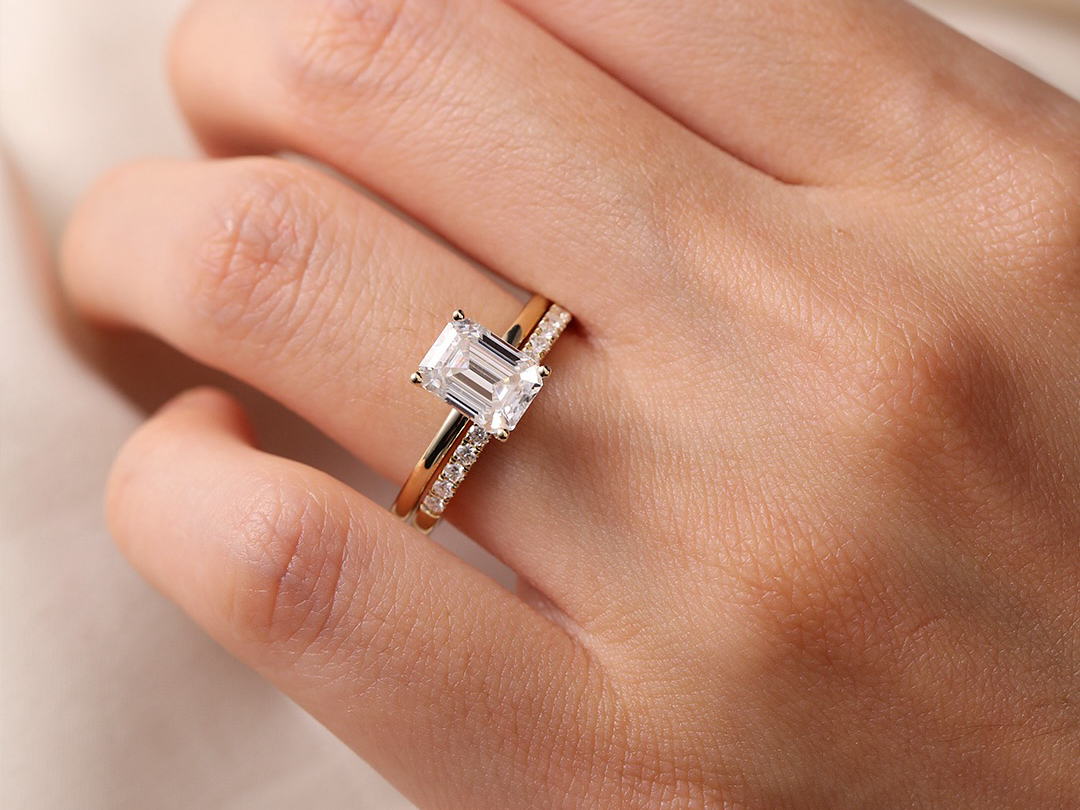
4. The Low-Profile Setting
Height is often the enemy of opal durability. The higher a stone sits off your finger, the more likely it is to get whacked.
A low-profile setting ensures the bottom of the opal sits flush against your finger or very close to the metal band.
Why it’s Protective: By lowering the center of gravity, you significantly reduce the "lever arm" effect. This is ideal for healthcare workers, teachers, or anyone who works with their hands.
- Comfort: These rings are incredibly comfortable for daily wear as they don't spin around the finger as easily as high-set solitaires.
- Pros: Classic look, allows maximum light.
- Cons: Less protective than the bezel, requires careful wear.
- Perfect For: The minimalist or someone seeking comfortable, understated jewelry that sits flush with the hand.
If you want to explore styling + daily-wear comfort, check How to Wear an Opal Ring for pairing and maintenance tips.
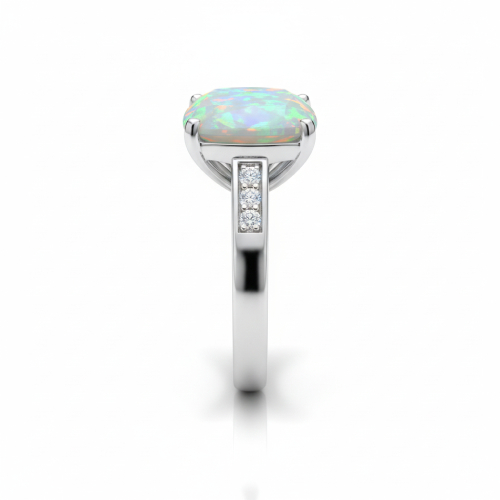
Low Profile Setting
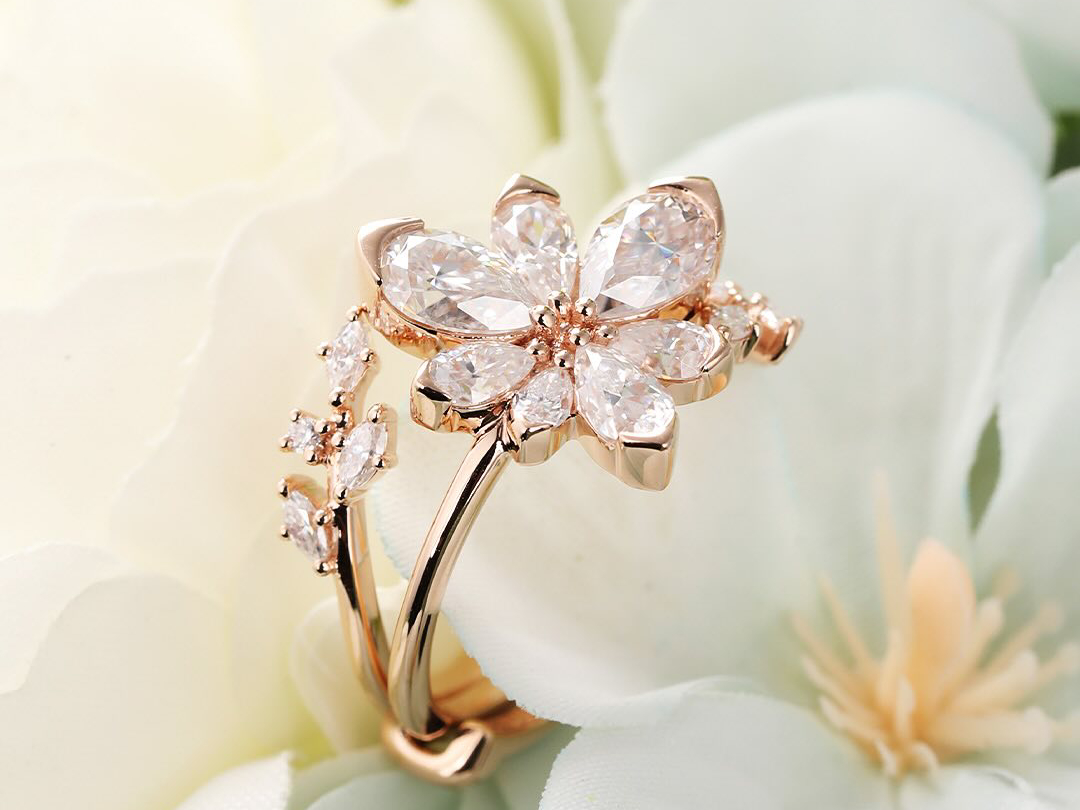
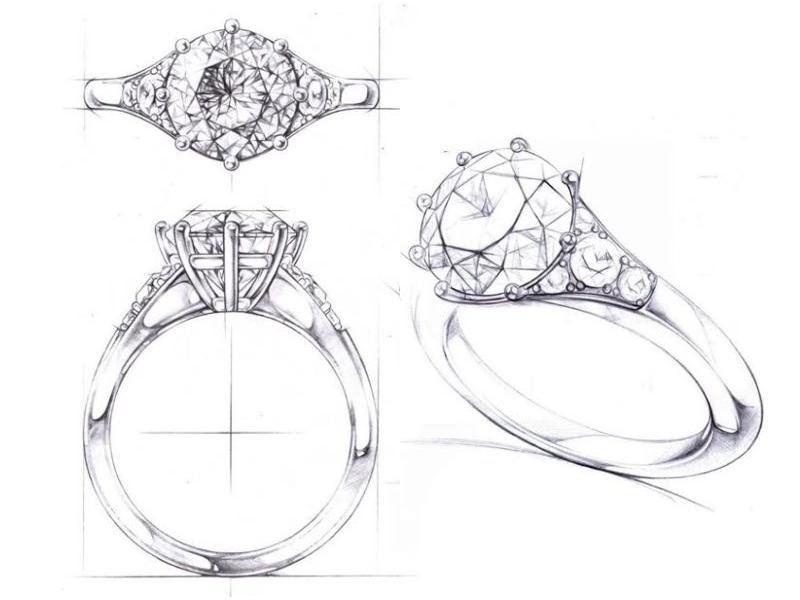
5. The Split Shank Setting
The "shank" refers to the band of the ring. In a split shank design, the band is divided into two as it approaches the center stone, creating a wider base.
Why it’s Protective: It offers structural integrity. A wider base stabilizes the head of the ring, preventing the setting from warping or bending when pressure is applied (such as when gripping a steering wheel or lifting heavy bags). A stable metal structure keeps the opal secure.
- Pros: Stylish band detail and stable support.
- Cons: Bulkier look, harder to clean.
- Perfect For: Anyone looking to make a bold statement or a modern bride seeking enhanced stability and visual presence will love this piece.
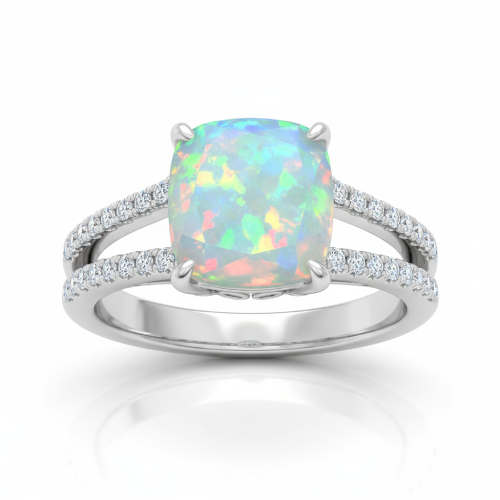
Split Shank Setting
6. The East-West Setting
Traditionally, oval or marquise stones are set vertically (north-south). Setting the stone horizontally is called an east-west setting.
Why it’s Protective: This orientation follows the natural curve of your finger. It exposes less of the stone's surface area to potential impacts from fingertips.
- Pros: Unique orientation and modern appeal.
- Cons: Exposes more of the stone's surface; less classic.
- Perfect For: Trendsetters who value uniqueness, an elongated aesthetic, and minimal vulnerability to lateral knocks.
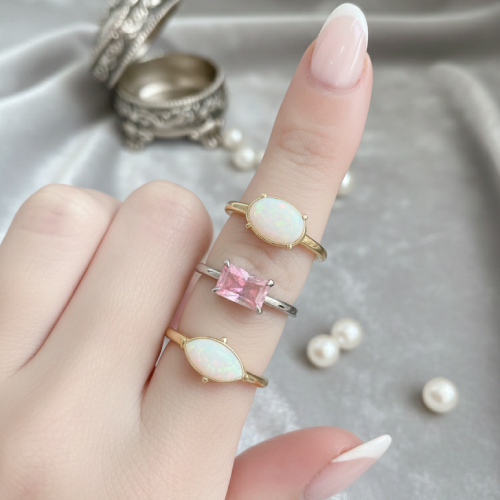
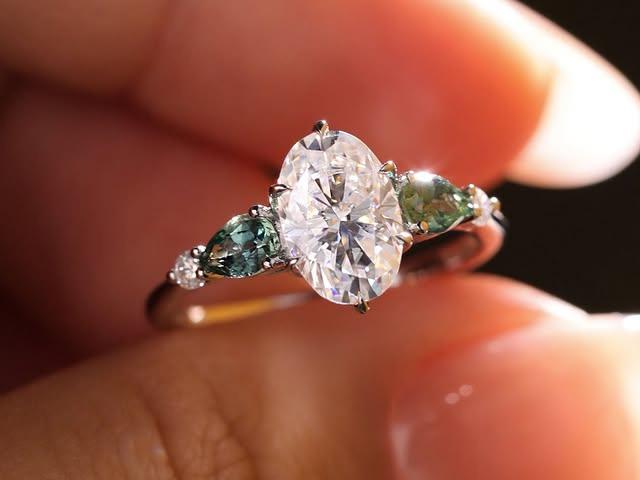
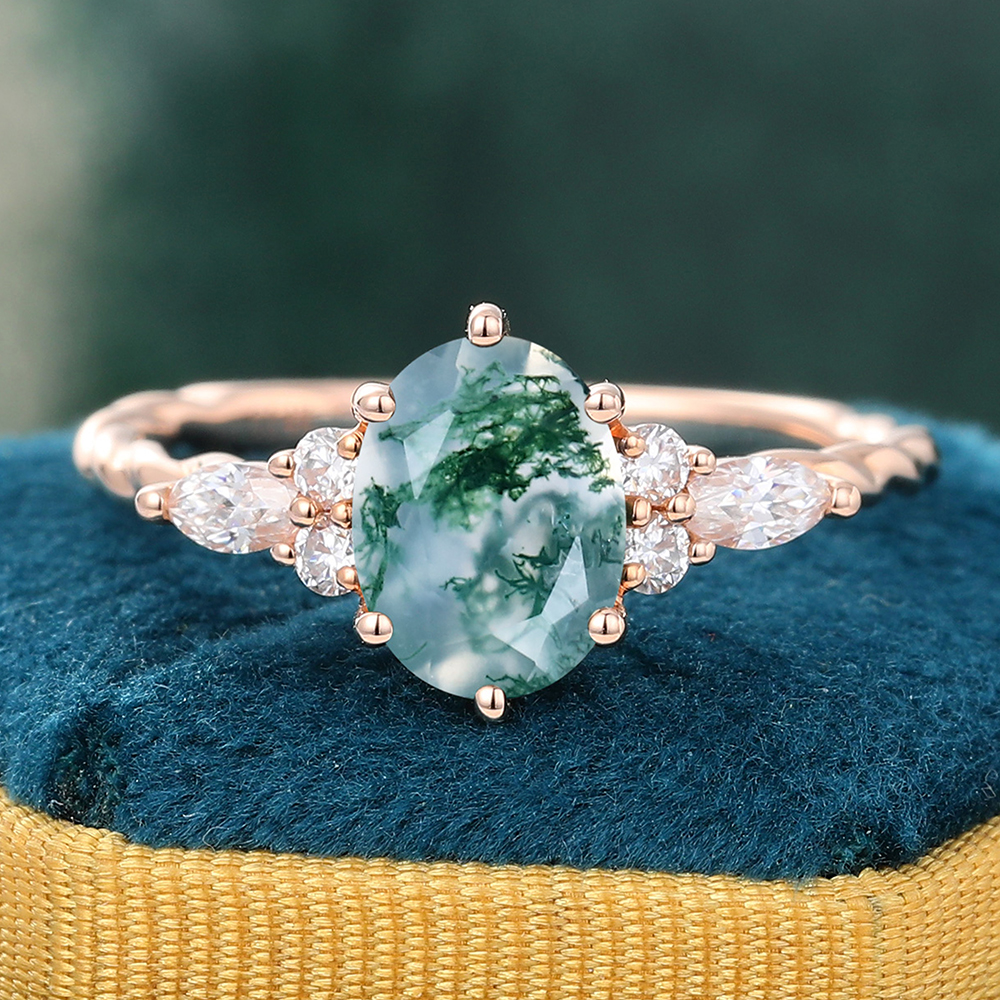
7. The Cluster/Three-Stone Setting (The Protective Buffer)
The "shank" refers to the band of the ring. In a split shank design, the band is divided into two as it approaches the center stone, creating a wider base.
Why it’s Protective: These harder accent stones act as impact buffers. They absorb the initial impact from oblique forces, protecting the central, softer opal from chips and reducing the force transmitted to the opal itself.
- Pros: The side stones serve as impact shields, providing a beautiful vintage aesthetic and high overall sparkle.
- Cons: Higher maintenance due to multiple prongs and increased cost due to extra stones.
- Perfect For: Lovers of vintage aesthetics who want side-stone sparkle without compromising the safety of the main opal.
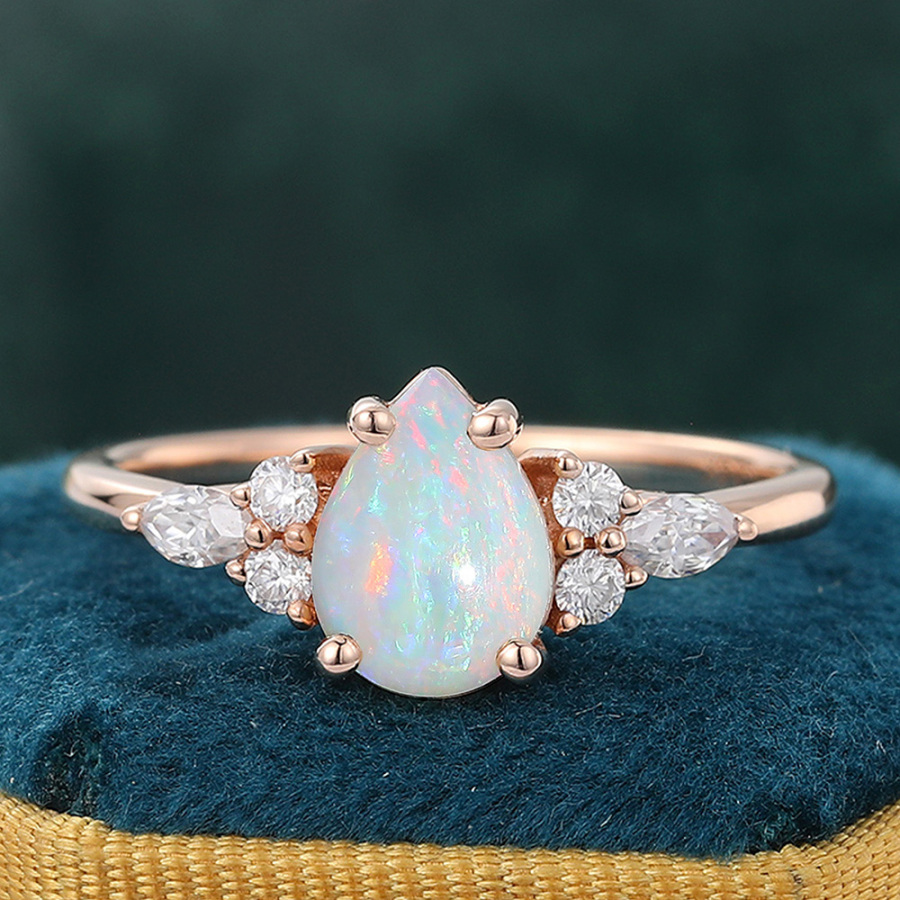 |
| Cluster Setting |
Metal Matters: Choosing the Right Alloy
The setting style is half the battle, and the metal is the other half. For opal ring settings, the metal must be strong enough to hold the stone yet malleable enough to be worked around the delicate gem without cracking it during the setting process.
- 14k Gold: The ideal balance of durability and color. It is harder than 18k gold, so it is better able to hold prongs in place over decades.
- Platinum: The most secure option. Unlike gold, platinum doesn't wear away over time; it merely displaces. If you want a "forever" setting for an opal engagement ring, platinum is the heavy-duty choice.
For a full comparison of durability and color, read "Best Metal for Opal Jewelry." Metal hardness directly affects stone security.
Which Opal Ring Setting Should I Choose?
By now, you've realized that there's no single "best" setting, only the one that's best for you. It's normal to feel overwhelmed by the choices, but don't worry. The perfect setting for your opal ring balances three key factors: Security, style, and your daily lifestyle.
Let's break it down to simplify your decision.
|
Your Primary Goal |
Recommended Setting |
Why? |
|
Maximum Impact Protection |
The Bezel Setting |
It offers a metal shield around the entire girdle, making chipping nearly impossible. |
|
Maximum Sparkle & Safety |
The Halo Setting |
The secondary gems serve as 'bodyguards' while greatly increasing the ring’s brilliance. |
|
Comfort & Subtlety |
The Low-Profile Setting |
Sits closest to the finger, minimizing accidental knocks and snags during busy days. |
|
Classic Solitaire Look |
Prong Setting Structure |
It provides the open, timeless aesthetic you desire with reinforced internal support (gallery rail). |
|
A Bold, Unique Statement |
The East-West Setting |
Visually stretches the finger and utilizes orientation to minimize lateral exposure. |
|
Heirloom Durability |
The Split Shank Setting |
The wider, divided band offers unmatched structural rigidity and prevents the ring head from warping. |
The best part? You don't have to do it alone. At Juyoyo, we specialize in helping clients like you make these exact choices. Tell us about your daily life and your dream design, and we'll help you find the perfect setting that best protects your unique opal.
Beyond the Setting: 4 Essential Care Tips for Your Opal Ring
Even with the most protective setting, opals require a little extra care. Here's how to keep your Juyoyo ring looking brand new:
- The "Last On, First Off" Rule: Put your ring on after applying makeup and hairspray, and take it off as soon as you get home.
- Beware of Water (Sometimes): Solid Australian opals are generally fine with water. However, Ethiopian opals are "hydrophane" (absorbent) and can lose color if soaked. Juyoyo always specifies the origin of our opals, so you know exactly how to care for them.
- Gentle Cleaning: Use only a soft, damp cloth to clean them. Never soak an opal in chemical cleaners or ultrasonic machines, especially if it's a doublet or triplet.
- Regular Check-Ups: Bring your ring to a jeweler every six to twelve months to check for loose stones, worn prongs, or bezel damage.
For more information on opal care, see "How to Clean an Opal Ring".
Final Thought: Your Opal Ring is Meant to Be Worn
Don't let fear keep your beautiful opal locked away in a box. With an intelligently designed, protective setting, you can wear your ring with confidence and joy every day.
Ready to find the perfect, secure setting for your dream opal? Explore Juyoyo's collection of durable, handcrafted opal rings designed for everyday wear.
Frequently Asked Questions (FAQ)
What is the Most Protective Setting for an Opal?
The bezel setting is widely considered the safest. It wraps metal entirely around the opal's perimeter, protecting its edges from chipping and securing the stone firmly in place, eliminating the risk of snagging from prongs.
Can I Wear My Opal Ring Every Day?
Yes, absolutely—as long as it’s in a protective setting like the ones listed above. The setting is key to durability for daily wear.
Can I Wear My Opal Engagement Ring in the Shower?
It is recommended that you remove your opal ring before showering. While solid Australian opals are water-resistant, soaps and shampoos can build up behind the setting and dull the stone. Ethiopian opals should strictly avoid water because they can absorb moisture and lose their color.
Are Opal Rings Suitable for Everyday Wear?
Yes, but with care. Since opals are softer (Mohs 5.5-6.5), they require protective settings, such as bezels or halos, and should be handled more carefully than diamonds. Avoid wearing them during gym sessions or heavy manual labor.
Can I Customize an Opal Ring Setting at Juyoyo?
Yes, absolutely. Juyoyo specializes in custom designs and precise settings for non-standard gemstones. If you have your own loose stone, we can design a setting tailored to your opal's unique size and curvature. Options include a Gallery Rail or Bezel structure, which will ensure your opal receives the most secure protection.
Comment