
Can Opals Get Wet? Everything You Need to Know to Protect Your Opal Jewelry
Nov 11,2025 | Juyoyo
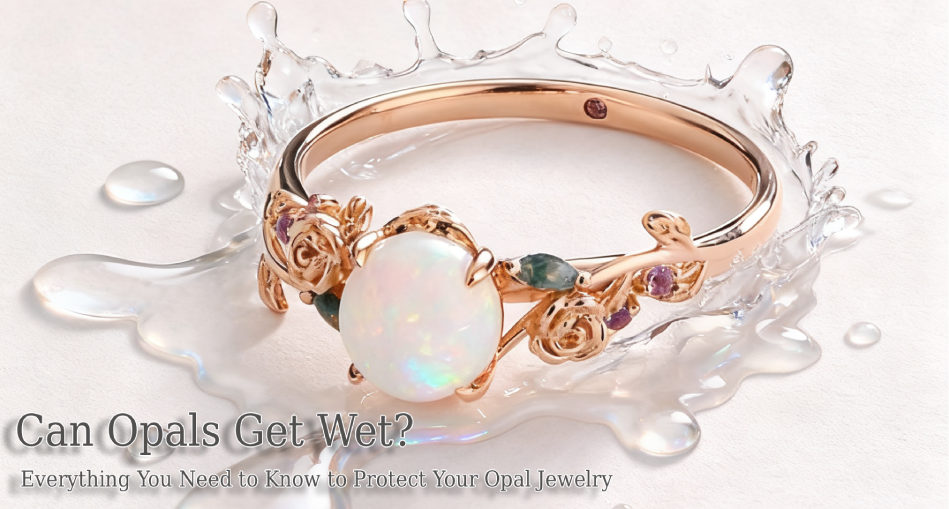
The mesmerizing, fiery flash of an opal is unlike that of any other gemstone on Earth. It's as if you're holding a tiny galaxy in your hand. But with this unique beauty comes a common question we hear every day at Juyoyo: “Can opals get wet?”
You’re afraid of damaging it. You’ve probably heard myths that they'll crack if exposed to rain or lose their color in the shower. This fear can be so paralyzing that your beautiful opal jewelry ends up locked away in a box.
But don’t worry! By the end of this guide, you'll be an opal and water safety expert, knowing exactly how to care for your unique piece with confidence.
The Quick Answer
Whether an opal can get wet depends entirely on its opal types. Porous Ethiopian opals absorb water and risk cracking, whereas solid Australian opals are non-porous. To protect both the stone and its setting, always remove opal jewelry before showering or swimming.
Opals Can Get Wet: Unpacking a Dangerous Half-Truth
You might have heard the statement, "Opals can get wet." "Opals can get wet." In a very narrow sense, this is true—a brief splash of water won't dissolve your opal. However, at Juyoyo, we believe this statement is incomplete and dangerous.
The truth is that "opal" is not one type of stone. The answer to "Can opals get wet?" is not simple. It's a very specific "it depends."
Think of it like this: A drizzle won't ruin a paper map, but dropping it in a puddle will. For one type of opal, water is like a drizzle; for another, it's like a deep puddle.
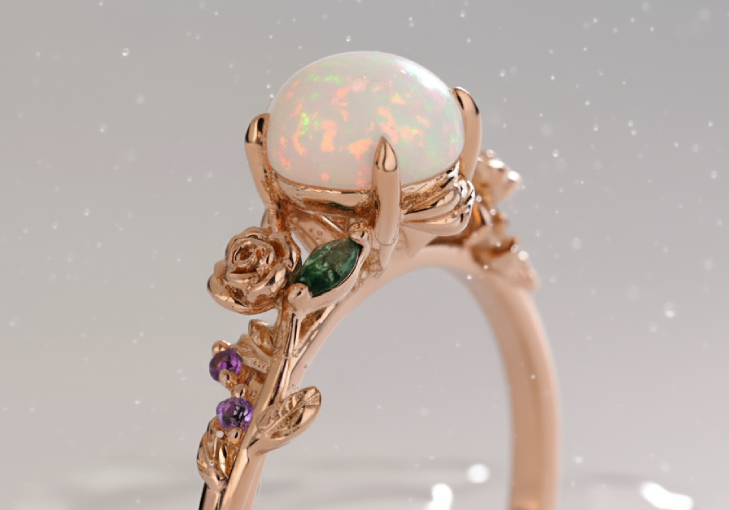
The Critical Difference: Not All Opals Are Created Equal
The most important factor is whether your opal is hydrophane, meaning it absorbs water, or non-hydrophane. Think of it as the difference between a sponge and a piece of glass:
1. The Water-Lover: Ethiopian Welo Opals (Hydrophane)
Most of the translucent, crystal-like opals with vibrant "jelly" fire that have flooded the market in the last decade are from Ethiopia.
They are hydrophane, which literally means "water-loving." Their internal structure is porous, like a hard natural sponge.
What happens when an Ethiopian opal gets wet? It absorbs whatever liquid it touches.
- Clean Water: Submerge it in water and it will soak it up, often turning completely transparent or dull yellow-brown. Its "fire" (play of color) will vanish.
- Dirty Water (Soaps, Lotions, Oils): This is far worse. It will absorb these substances, too. Over time, this buildup can permanently cloud, yellow, or brown the opal, destroying its beauty.
What if my Ethiopian opal gets wet? (A Recovery Guide)
Don't panic! If it were just clean water, the color and fire would usually return.
- Do: Place the opal in a dry, well-ventilated area, such as on a soft cloth on your desk.
- Do Not: Do not use heat! Never put it in the sun, under a hairdryer, or in an oven. A rapid change in temperature or moisture (such as drying too quickly) will almost certainly cause it to crack, a phenomenon called "crazing."
- Do: Be patient. It may take days or weeks for the opal to safely and slowly release the water and return to its former glory.
2. The Stable Staple: Australian Opals (Non-Hydrophane)
Opals from areas like Lightning Ridge or Coober Pedy are the classic, traditional gem. They have a unique chemical composition and are non-porous.
A solid Australian opal will not absorb water. It is generally safe to get them wet, and it won't cause them to change color. In fact, many miners and cutters store them in water.
However, there is a crucial exception.
To make Australian opals more affordable, jewelers often create doublets and triplets.
- Opal Doublet: A thin slice of precious opal glued to a dark backing, such as black potch or ironstone, to enhance its color.
- Opal Triplet: It's the same as a doublet, but with a clear quartz or glass cap glued to the top for shine and protection.
Water is the number one enemy of doublets and triplets.
Even brief submergence can allow water to seep between the layers and break down the glue. This results in a "foggy," "cloudy," or "waterlogged" appearance that is unfortunately permanent.
3. How Can You Tell Which Type You Have?
The most reliable clue is knowing the origin of your opal. If you're unsure, however, there are visual cues you can look for.
Ethiopian opals often have a honey-brown, yellow, or white body color and a beautiful play of color that is sometimes more fluid or "jelly-like." They can also be remarkably transparent.
In contrast, Australian opals are renowned for their brilliant, solid body colors, such as the deep black of Lightning Ridge opals or the milky white of Coober Pedy stones, and they often display a sharp play of color.
To learn more about their unique characteristics and get a definitive identification, explore our detailed guide on Ethiopian Opal vs. Australian Opal: Which One Should You Buy?
Tired of the Anxiety? Discover the "Worry-Free" Opal!
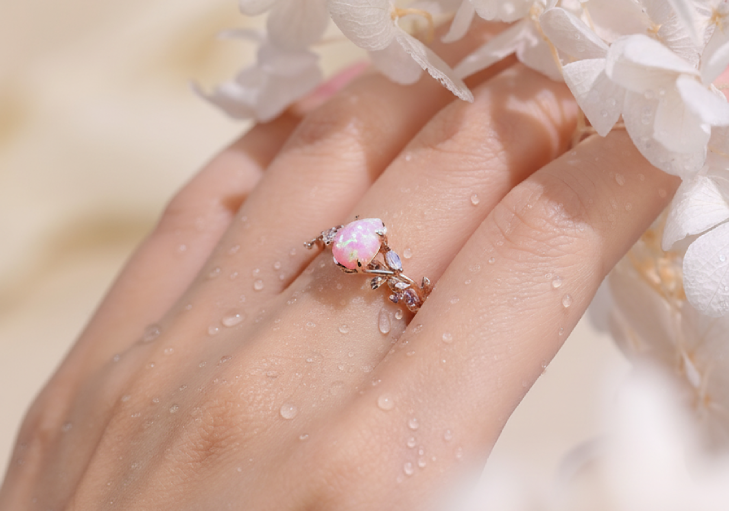
Reading all of these rules about natural opals can be stressful. Maybe you're thinking, "I just want a beautiful opal that I can wear every day, free from anxiety!"
We understand completely. This is where modern science meets timeless style.
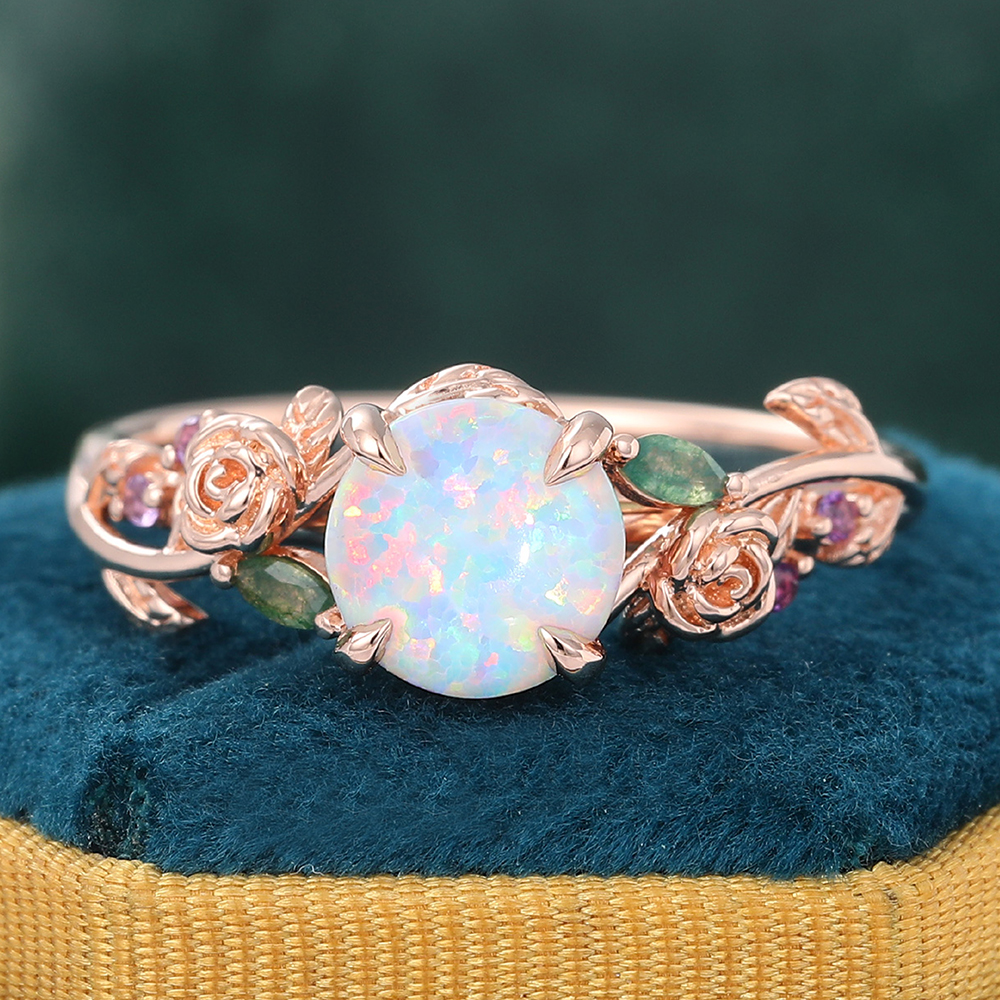
For those who love the look of opals but want something durable enough for everyday wear, a lab-created opal is a fantastic choice. Since they're grown in a controlled environment, they have a non-porous, stable structure that's incredibly resilient.
This means they are less likely to absorb water, crack, or lose their color.
We at Juyoyo are proud of our Lab-Created Pink Opal collection because of its durability. You get the stunning, feminine flash of color you love with the peace of mind that comes with wearing it daily. It's the perfect solution for an everyday ring or bracelet that you'll never want to take off—and you won't have to worry about rain or washing your hands.
It's the best of both worlds—the magic of opal meets modern, wearable resilience.
How to Safely Clean Opal Jewelry: A Step-by-Step Guide
Proper care is key, whether you have a natural gem or a modern lab-created stone.
- For All Natural Opals (Ethiopian, Australian, Doublets): The safest method is dry cleaning. Gently wipe your opal with a soft, dry, lint-free microfiber cloth, like the kind used for cleaning eyeglasses. This removes oils and smudges without any risk. If necessary, you may use a slightly damp cloth, but never allow the stone to become completely submerged.
- For Juyoyo Lab-Created Opals: These are much easier! You can safely clean them with lukewarm water and mild soap, just as you would a diamond or sapphire. There is no risk of absorption.
Conclusion: So, Can Opals Get Wet?
Yes, opals can get wet, but the consequences in the real world depend entirely on the type of opal you own.
The most important factor for their care is the key distinction between hydrophane Ethiopian opals, which act like sponges and risk cracking, and non-hydrophane Australian opals, which are more like glass but still risk a loose setting. This fundamental difference, if remembered, empowers you to protect your jewelry confidently.
Now that you're an opal expert, are you ready to find a piece that matches your lifestyle?
FAQs: Your Top Questions Answered
Can I Wear an Opal Ring Every Day?
It depends on the type of opal. We do not recommend daily wear for porous Ethiopian opals or layered doublets or triplets because they are too fragile to withstand daily exposure to soaps, lotions, and impacts. Solid Australian opals are more durable, but for true "worry-free" daily wear, lab-created opals are the most resilient choice.
Can I Shower With My Opal Jewelry?
No, you should never shower with any opal jewelry. Soaps and shampoos are the real enemy. They can be absorbed by porous opals, like Ethiopian opals, or they can build up on the surface of the stone and dull it. Hot water can also cause "thermal shock," which may lead to cracking.
Can I Wash My Hands with an Opal Ring On?
We strongly recommend removing it. While a quick splash of pure water won't harm a solid Australian opal, hand soap, lotions, and sanitizers can. These chemicals can be absorbed by porous opals or become trapped in the setting, which dulls the gem and weakens the metal.
Can I Swim with My Opals (in a Pool or Ocean)?
Absolutely not. It is one of the worst things you can do. The chlorine in pools is a harsh chemical that can damage both the opal and the metal of your setting. Saltwater is abrasive and can seep into the glue of a doublet or triplet, destroying it.
Can Opals be in the Sun?
Avoid prolonged exposure to direct sunlight. Opals are hydrated minerals, meaning they contain water. Intense heat and sunlight can dehydrate the stone, causing the color to fade or, in severe cases, for the opal to crack. This is known as "crazing."
How Long Does It Take for a Wet Opal to Dry?
Be very patient; it can take days or even weeks. If a porous Ethiopian opal has absorbed water, it must dry out slowly and naturally at room temperature. Never use a hairdryer or other heat source to speed up the process, as this will likely cause cracking.
Also Read
Can You Wear an Opal Ring Every Day? The Ultimate Guide (Yes, You Can!)
Are Opal Rings a Good Choice? An Honest Look at the Pros and Cons
Are Opals Bad Luck? Uncovering the Truth Behind the Superstition
Is Opal More Expensive Than Diamonds? The Surprising Truth About Price
How Much is Opal Worth? Unveiling the Secrets to Opal Value
Comment